Blab News
12-Foot Waves from Hurricane Marie Flood Long Beach, Evacuating 20 Homes
When the sea rose like a 12‑foot wall on Monday, Long Beach residents found themselves swimming in their own streets.
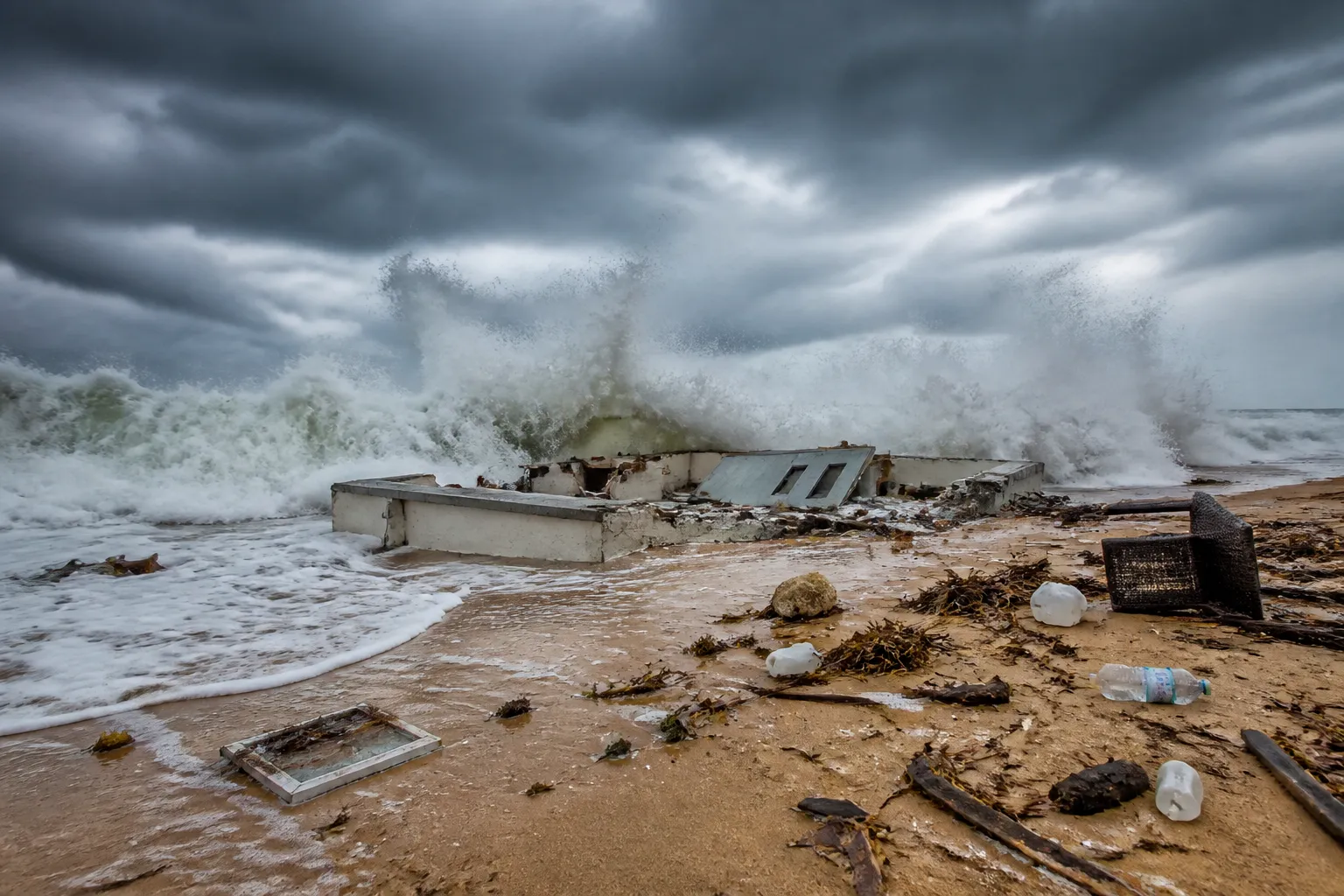
On September 7, 2026, the Long Beach Peninsula was battered by waves generated by the remnants of Hurricane Marie. The surge breached the seawall that guards beachside homes, tore through the boardwalk, and turned a stretch of street into a temporary lake. A mandatory evacuation order was issued for about 20 residences on Seaside Walk between 63rd and 67th Place.
The waves arrived during a high tide that amplified the surge. Aerial photographs captured the seawall ripped apart and the boardwalk collapsed in several spots. Residents reported water pouring into garages and streets. Evelina Mardirossian, 77, told the California Post that “the conditions were very normal…within five minutes, the entire street became a lake.” Her husband, David Black, 75, said, “All of our cars are gone. Her car was only three months old; it had 1,500 miles on it.” The couple’s garage was flooded, and they estimated a loss of $60,000 in vehicles.
Other homeowners echoed the damage. Del Sunperk, 49, said she “wished she had known it was coming” and that she would have placed sandbags at her front door. Jen Pieracci‑Jensen, 45, noted that the sand berm was eroding, “so the waves are not coming up and over as much as they’re hitting our boardwalk, which is collapsing in multiple places.” She added that the situation was “super stressful.”
City officials acted quickly. Long Beach firefighters went door‑to‑door on Monday evening, informing residents that evacuation was required. Public‑works crews arrived with tractors to reinforce the sand berm before the next high tide. Evacuated residents are staying in local emergency shelters or nearby hotels, while others have packed essentials to stay with family until city inspectors clear their homes on Wednesday morning.
Meteorologists attribute the surge to the remnants of Hurricane Marie, which weakened to a tropical storm by Sunday but continued to generate powerful swells. The event coincided with record‑breaking ocean temperatures and the early stages of an El Niño, conditions that can amplify wave heights.
The damage raises concerns about the long‑term structural integrity of homes on the peninsula. Residents report cracked concrete between some houses and a loss of sand that supports foundations. The boardwalk’s collapse and the seawall’s breach suggest that the protective infrastructure may need significant repairs.
City officials have not yet released a detailed assessment of the damage, but they have indicated that inspections will begin on Wednesday. The Long Beach Fire Department and the Department of Public Works are coordinating to determine which properties are safe to re‑enter and what repairs are required. The city is also evaluating whether additional sand berms or reinforced seawalls are necessary to prevent future incidents.
The incident highlights the vulnerability of coastal communities to tropical‑storm‑driven surf, even when the storm is far offshore. Long Beach officials have called for clearer communication about impending high‑surf conditions. Residents, meanwhile, are awaiting the outcome of inspections and the decision on whether to rebuild or relocate.
At this time, no injuries have been reported, and the city has not announced any legal actions or insurance claims. The focus remains on ensuring residents’ safety, restoring infrastructure, and assessing the full extent of the damage.
The event underscores the need for ongoing monitoring of coastal defenses and better preparedness for the increasing frequency of large surf events associated with tropical cyclones and changing ocean temperatures.
On September 7, 2026, the Long Beach Peninsula was battered by waves generated by the remnants of Hurricane Marie. The surge breached the seawall that guards beachside homes, tore through the boardwalk, and turned a stretch of street into a temporary lake. A mandatory evacuation order was issued for about 20 residences on Seaside Walk between 63rd and 67th Place.
The waves arrived during a high tide that amplified the surge. Aerial photographs captured the seawall ripped apart and the boardwalk collapsed in several spots. Residents reported water pouring into garages and streets. Evelina Mardirossian, 77, told the California Post that “the conditions were very normal…within five minutes, the entire street became a lake.” Her husband, David Black, 75, said, “All of our cars are gone. Her car was only three months old; it had 1,500 miles on it.” The couple’s garage was flooded, and they estimated a loss of $60,000 in vehicles.
Other homeowners echoed the damage. Del Sunperk, 49, said she “wished she had known it was coming” and that she would have placed sandbags at her front door. Jen Pieracci‑Jensen, 45, noted that the sand berm was eroding, “so the waves are not coming up and over as much as they’re hitting our boardwalk, which is collapsing in multiple places.” She added that the situation was “super stressful.”
City officials acted quickly. Long Beach firefighters went door‑to‑door on Monday evening, informing residents that evacuation was required. Public‑works crews arrived with tractors to reinforce the sand berm before the next high tide. Evacuated residents are staying in local emergency shelters or nearby hotels, while others have packed essentials to stay with family until city inspectors clear their homes on Wednesday morning.
Meteorologists attribute the surge to the remnants of Hurricane Marie, which weakened to a tropical storm by Sunday but continued to generate powerful swells. The event coincided with record‑breaking ocean temperatures and the early stages of an El Niño, conditions that can amplify wave heights.
The damage raises concerns about the long‑term structural integrity of homes on the peninsula. Residents report cracked concrete between some houses and a loss of sand that supports foundations. The boardwalk’s collapse and the seawall’s breach suggest that the protective infrastructure may need significant repairs.
City officials have not yet released a detailed assessment of the damage, but they have indicated that inspections will begin on Wednesday. The Long Beach Fire Department and the Department of Public Works are coordinating to determine which properties are safe to re‑enter and what repairs are required. The city is also evaluating whether additional sand berms or reinforced seawalls are necessary to prevent future incidents.
The incident highlights the vulnerability of coastal communities to tropical‑storm‑driven surf, even when the storm is far offshore. Long Beach officials have called for clearer communication about impending high‑surf conditions. Residents, meanwhile, are awaiting the outcome of inspections and the decision on whether to rebuild or relocate.
At this time, no injuries have been reported, and the city has not announced any legal actions or insurance claims. The focus remains on ensuring residents’ safety, restoring infrastructure, and assessing the full extent of the damage.
The event underscores the need for ongoing monitoring of coastal defenses and better preparedness for the increasing frequency of large surf events associated with tropical cyclones and changing ocean temperatures.