Blab News
Schneider Electric Secures NEMA Make-It-American Certification for 20-Plus U.S. Facilities
On June 15 2026, Schneider Electric announced that more than twenty of its U.S. manufacturing sites have earned certification under the National Electrical Manufacturers Association’s (NEMA) Make‑It‑American program. The certification verifies that a facility’s products meet the domestic‑content requirements of the Build America, Buy America Act (BABA). This milestone marks the first time a single company has achieved the status across so many U.S. locations.
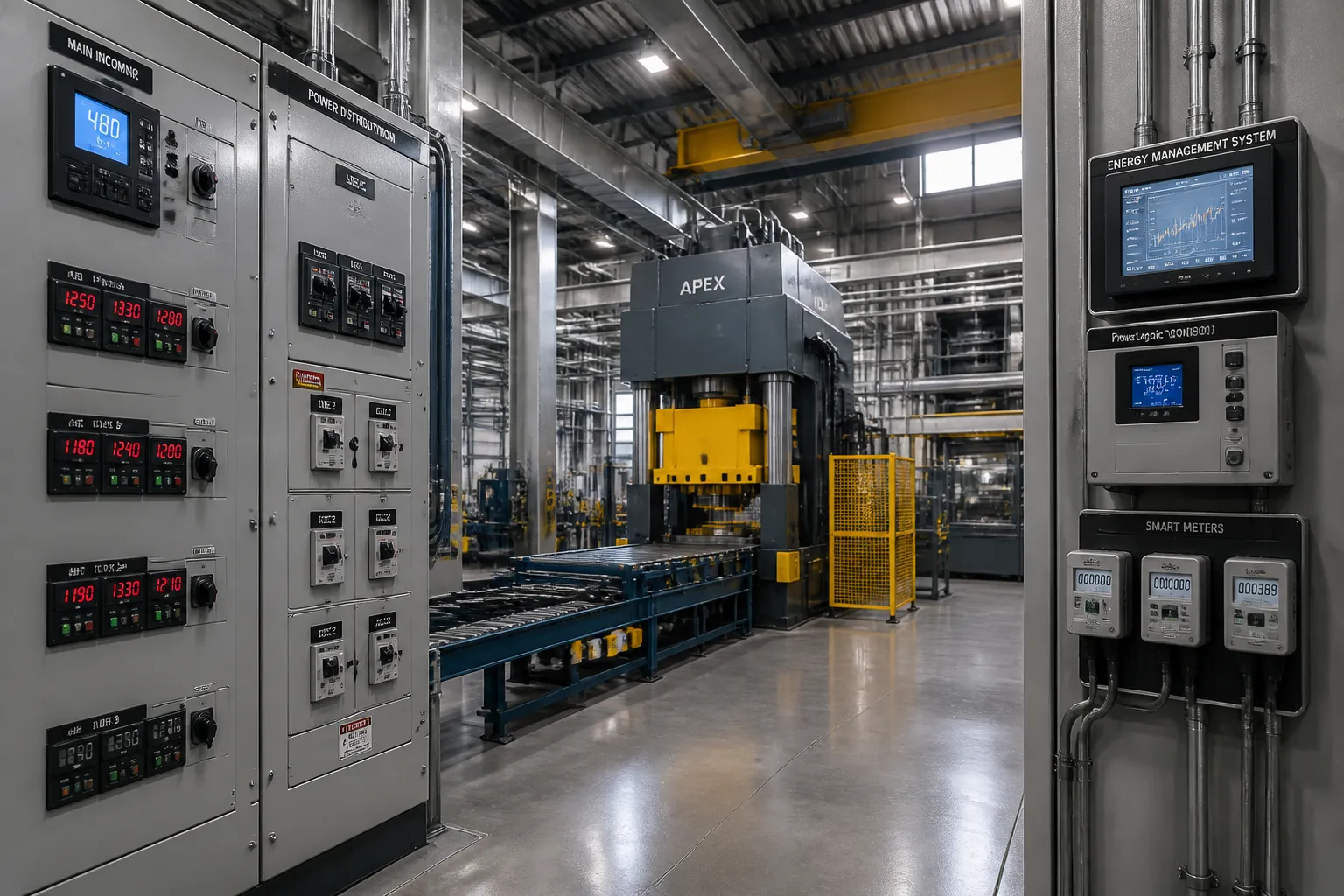
The Make‑It‑American program, governed by NEMA standard 70901‑2024, mandates independent audits to confirm that a facility’s output satisfies BABA’s domestic‑content thresholds for federal‑aid projects. Schneider’s certification covers plants that produce low‑ and medium‑voltage switchgear, circuit breakers, variable‑speed drives, and motor‑control centers—equipment increasingly demanded by AI data centers, industrial electrification initiatives, and advanced manufacturing projects.
The first Schneider site to receive the certification was the Fairfield, Ohio, plant, which earned the award in May 2025. After completing supplementary audits this year, the company’s facilities in California, Iowa, Indiana, Kentucky, Massachusetts, Missouri, Nebraska, North Carolina, Ohio, South Carolina, Tennessee, and Texas were added to the NEMA Make‑It‑American BABA Registry.
"Today’s announcement marks another milestone in our responsible supply‑chain and regionalization strategy at Schneider Electric," said Mourad Tamoud, EVP and Chief Supply Chain Officer. "It underscores our commitment to domestic manufacturing, our belief that jobs and technological innovation thrive together, and our central role as an energy‑technology partner to our U.S. customers across energy and automation sectors."
Kelly Becker, President of North America Operations, added that the certification comes at a critical time for the United States. "AI growth and unprecedented energy demand have led to an inflection point for industry in the U.S. Transformation for our energy future requires agility today, and that’s why Schneider Electric continues to strengthen our domestic supply chain," she said.
NEMA President and CEO Debra Phillips praised the achievement. "Schneider Electric has set a new standard. As the first company to earn Make‑It‑American certification across 20+ U.S. facilities, it has raised the bar for what industry leadership looks like in practice," she said. "Make‑It‑American provides rigorous, independent verification that facilities and supply chains meet Build America, Buy America domestic‑content requirements—bringing transparency, certainty, and trust to the federal marketplace."
Becker’s appointment to NEMA’s Board of Directors follows the certification announcement. In her new role, she will help shape policy advocacy, legal action, workforce solutions, and operational excellence as the electrical‑manufacturing sector faces rising energy demand.
Schneider Electric employs more than 24,000 people in the United States and operates over 20 smart factories, facilities, and distribution centers. The company was named one of Glassdoor’s Best Places to Work in 2025 and was recognized as a 2026 Gold Military‑Friendly employer. In 2025, TIME magazine ranked Schneider Electric as the world’s most sustainable company for the second consecutive year, and Corporate Knights named it the World’s Most Sustainable Corporation.
The certification aligns with Schneider’s announced $700 million investment in domestic manufacturing and its broader strategy to support U.S. infrastructure and industrial resilience. By demonstrating compliance with BABA requirements, the company positions its products as eligible for federal‑aid projects that prioritize American‑made components.
At present, the certification status is complete for the listed facilities, and Schneider is preparing to expand the program to additional sites as part of its ongoing investment plan. No regulatory or legal actions are pending, and the company has not announced further changes to its supply‑chain strategy.
The Make‑It‑American certification is expected to strengthen Schneider’s relationships with federal agencies and private partners seeking domestic‑content compliance, and it may influence other manufacturers to pursue similar certification as the U.S. government continues to emphasize domestic production in infrastructure and energy projects.
The Make‑It‑American program, governed by NEMA standard 70901‑2024, mandates independent audits to confirm that a facility’s output satisfies BABA’s domestic‑content thresholds for federal‑aid projects. Schneider’s certification covers plants that produce low‑ and medium‑voltage switchgear, circuit breakers, variable‑speed drives, and motor‑control centers—equipment increasingly demanded by AI data centers, industrial electrification initiatives, and advanced manufacturing projects.
The first Schneider site to receive the certification was the Fairfield, Ohio, plant, which earned the award in May 2025. After completing supplementary audits this year, the company’s facilities in California, Iowa, Indiana, Kentucky, Massachusetts, Missouri, Nebraska, North Carolina, Ohio, South Carolina, Tennessee, and Texas were added to the NEMA Make‑It‑American BABA Registry.
"Today’s announcement marks another milestone in our responsible supply‑chain and regionalization strategy at Schneider Electric," said Mourad Tamoud, EVP and Chief Supply Chain Officer. "It underscores our commitment to domestic manufacturing, our belief that jobs and technological innovation thrive together, and our central role as an energy‑technology partner to our U.S. customers across energy and automation sectors."
Kelly Becker, President of North America Operations, added that the certification comes at a critical time for the United States. "AI growth and unprecedented energy demand have led to an inflection point for industry in the U.S. Transformation for our energy future requires agility today, and that’s why Schneider Electric continues to strengthen our domestic supply chain," she said.
NEMA President and CEO Debra Phillips praised the achievement. "Schneider Electric has set a new standard. As the first company to earn Make‑It‑American certification across 20+ U.S. facilities, it has raised the bar for what industry leadership looks like in practice," she said. "Make‑It‑American provides rigorous, independent verification that facilities and supply chains meet Build America, Buy America domestic‑content requirements—bringing transparency, certainty, and trust to the federal marketplace."
Becker’s appointment to NEMA’s Board of Directors follows the certification announcement. In her new role, she will help shape policy advocacy, legal action, workforce solutions, and operational excellence as the electrical‑manufacturing sector faces rising energy demand.
Schneider Electric employs more than 24,000 people in the United States and operates over 20 smart factories, facilities, and distribution centers. The company was named one of Glassdoor’s Best Places to Work in 2025 and was recognized as a 2026 Gold Military‑Friendly employer. In 2025, TIME magazine ranked Schneider Electric as the world’s most sustainable company for the second consecutive year, and Corporate Knights named it the World’s Most Sustainable Corporation.
The certification aligns with Schneider’s announced $700 million investment in domestic manufacturing and its broader strategy to support U.S. infrastructure and industrial resilience. By demonstrating compliance with BABA requirements, the company positions its products as eligible for federal‑aid projects that prioritize American‑made components.
At present, the certification status is complete for the listed facilities, and Schneider is preparing to expand the program to additional sites as part of its ongoing investment plan. No regulatory or legal actions are pending, and the company has not announced further changes to its supply‑chain strategy.
The Make‑It‑American certification is expected to strengthen Schneider’s relationships with federal agencies and private partners seeking domestic‑content compliance, and it may influence other manufacturers to pursue similar certification as the U.S. government continues to emphasize domestic production in infrastructure and energy projects.