Blab News
Albanias Flamingo Revolution: Mass Protests Erupt Over Kushner-Linked Resort Plan
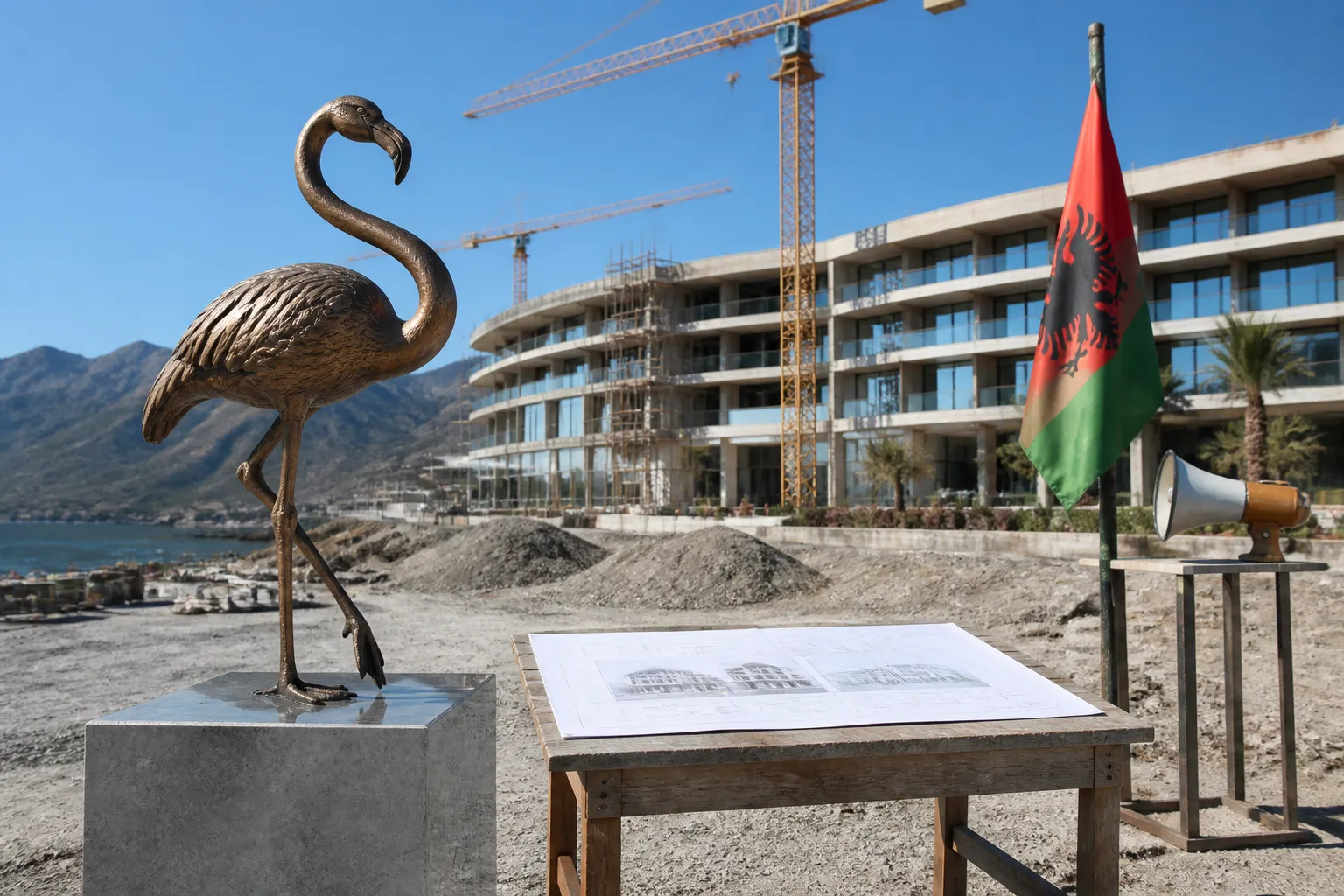
Albania’s capital, Tirana, has been gripped by a wave of demonstrations that began in the first week of June and are now spreading to surrounding towns. The movement, dubbed the “Flamingo Revolution,” erupted after Prime Minister Edi Rama announced a $1.4 billion luxury resort on the Adriatic coast—an area protected as part of the Pishë Poro‑Nartë nature reserve. The project’s ties to American investor Jared Kushner, the son‑in‑law of former U.S. President Donald Trump, have amplified public anger.
Rama’s June 1 announcement sent shockwaves through the nation. By June 2, crowds had already assembled in Tirana’s main squares, chanting for transparency, justice, and the safeguarding of the reserve. Reports describe the protests as swelling in size and intensity: clashes with police, the use of fireworks and flares, and sporadic violence. Protesters have adopted the flamingo as a symbol, a motif that has since become synonymous with the movement.
The Albanian government has defended the development. Rama has dismissed the demonstrators as a small fraction of the population and has suggested that online outrage is amplified by foreign actors, specifically citing Iranian influence. Officials have framed the protests as part of a “hybrid war” waged by enemies of Albania and Israel.
Opposition parties have framed the protests within a broader context of dissatisfaction with Rama’s administration. The 2025‑2026 opposition protests, which began after the indictment of Deputy Prime Minister Belinda Balluku on corruption charges, have called for Rama’s resignation, a technocratic government, and new elections. The Flamingo Revolution has become a focal point for these demands, with protesters calling for a “different Albania” that prioritizes environmental stewardship and democratic accountability.
International reactions have added pressure on the Albanian government. On June 7, the European Commission warned that the resort project could jeopardise Albania’s EU accession bid, citing concerns about the project’s environmental impact and the legality of the land acquisition. Meanwhile, Albanian authorities have frozen developer assets in connection with a property‑fraud investigation that involves the Kushner‑backed project.
The resort, slated for the town of Sazan on the southern coast, is projected to include a high‑end hotel, residential units, and recreational facilities. According to the company’s filings, the development would be financed through a partnership that includes Kushner’s Affinity Partners. Critics argue that the project would threaten the biodiversity of the protected area and divert public funds from essential services.
The protests have also drawn attention to Albania’s fragile democratic institutions. The country has been negotiating EU membership since 2022, and the European Union has repeatedly urged the Albanian government to uphold rule‑of‑law standards. The current unrest has highlighted tensions between economic development goals and environmental and social safeguards.
As of mid‑June, the protests have continued for more than a week, with demonstrators occupying key intersections and civic spaces in Tirana and other cities. Police have used tear gas and rubber bullets to disperse crowds, and several arrests have been reported, including minors. The situation remains fluid, with no clear resolution in sight.
The Albanian government has stated that it will continue to pursue the resort project, citing potential economic benefits and increased tourism revenue. However, the EU’s warning and the domestic backlash have forced the government to reassess the project’s feasibility and public support.
The future of the Kushner‑linked resort remains uncertain. The freezing of developer assets and ongoing investigations may delay or halt construction. Meanwhile, the government faces mounting pressure from opposition parties, environmental groups and the European Union to address the concerns raised by the Flamingo Revolution.
The protests are expected to persist until a political compromise is reached or the government takes decisive action to address the protesters’ demands. The international community, particularly EU institutions, will likely continue to monitor the situation closely as Albania navigates its path toward European integration.
The current status of the protests is that they remain active, with no official statement from the Albanian government indicating a willingness to negotiate. The EU’s warning has added a new dimension to the domestic dispute, and the legal proceedings against the developer may further complicate the project’s future.
The situation remains unresolved, with ongoing demonstrations, legal investigations and diplomatic scrutiny shaping the unfolding narrative of Albania’s struggle over development, environmental protection and democratic governance.
Rama’s June 1 announcement sent shockwaves through the nation. By June 2, crowds had already assembled in Tirana’s main squares, chanting for transparency, justice, and the safeguarding of the reserve. Reports describe the protests as swelling in size and intensity: clashes with police, the use of fireworks and flares, and sporadic violence. Protesters have adopted the flamingo as a symbol, a motif that has since become synonymous with the movement.
The Albanian government has defended the development. Rama has dismissed the demonstrators as a small fraction of the population and has suggested that online outrage is amplified by foreign actors, specifically citing Iranian influence. Officials have framed the protests as part of a “hybrid war” waged by enemies of Albania and Israel.
Opposition parties have framed the protests within a broader context of dissatisfaction with Rama’s administration. The 2025‑2026 opposition protests, which began after the indictment of Deputy Prime Minister Belinda Balluku on corruption charges, have called for Rama’s resignation, a technocratic government, and new elections. The Flamingo Revolution has become a focal point for these demands, with protesters calling for a “different Albania” that prioritizes environmental stewardship and democratic accountability.
International reactions have added pressure on the Albanian government. On June 7, the European Commission warned that the resort project could jeopardise Albania’s EU accession bid, citing concerns about the project’s environmental impact and the legality of the land acquisition. Meanwhile, Albanian authorities have frozen developer assets in connection with a property‑fraud investigation that involves the Kushner‑backed project.
The resort, slated for the town of Sazan on the southern coast, is projected to include a high‑end hotel, residential units, and recreational facilities. According to the company’s filings, the development would be financed through a partnership that includes Kushner’s Affinity Partners. Critics argue that the project would threaten the biodiversity of the protected area and divert public funds from essential services.
The protests have also drawn attention to Albania’s fragile democratic institutions. The country has been negotiating EU membership since 2022, and the European Union has repeatedly urged the Albanian government to uphold rule‑of‑law standards. The current unrest has highlighted tensions between economic development goals and environmental and social safeguards.
As of mid‑June, the protests have continued for more than a week, with demonstrators occupying key intersections and civic spaces in Tirana and other cities. Police have used tear gas and rubber bullets to disperse crowds, and several arrests have been reported, including minors. The situation remains fluid, with no clear resolution in sight.
The Albanian government has stated that it will continue to pursue the resort project, citing potential economic benefits and increased tourism revenue. However, the EU’s warning and the domestic backlash have forced the government to reassess the project’s feasibility and public support.
The future of the Kushner‑linked resort remains uncertain. The freezing of developer assets and ongoing investigations may delay or halt construction. Meanwhile, the government faces mounting pressure from opposition parties, environmental groups and the European Union to address the concerns raised by the Flamingo Revolution.
The protests are expected to persist until a political compromise is reached or the government takes decisive action to address the protesters’ demands. The international community, particularly EU institutions, will likely continue to monitor the situation closely as Albania navigates its path toward European integration.
The current status of the protests is that they remain active, with no official statement from the Albanian government indicating a willingness to negotiate. The EU’s warning has added a new dimension to the domestic dispute, and the legal proceedings against the developer may further complicate the project’s future.
The situation remains unresolved, with ongoing demonstrations, legal investigations and diplomatic scrutiny shaping the unfolding narrative of Albania’s struggle over development, environmental protection and democratic governance.