Blab News
Supreme Court to Rule on Trumps Birthright Citizenship Order, Impact on Illinois Families
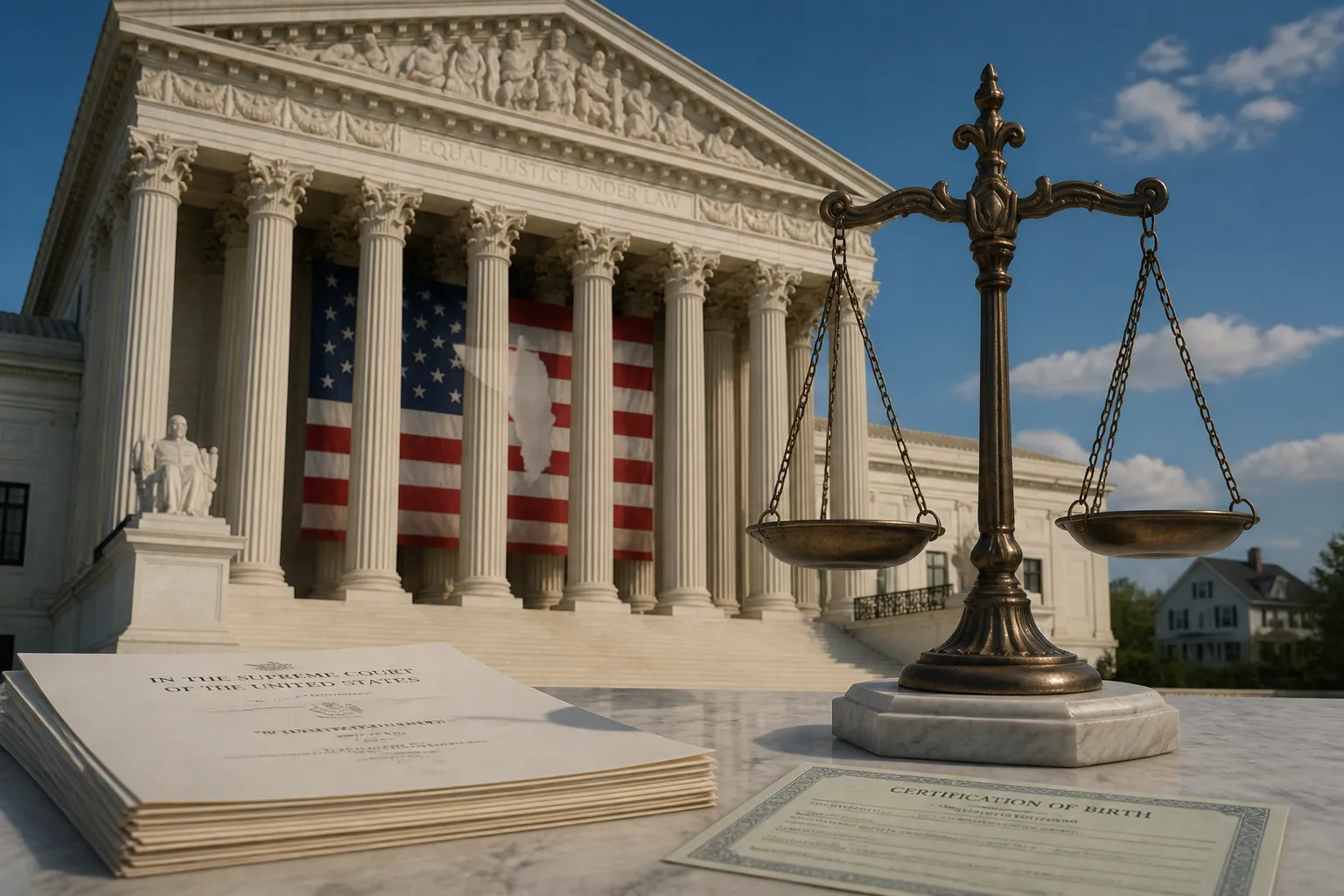
The U.S. Supreme Court is set to weigh the fate of a controversial 2025 executive order that could strip birthright citizenship from children born on American soil to non‑citizen parents. In Trump v. Barbara, the justices are expected to deliver a ruling between late June and early July, deciding whether the 14th Amendment’s citizenship clause—and the federal law that automatically grants citizenship to anyone born in the United States—will survive the order.
Adopted in 1868, the 14th Amendment guarantees citizenship to anyone born or naturalized in the United States and subject to its jurisdiction. For over a century and a half, that clause has turned every newborn on U.S. soil into a citizen, no matter the parents’ status. Trump’s executive order, issued early in his first term, abruptly reversed that rule, stating that the federal government would no longer recognize birthright citizenship for children of parents who were neither U.S. citizens nor permanent residents at birth. While lower courts halted the order, the Supreme Court now faces its constitutionality.
Should the Court uphold the order, a wide swath of families would be hit. Cody Wofsy, deputy director of the ACLU’s Immigrants’ Rights Project, explained that children of undocumented immigrants, asylum seekers, holders of Temporary Protected Status, and parents on student, work or tourist visas could lose their automatic citizenship. The ruling would reverberate across the nation, with Illinois families among those most directly affected.
When, if, and how quickly the order would take effect remains unclear. The order was slated to become active 30 days after the January 20, 2025 signing, but court injunctions prevented its enforcement, so children born since then have already been granted citizenship and, in many instances, U.S. passports. Experts say the justices’ language will dictate whether the order applies retroactively or whether a pause is necessary. In the related Trump v. CASA case, a 30‑day implementation delay was permitted, but the Supreme Court’s precise wording will ultimately decide the timeline.
If birthright citizenship is stripped away, the federal government might offer a pathway for some U.S.-born children denied citizenship to secure a parent’s temporary immigrant status, as outlined in a July 2025 USCIS memo. Yet that guidance does not cover children whose parents hold no legal status at all, leaving them at risk of statelessness. Conchita Cruz, co‑executive director of the Asylum Seeker Advocacy Project, cautioned that many asylum seekers fear their children could end up without citizenship in any country. Stateless children would face severe hurdles—restricted access to health care, education, travel, and they would not be shielded from immigration enforcement.
In Illinois, hospitals transmit birth details—including the child’s date of birth and the parents’ full names—to the state’s Vital Records System. After filing, the newborn receives a certified birth certificate, and parents may obtain a Social Security number directly at the hospital. Should birthright citizenship be revoked, the procedural changes would probably unfold at the federal level, not in local hospitals, according to experts.
Even if the Court upholds the order, a future president could seek to reinstate birthright citizenship, though that would necessitate a fresh legal battle. Congress could likewise enact legislation granting citizenship to the affected children.
Illinois families seeking guidance on how the decision might impact them can reach the Illinois Coalition for Immigrant and Refugee Rights Family Support Network Hotline at 855‑HELP‑MY‑FAMILY (855‑435‑7693). Parents who suspect their child could be affected may fill out the ACLU’s Barbara v. Trump Nationwide Class Inquiry form. The ACLU clarifies that submitting the form does not establish an attorney‑client relationship or guarantee representation.
The Supreme Court’s ruling will ultimately decide whether the 14th Amendment’s citizenship clause endures in its current form. Until that decision arrives, the legal status of children born to undocumented parents in Illinois and nationwide remains in limbo. The justices’ opinion will dictate whether the executive order holds, the timetable for any adjustments, and whether additional legislative or executive measures will be needed to resolve the children’s status.
Adopted in 1868, the 14th Amendment guarantees citizenship to anyone born or naturalized in the United States and subject to its jurisdiction. For over a century and a half, that clause has turned every newborn on U.S. soil into a citizen, no matter the parents’ status. Trump’s executive order, issued early in his first term, abruptly reversed that rule, stating that the federal government would no longer recognize birthright citizenship for children of parents who were neither U.S. citizens nor permanent residents at birth. While lower courts halted the order, the Supreme Court now faces its constitutionality.
Should the Court uphold the order, a wide swath of families would be hit. Cody Wofsy, deputy director of the ACLU’s Immigrants’ Rights Project, explained that children of undocumented immigrants, asylum seekers, holders of Temporary Protected Status, and parents on student, work or tourist visas could lose their automatic citizenship. The ruling would reverberate across the nation, with Illinois families among those most directly affected.
When, if, and how quickly the order would take effect remains unclear. The order was slated to become active 30 days after the January 20, 2025 signing, but court injunctions prevented its enforcement, so children born since then have already been granted citizenship and, in many instances, U.S. passports. Experts say the justices’ language will dictate whether the order applies retroactively or whether a pause is necessary. In the related Trump v. CASA case, a 30‑day implementation delay was permitted, but the Supreme Court’s precise wording will ultimately decide the timeline.
If birthright citizenship is stripped away, the federal government might offer a pathway for some U.S.-born children denied citizenship to secure a parent’s temporary immigrant status, as outlined in a July 2025 USCIS memo. Yet that guidance does not cover children whose parents hold no legal status at all, leaving them at risk of statelessness. Conchita Cruz, co‑executive director of the Asylum Seeker Advocacy Project, cautioned that many asylum seekers fear their children could end up without citizenship in any country. Stateless children would face severe hurdles—restricted access to health care, education, travel, and they would not be shielded from immigration enforcement.
In Illinois, hospitals transmit birth details—including the child’s date of birth and the parents’ full names—to the state’s Vital Records System. After filing, the newborn receives a certified birth certificate, and parents may obtain a Social Security number directly at the hospital. Should birthright citizenship be revoked, the procedural changes would probably unfold at the federal level, not in local hospitals, according to experts.
Even if the Court upholds the order, a future president could seek to reinstate birthright citizenship, though that would necessitate a fresh legal battle. Congress could likewise enact legislation granting citizenship to the affected children.
Illinois families seeking guidance on how the decision might impact them can reach the Illinois Coalition for Immigrant and Refugee Rights Family Support Network Hotline at 855‑HELP‑MY‑FAMILY (855‑435‑7693). Parents who suspect their child could be affected may fill out the ACLU’s Barbara v. Trump Nationwide Class Inquiry form. The ACLU clarifies that submitting the form does not establish an attorney‑client relationship or guarantee representation.
The Supreme Court’s ruling will ultimately decide whether the 14th Amendment’s citizenship clause endures in its current form. Until that decision arrives, the legal status of children born to undocumented parents in Illinois and nationwide remains in limbo. The justices’ opinion will dictate whether the executive order holds, the timetable for any adjustments, and whether additional legislative or executive measures will be needed to resolve the children’s status.