Blab News
Wildfire Smoke From Canada Drives St. Louis Air Quality to Unhealthy Levels
On Monday morning, the city of St. Louis recorded an air quality index (AQI) of 142, a level that the U.S. Environmental Protection Agency (EPA) classifies as unhealthy for sensitive groups. The reading, taken at 9 a.m. by a monitor in the Metro East, placed the region as the seventh‑worst in the United States that day.
The AQI value was reported by the Missouri Department of Natural Resources and is tracked in real time by the EPA’s AirNow system. An AQI of 142 indicates that fine particulate matter—particles smaller than 2.5 µm—has reached concentrations that can irritate the eyes, nose and throat and may worsen breathing problems in children, the elderly and people with asthma or other respiratory conditions.
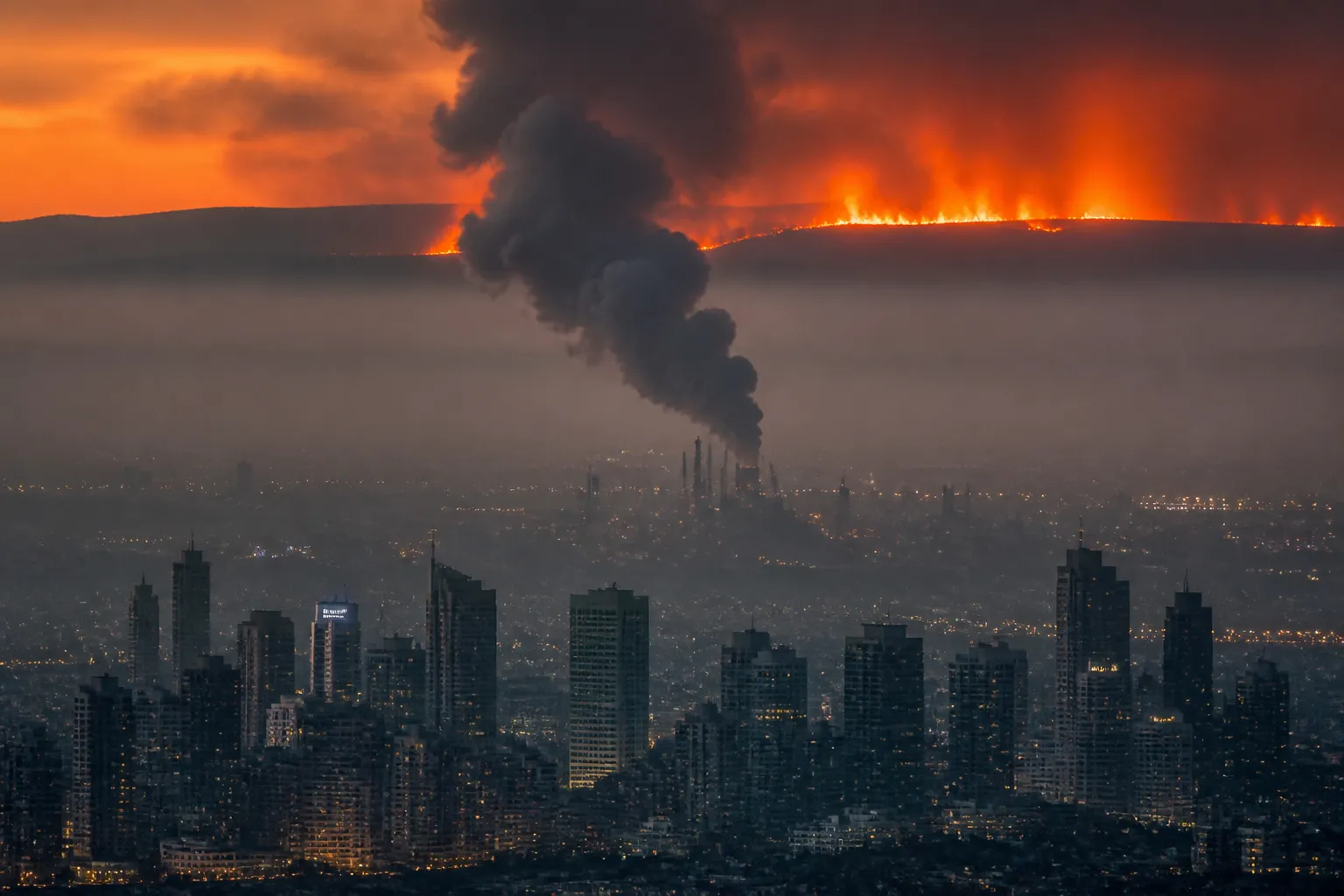
The fine particles responsible for the elevated AQI are smoke from large fires burning in Canada and parts of the United States. Satellite imagery and air‑quality models show that smoke from Canadian wildfires has drifted across the Midwest and into the St. Louis area, creating a haze that reduces visibility and raises particulate concentrations.
The Illinois Environmental Protection Agency issued an air‑quality alert for several counties in the Metro East, the region of Illinois that lies across the Mississippi River from downtown St. Louis. The alert warned that children, adults and people with asthma or other diseases should limit outdoor activity on Monday. The alert was issued after the Illinois EPA confirmed that the smoke plume was affecting air‑quality conditions in those counties.
The St. Louis situation is part of a broader pattern of smoke‑related air‑quality problems that have affected the northeastern United States over the past week. The EPA’s AirNow map shows that many cities in the region have recorded AQI values above 100, and several have reached levels that are considered unhealthy for the general public.
Public health officials emphasize that the main risk from the smoke is the fine particulate matter, which can penetrate deep into the lungs and enter the bloodstream. Sensitive populations—especially those with pre‑existing respiratory or cardiovascular conditions—are advised to stay indoors, keep windows closed, and use air‑purifying systems if available.
In response to the deteriorating air quality, state and local agencies have increased monitoring and issued advisories. The Missouri Department of Natural Resources has released daily updates on AQI values, while the Illinois EPA has coordinated with county health departments to distribute information on safe outdoor practices.
As the smoke plume continues to move, officials are monitoring the situation closely. The EPA’s AirNow system will provide real‑time updates, and the Missouri and Illinois agencies will issue further advisories if AQI values rise or if the smoke persists. Residents are encouraged to check local air‑quality reports and follow the guidance of health officials.
The current air‑quality conditions in St. Louis underscore the regional impact of Canadian wildfires and the importance of cross‑state coordination in managing public health risks associated with fine particulate pollution. The situation remains fluid, and authorities will continue to provide updates as new data become available.
The AQI value was reported by the Missouri Department of Natural Resources and is tracked in real time by the EPA’s AirNow system. An AQI of 142 indicates that fine particulate matter—particles smaller than 2.5 µm—has reached concentrations that can irritate the eyes, nose and throat and may worsen breathing problems in children, the elderly and people with asthma or other respiratory conditions.
The fine particles responsible for the elevated AQI are smoke from large fires burning in Canada and parts of the United States. Satellite imagery and air‑quality models show that smoke from Canadian wildfires has drifted across the Midwest and into the St. Louis area, creating a haze that reduces visibility and raises particulate concentrations.
The Illinois Environmental Protection Agency issued an air‑quality alert for several counties in the Metro East, the region of Illinois that lies across the Mississippi River from downtown St. Louis. The alert warned that children, adults and people with asthma or other diseases should limit outdoor activity on Monday. The alert was issued after the Illinois EPA confirmed that the smoke plume was affecting air‑quality conditions in those counties.
The St. Louis situation is part of a broader pattern of smoke‑related air‑quality problems that have affected the northeastern United States over the past week. The EPA’s AirNow map shows that many cities in the region have recorded AQI values above 100, and several have reached levels that are considered unhealthy for the general public.
Public health officials emphasize that the main risk from the smoke is the fine particulate matter, which can penetrate deep into the lungs and enter the bloodstream. Sensitive populations—especially those with pre‑existing respiratory or cardiovascular conditions—are advised to stay indoors, keep windows closed, and use air‑purifying systems if available.
In response to the deteriorating air quality, state and local agencies have increased monitoring and issued advisories. The Missouri Department of Natural Resources has released daily updates on AQI values, while the Illinois EPA has coordinated with county health departments to distribute information on safe outdoor practices.
As the smoke plume continues to move, officials are monitoring the situation closely. The EPA’s AirNow system will provide real‑time updates, and the Missouri and Illinois agencies will issue further advisories if AQI values rise or if the smoke persists. Residents are encouraged to check local air‑quality reports and follow the guidance of health officials.
The current air‑quality conditions in St. Louis underscore the regional impact of Canadian wildfires and the importance of cross‑state coordination in managing public health risks associated with fine particulate pollution. The situation remains fluid, and authorities will continue to provide updates as new data become available.