Blab News
Federal Plan Could Cut Arizonas Colorado River Water by Over 75%, State Leaders Warn of Economic Fallout
On Friday, July 31 2026, the U.S. Department of the Interior unveiled a federal plan that could slash Arizona’s Colorado River allocation by more than three‑quarters during droughts, state officials say.
The Environmental Impact Statement (EIS) outlines a "preferred alternative" that trims Arizona’s allotment by as much as 3 million acre‑feet each year, a cut that would translate into a 77 percent reduction for the state.
The 1922 Colorado River Compact splits the river’s flow between Upper Basin states—Colorado, New Mexico, Utah, and Wyoming—and Lower Basin states—Arizona, Nevada, and California. Both basins are entitled to 7.5 million acre‑feet per year, but the Compact’s interim guidelines expire at the end of 2026. When drought hits, federal authorities can order cuts for the Lower Basin, a power the Upper Basin does not possess. Because Arizona depends largely on the Central Arizona Project (CAP) to channel river water to Phoenix and Tucson, the state would bear the brunt of any reduction.
Under the preferred alternative, the Lower Basin’s overall allocation would shrink by 3 million acre‑feet a year, pushing Arizona’s cut beyond 75 percent. In contrast, a May proposal from the Lower Basin states would trim the basin’s total use by 1.25 million acre‑feet in 2027 and 2028, translating into about a 30 percent reduction for Arizona. The two options differ markedly in scale and in how the burden is shared between the basins.
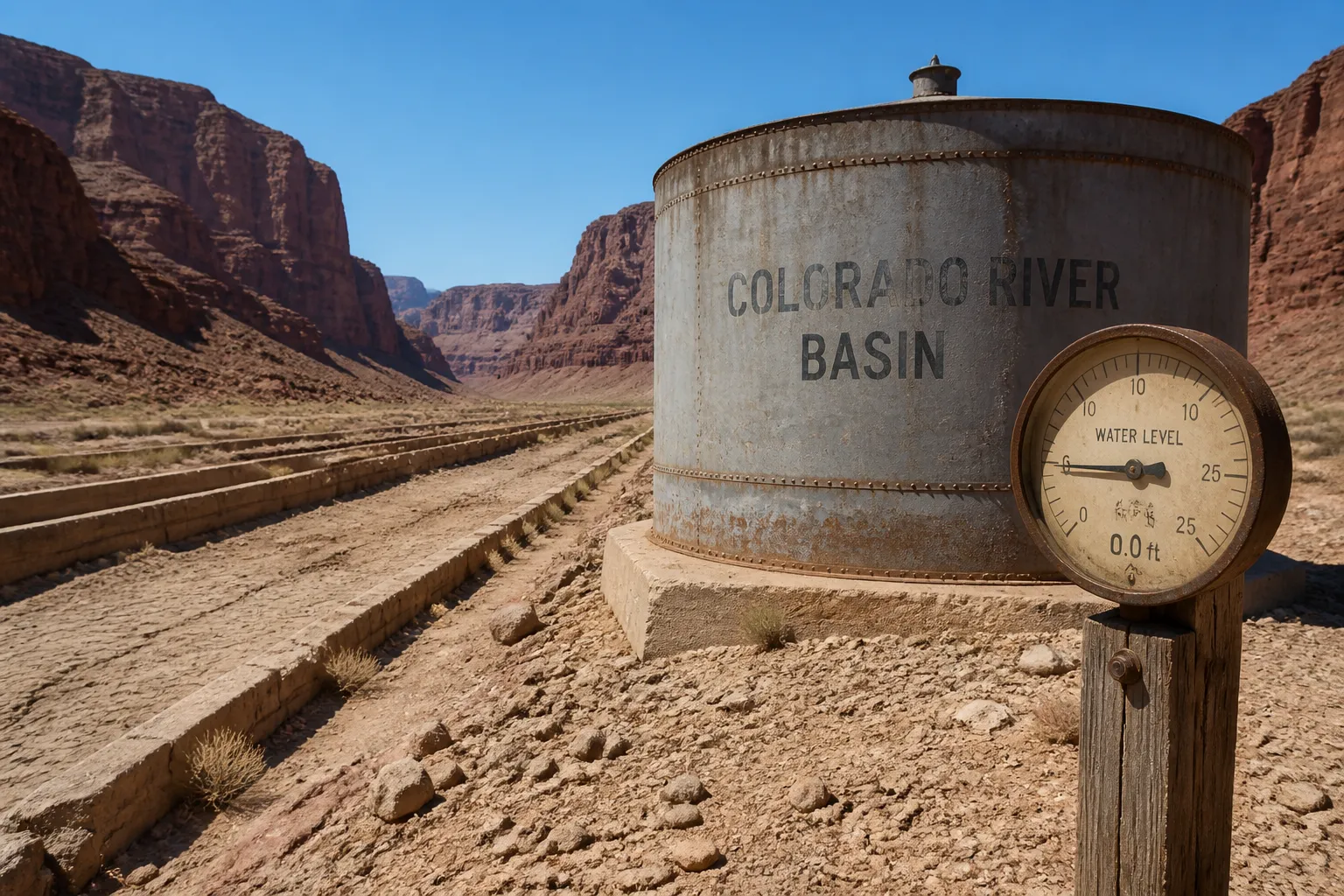
Lake Powell and Lake Mead—Colorado River’s primary storage reservoirs—now sit at their lowest combined levels since 1957. Today, Powell is 23 percent full and Mead 27 percent, and analysts warn that if Powell falls below its minimum power pool, the Glen Canyon Dam’s turbines could be shut down.
The Arizona Department of Water Resources blasted the plan, warning that the cuts would "devastate Arizona’s water users and its economy." Governor Katie Hobbs echoed that assessment, saying the proposal would ripple through the national economy and even national security, noting that Arizona supplies key agricultural goods, minerals, and semiconductors that underpin defense and the high‑tech industry.
Senate President Warren Petersen said, "Arizona recognizes the Colorado River’s dire state and is ready to contribute to a responsible solution. What we will not accept is a federal plan that safeguards some states while placing an unduly heavy burden on Arizona." Senate Democratic Whip Rosanna Gabaldón urged the federal government to adopt the Lower Basin proposal, adding that "our farmers, tribal nations, businesses, and families have worked for decades to use water responsibly."
Legal experts say Arizona is preparing for possible litigation. In March, the state retained Sullivan & Cromwell to represent it in potential lawsuits involving the Colorado River Basin states and the federal government. Water‑law attorney Riley Snow, who represents clients in both Arizona and Utah, told the Arizona Mirror that the state should focus on convincing the Trump administration to adopt the Lower Basin proposal and secure federal funding before pursuing court action.
Because the Central Arizona Project is among the newest users of Colorado River water, it stands to be the first to see cuts. Snow noted that Arizona has been tapping groundwater and boosting efficiency, with roughly 70 percent of its water allocated to agriculture. Switching to more efficient irrigation, fallowing acreage, and cultivating less water‑intensive crops could soften the blow of any reductions.
The federal government has yet to finalize the new water‑usage rules. The EIS released on Friday lists several alternatives, but officials say the definitive regulations will come later this year. In the meantime, Arizona and its Lower Basin neighbors are keeping a close eye on the process and bracing for possible cuts.
In short, the July 31 2026 plan could slash Arizona’s Colorado River allocation by over 75 percent during droughts. State officials have denounced the proposal, called for a more equitable share of cuts, and are gearing up for legal and practical measures. Final rules are due later this year, and the decision will decide whether Arizona shoulders most of the burden or shares it with Upper Basin states.
The Environmental Impact Statement (EIS) outlines a "preferred alternative" that trims Arizona’s allotment by as much as 3 million acre‑feet each year, a cut that would translate into a 77 percent reduction for the state.
The 1922 Colorado River Compact splits the river’s flow between Upper Basin states—Colorado, New Mexico, Utah, and Wyoming—and Lower Basin states—Arizona, Nevada, and California. Both basins are entitled to 7.5 million acre‑feet per year, but the Compact’s interim guidelines expire at the end of 2026. When drought hits, federal authorities can order cuts for the Lower Basin, a power the Upper Basin does not possess. Because Arizona depends largely on the Central Arizona Project (CAP) to channel river water to Phoenix and Tucson, the state would bear the brunt of any reduction.
Under the preferred alternative, the Lower Basin’s overall allocation would shrink by 3 million acre‑feet a year, pushing Arizona’s cut beyond 75 percent. In contrast, a May proposal from the Lower Basin states would trim the basin’s total use by 1.25 million acre‑feet in 2027 and 2028, translating into about a 30 percent reduction for Arizona. The two options differ markedly in scale and in how the burden is shared between the basins.
Lake Powell and Lake Mead—Colorado River’s primary storage reservoirs—now sit at their lowest combined levels since 1957. Today, Powell is 23 percent full and Mead 27 percent, and analysts warn that if Powell falls below its minimum power pool, the Glen Canyon Dam’s turbines could be shut down.
The Arizona Department of Water Resources blasted the plan, warning that the cuts would "devastate Arizona’s water users and its economy." Governor Katie Hobbs echoed that assessment, saying the proposal would ripple through the national economy and even national security, noting that Arizona supplies key agricultural goods, minerals, and semiconductors that underpin defense and the high‑tech industry.
Senate President Warren Petersen said, "Arizona recognizes the Colorado River’s dire state and is ready to contribute to a responsible solution. What we will not accept is a federal plan that safeguards some states while placing an unduly heavy burden on Arizona." Senate Democratic Whip Rosanna Gabaldón urged the federal government to adopt the Lower Basin proposal, adding that "our farmers, tribal nations, businesses, and families have worked for decades to use water responsibly."
Legal experts say Arizona is preparing for possible litigation. In March, the state retained Sullivan & Cromwell to represent it in potential lawsuits involving the Colorado River Basin states and the federal government. Water‑law attorney Riley Snow, who represents clients in both Arizona and Utah, told the Arizona Mirror that the state should focus on convincing the Trump administration to adopt the Lower Basin proposal and secure federal funding before pursuing court action.
Because the Central Arizona Project is among the newest users of Colorado River water, it stands to be the first to see cuts. Snow noted that Arizona has been tapping groundwater and boosting efficiency, with roughly 70 percent of its water allocated to agriculture. Switching to more efficient irrigation, fallowing acreage, and cultivating less water‑intensive crops could soften the blow of any reductions.
The federal government has yet to finalize the new water‑usage rules. The EIS released on Friday lists several alternatives, but officials say the definitive regulations will come later this year. In the meantime, Arizona and its Lower Basin neighbors are keeping a close eye on the process and bracing for possible cuts.
In short, the July 31 2026 plan could slash Arizona’s Colorado River allocation by over 75 percent during droughts. State officials have denounced the proposal, called for a more equitable share of cuts, and are gearing up for legal and practical measures. Final rules are due later this year, and the decision will decide whether Arizona shoulders most of the burden or shares it with Upper Basin states.