Blab News
Washington Governor Declares Statewide Emergency as Wildfires Rage Near Spokane
On Saturday, Governor Bob Ferguson declared a statewide emergency as Washington’s wildfire crisis reached a fever pitch. The proclamation, issued amid record‑setting drought, soaring temperatures, and gale‑force winds, also imposed a blanket ban on most outdoor and agricultural burning through September 30.
Ferguson cited the National Weather Service’s unprecedented “particularly dangerous situation” Red Flag Alert for Eastern Washington. He warned that the combination of dry conditions and wind‑driven fire weather posed a serious threat to life and property.
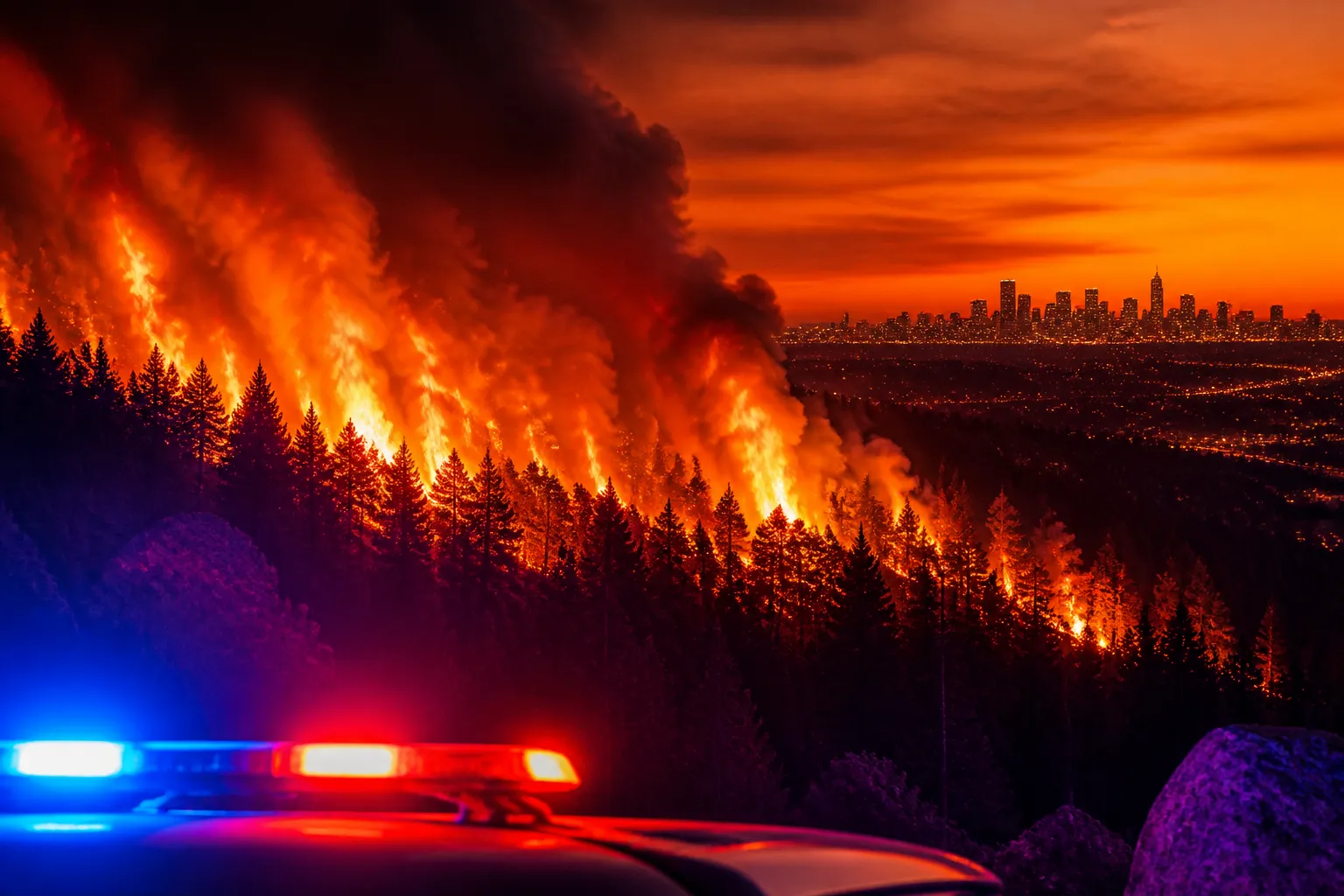
The emergency comes as the state grapples with its fourth straight drought, the longest drought streak in Washington’s history. According to the Washington Department of Natural Resources (DNR), more than 1,000 fires have burned roughly 425,000 acres this year, the largest acreage burned since 2021. Over 200,000 acres are currently burning in 12 large fires.
The most destructive blazes are the Modrite Fire and the Little Giant Fire, both near Spokane. The Modrite Fire has consumed 40,625 acres and is 22% contained, while the Little Giant Fire has grown to 28,393 acres. Officials note that high winds are expected to persist into the evening, creating volatile conditions that could accelerate spread.
Beyond the Spokane‑area fires, the state’s fire marshal has mobilized 13 task forces to tackle multiple incidents. Eight are assigned to the Sinlahekin Fire in Okanogan County and five to the Bradeen Hill Fire in Stevens County. Three strike teams are operating at the Kaiser Canyon Fire in Okanogan County and the Little Giant Fire in Chelan County, with another task force staged in Kittitas County.
The emergency proclamation also authorizes Washington to tap the Emergency Management Assistance Compact, a nationwide mutual‑aid system, and to activate additional National Guard resources. The state has already activated 110 National Guard members and 27 helicopter crew members to support firefighting efforts.
The statewide burn ban prohibits activities such as yard debris burning, trash disposal, land clearing, weed abatement, bonfires, and campfires that are not contained in fire rings or fire pits. The ban does not apply to liquid‑ or gas‑fueled stoves or grills used on nonflammable surfaces at least five feet from vegetation, permitted agricultural or silvicultural burns, or campfires contained in approved fire rings or fire pits on private property and in state, county, and municipal parks and campgrounds. Consumer fireworks remain unlawful to sell or discharge outside licensed displays.
Officials urge residents to rely on official sources for updates on wildfire response, local evacuations, and changing conditions. The DNR and fire marshal’s office have issued guidance to avoid activities that could ignite dry vegetation, inspect vehicles for fire hazards such as dragging trailer chains, and properly extinguish and dispose of smoking materials.
The emergency declaration and burn ban are designed to reduce human‑caused ignition sources while the state coordinates resources to contain the most dangerous fires. As the situation evolves, the governor’s office and the DNR will continue to monitor weather forecasts, fire behavior, and resource availability.
At present, the state remains in a heightened state of alert, with multiple large fires burning across Eastern Washington. The emergency measures provide a framework for federal and state assistance, while the burn ban and public advisories aim to protect communities from further fire risk. The next steps will involve ongoing containment efforts, potential evacuation orders, and the activation of additional National Guard and federal resources as needed.
The emergency status will remain in effect until the governor lifts it or the situation improves, with the burn ban scheduled to expire on September 30 unless extended by future proclamation.
Ferguson cited the National Weather Service’s unprecedented “particularly dangerous situation” Red Flag Alert for Eastern Washington. He warned that the combination of dry conditions and wind‑driven fire weather posed a serious threat to life and property.
The emergency comes as the state grapples with its fourth straight drought, the longest drought streak in Washington’s history. According to the Washington Department of Natural Resources (DNR), more than 1,000 fires have burned roughly 425,000 acres this year, the largest acreage burned since 2021. Over 200,000 acres are currently burning in 12 large fires.
The most destructive blazes are the Modrite Fire and the Little Giant Fire, both near Spokane. The Modrite Fire has consumed 40,625 acres and is 22% contained, while the Little Giant Fire has grown to 28,393 acres. Officials note that high winds are expected to persist into the evening, creating volatile conditions that could accelerate spread.
Beyond the Spokane‑area fires, the state’s fire marshal has mobilized 13 task forces to tackle multiple incidents. Eight are assigned to the Sinlahekin Fire in Okanogan County and five to the Bradeen Hill Fire in Stevens County. Three strike teams are operating at the Kaiser Canyon Fire in Okanogan County and the Little Giant Fire in Chelan County, with another task force staged in Kittitas County.
The emergency proclamation also authorizes Washington to tap the Emergency Management Assistance Compact, a nationwide mutual‑aid system, and to activate additional National Guard resources. The state has already activated 110 National Guard members and 27 helicopter crew members to support firefighting efforts.
The statewide burn ban prohibits activities such as yard debris burning, trash disposal, land clearing, weed abatement, bonfires, and campfires that are not contained in fire rings or fire pits. The ban does not apply to liquid‑ or gas‑fueled stoves or grills used on nonflammable surfaces at least five feet from vegetation, permitted agricultural or silvicultural burns, or campfires contained in approved fire rings or fire pits on private property and in state, county, and municipal parks and campgrounds. Consumer fireworks remain unlawful to sell or discharge outside licensed displays.
Officials urge residents to rely on official sources for updates on wildfire response, local evacuations, and changing conditions. The DNR and fire marshal’s office have issued guidance to avoid activities that could ignite dry vegetation, inspect vehicles for fire hazards such as dragging trailer chains, and properly extinguish and dispose of smoking materials.
The emergency declaration and burn ban are designed to reduce human‑caused ignition sources while the state coordinates resources to contain the most dangerous fires. As the situation evolves, the governor’s office and the DNR will continue to monitor weather forecasts, fire behavior, and resource availability.
At present, the state remains in a heightened state of alert, with multiple large fires burning across Eastern Washington. The emergency measures provide a framework for federal and state assistance, while the burn ban and public advisories aim to protect communities from further fire risk. The next steps will involve ongoing containment efforts, potential evacuation orders, and the activation of additional National Guard and federal resources as needed.
The emergency status will remain in effect until the governor lifts it or the situation improves, with the burn ban scheduled to expire on September 30 unless extended by future proclamation.