Blab News
Colombia Earthquake: Baby Pulled Alive from Rubble in Cali, International Aid Arrives
A 7.4‑magnitude quake shook Colombia on Monday, 10 August 2026, and in the city of Cali a harrowing rescue unfolded under the rubble—an infant pulled from concrete while a volunteer’s own body remained trapped.
The tremor, centered in the Chocó department, sent shock waves across western and central Colombia, collapsing buildings and sending dust into the air. In the aftermath, a video posted by resident Brian Osorio Zuluaga went viral. It shows five volunteers combing through the wreckage of a collapsed structure, one of them holding a crying baby while his lower body was still buried beneath concrete. The footage, shared on social media that night, captures the moment the infant is finally freed and the team’s collective shout of relief. Zuluaga’s caption reflected on the experience: “Today I understood, more than ever, that no one is really prepared to live through a situation like the one we are experiencing today.” He added, “A helping hand can make the difference between life and death.”
The clip also shows a survivor trapped under rubble who, in a muffled voice, says, “I’m with a baby.” The condition of both the infant and the adult rescuer remains unclear, and authorities have not released further medical details.
President Abelardo de la Espriella, who took office only days before the quake, declared a national emergency and mobilized the military, police, and civilian volunteers for search and rescue. Early government reports put the death toll at 181 and injuries at 2,595. By Wednesday, the death toll in Cali alone had risen to 216, according to local authorities. Civilian‑run databases estimate that nearly 4,000 people remain missing, and the total number of casualties across the country is expected to increase as rescue teams continue to work.
International assistance has begun to flow. The United States announced more than $15 million in aid, including emergency medical supplies and equipment. Mexican President Claudia Sheinbaum said she is prepared to send hundreds of search and health workers, tons of health supplies, and other equipment to Colombia. Salvadoran President Nayib Bukele announced that his country would dispatch two planes loaded with 100 tons of aid in the coming days. Bukele posted a message on X, stating, “Our prayers are with the families of the victims, the wounded and all the Colombian people.”
While the epicenter was in Chocó, the quake’s effects were felt in major cities such as Bogotá, Pereira, and Manizales. The Colombian National Civil Defense Agency reported extensive damage to residential and commercial buildings, and the Ministry of Housing has begun assessing structural integrity in the most affected areas. The United Nations Office for the Coordination of Humanitarian Affairs (OCHA) called for additional international support to address the humanitarian needs of displaced residents.
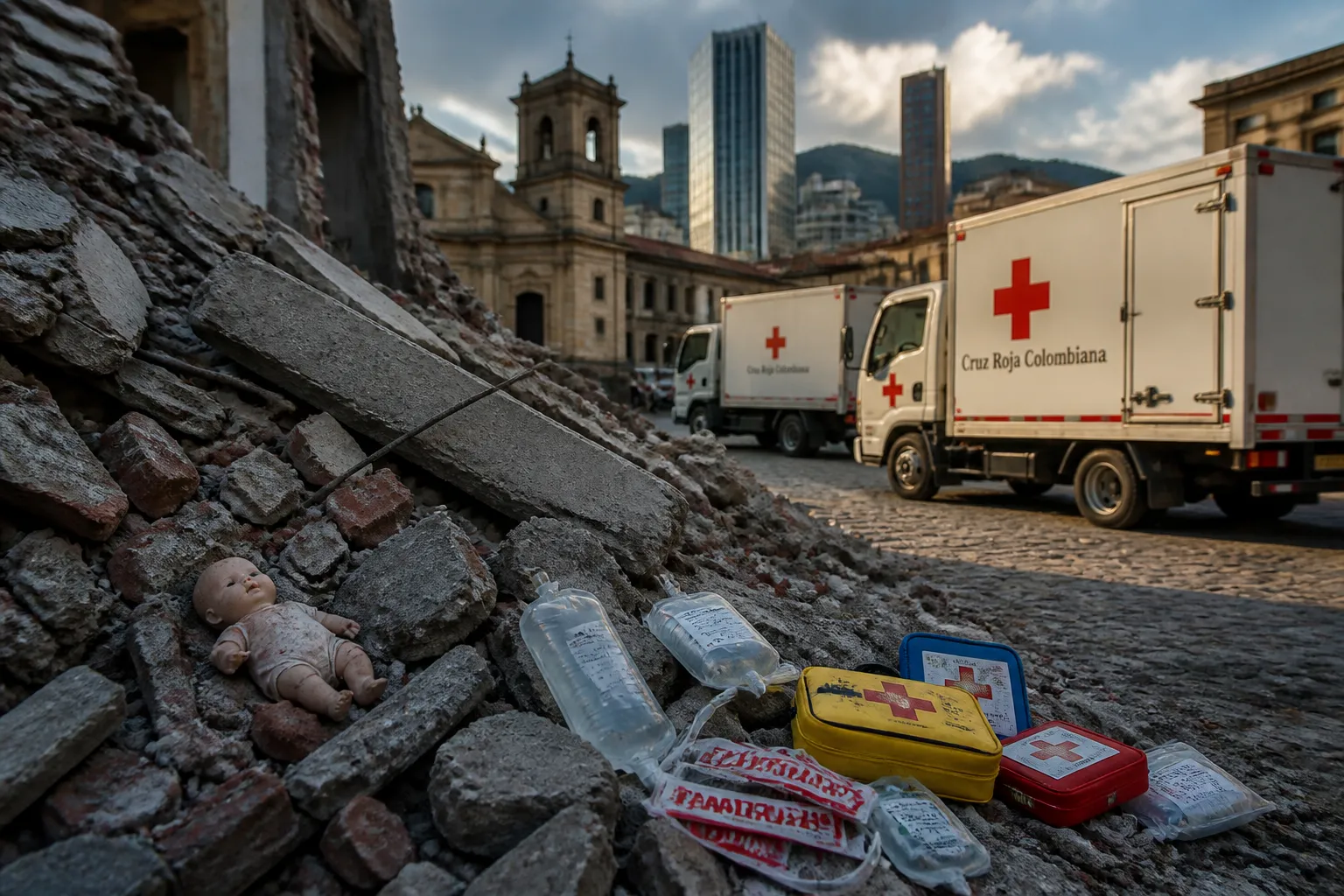
Search and rescue teams, including the Colombian Army’s Special Operations Group and the National Police, are operating around the clock in Cali and other affected cities. Volunteers from local NGOs, such as the Red Cross and community groups, have joined the effort, providing medical care and logistical support. The government has set up temporary shelters for displaced families and is coordinating with international partners to ensure adequate food, water, and medical supplies.
The rescue has highlighted local resilience and the urgency of continued search efforts. Authorities are also working to prevent secondary hazards such as landslides and structural collapses that could endanger rescue workers.
The situation remains fluid. The death toll continues to rise, and the number of missing people is still uncertain. Colombian officials have pledged to keep the public informed as new information becomes available. International aid agencies are preparing to deploy additional resources, and the government has requested further assistance from the United Nations and neighboring countries. The ongoing rescue operations, combined with the international response, underscore the collective effort required to address the humanitarian crisis triggered by the 7.4‑magnitude earthquake that struck Colombia on 10 August 2026.
The tremor, centered in the Chocó department, sent shock waves across western and central Colombia, collapsing buildings and sending dust into the air. In the aftermath, a video posted by resident Brian Osorio Zuluaga went viral. It shows five volunteers combing through the wreckage of a collapsed structure, one of them holding a crying baby while his lower body was still buried beneath concrete. The footage, shared on social media that night, captures the moment the infant is finally freed and the team’s collective shout of relief. Zuluaga’s caption reflected on the experience: “Today I understood, more than ever, that no one is really prepared to live through a situation like the one we are experiencing today.” He added, “A helping hand can make the difference between life and death.”
The clip also shows a survivor trapped under rubble who, in a muffled voice, says, “I’m with a baby.” The condition of both the infant and the adult rescuer remains unclear, and authorities have not released further medical details.
President Abelardo de la Espriella, who took office only days before the quake, declared a national emergency and mobilized the military, police, and civilian volunteers for search and rescue. Early government reports put the death toll at 181 and injuries at 2,595. By Wednesday, the death toll in Cali alone had risen to 216, according to local authorities. Civilian‑run databases estimate that nearly 4,000 people remain missing, and the total number of casualties across the country is expected to increase as rescue teams continue to work.
International assistance has begun to flow. The United States announced more than $15 million in aid, including emergency medical supplies and equipment. Mexican President Claudia Sheinbaum said she is prepared to send hundreds of search and health workers, tons of health supplies, and other equipment to Colombia. Salvadoran President Nayib Bukele announced that his country would dispatch two planes loaded with 100 tons of aid in the coming days. Bukele posted a message on X, stating, “Our prayers are with the families of the victims, the wounded and all the Colombian people.”
While the epicenter was in Chocó, the quake’s effects were felt in major cities such as Bogotá, Pereira, and Manizales. The Colombian National Civil Defense Agency reported extensive damage to residential and commercial buildings, and the Ministry of Housing has begun assessing structural integrity in the most affected areas. The United Nations Office for the Coordination of Humanitarian Affairs (OCHA) called for additional international support to address the humanitarian needs of displaced residents.
Search and rescue teams, including the Colombian Army’s Special Operations Group and the National Police, are operating around the clock in Cali and other affected cities. Volunteers from local NGOs, such as the Red Cross and community groups, have joined the effort, providing medical care and logistical support. The government has set up temporary shelters for displaced families and is coordinating with international partners to ensure adequate food, water, and medical supplies.
The rescue has highlighted local resilience and the urgency of continued search efforts. Authorities are also working to prevent secondary hazards such as landslides and structural collapses that could endanger rescue workers.
The situation remains fluid. The death toll continues to rise, and the number of missing people is still uncertain. Colombian officials have pledged to keep the public informed as new information becomes available. International aid agencies are preparing to deploy additional resources, and the government has requested further assistance from the United Nations and neighboring countries. The ongoing rescue operations, combined with the international response, underscore the collective effort required to address the humanitarian crisis triggered by the 7.4‑magnitude earthquake that struck Colombia on 10 August 2026.