Blab News
Florida Revokes State-Highway License-Plate Cameras Amid Nationwide Privacy Backlash
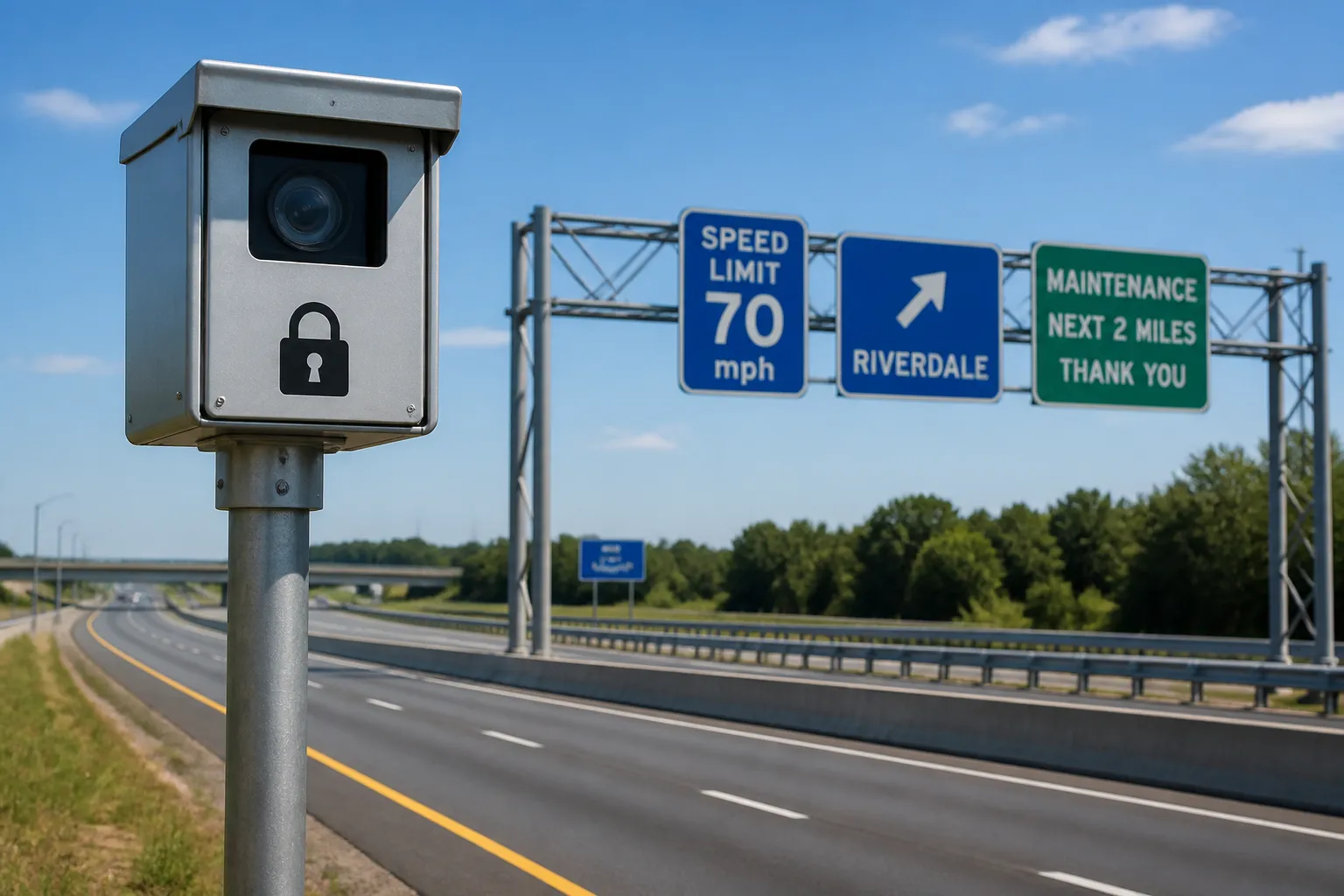
On Monday, the Florida Department of Transportation (FDOT) issued a sweeping memo that rescinded every permit for automated license‑plate readers (ALPRs) operating on state‑right‑of‑way roads. The directive demands that all devices be removed within 30 days.
FDOT’s chief operating officer, Will Watts, said the decision was driven by a rapid uptick in camera deployments and mounting reports of misuse, data‑privacy violations, and covert surveillance practices. The memo frames the revocation as a measure to "preserve Floridians’ sovereignty and quality of life." It explicitly excludes cameras on private property and on local rights‑of‑way, where 98 % of the country’s ALPRs remain installed.
The order echoes Governor Ron DeSantis’s recent remarks on the Real America’s Voice podcast. DeSantis warned, "We’re gonna clear the state right‑of‑ways. These cameras that are out there now — who’s to say they’re only doing the license plate? I think it’s capturing people in their cars. I think it’s capturing way more information than they’re letting on. And you’ve seen the abuse." The governor’s statement followed a week in which he pledged that Florida would eliminate the cameras.
Law‑enforcement agencies across the state have begun to mirror the move. The Jacksonville Sheriff’s Office announced it would discontinue the use of ALPR technology throughout Duval County "effective immediately," even as the department described the cameras as "an enormously valuable investigative tool." Duval County, which includes Jacksonville, has a population of roughly one million.
Flock Safety, the company that supplies many of the cameras, has criticized the ban. In a statement, the firm said its technology helps solve serious crimes, locate missing people, recover stolen vehicles, and support safer communities. It cited recent cases in which the system identified missing children, led to the arrest of a murder suspect, and assisted in other investigations. Flock also noted that it has reduced the default data‑retention period from one month to one week and will restrict users whose searches show abnormal activity.
The ban comes amid a national wave of scrutiny. Texas Governor Greg Abbott halted state funding for Flock cameras, and more than 100 local governments have canceled or failed to renew their ALPR contracts since the start of last year, according to the Institute for Justice, a Virginia‑based advocacy group that argues the technology is unconstitutional.
Physical attacks on the technology have also intensified. NBC News reported that 50 locations nationwide have seen Flock cameras vandalized, spray‑painted, smashed, or cut down since 2024. Some drivers have filed lawsuits against Flock and are organizing a proposed class action.
Legal concerns have added another layer of tension. A recent arrest in Kentucky saw a police officer detained after authorities said he had used the Flock system more than 2,000 times to track his ex‑girlfriend.
The FDOT memo does not address cameras on local roads or private property, but the state’s action signals a clear shift in Florida’s stance on surveillance technology. Law‑enforcement agencies will need to dismantle the devices from state highways, and local departments may now weigh whether to continue using ALPRs on their own property.
At its core, the debate pits public‑safety benefits against privacy rights. As Florida and other states reassess the use of automated license‑plate readers, the legal and technological landscape is poised to evolve. New regulations, court rulings, and public‑policy discussions will likely shape the future of vehicle‑tracking surveillance.
FDOT’s chief operating officer, Will Watts, said the decision was driven by a rapid uptick in camera deployments and mounting reports of misuse, data‑privacy violations, and covert surveillance practices. The memo frames the revocation as a measure to "preserve Floridians’ sovereignty and quality of life." It explicitly excludes cameras on private property and on local rights‑of‑way, where 98 % of the country’s ALPRs remain installed.
The order echoes Governor Ron DeSantis’s recent remarks on the Real America’s Voice podcast. DeSantis warned, "We’re gonna clear the state right‑of‑ways. These cameras that are out there now — who’s to say they’re only doing the license plate? I think it’s capturing people in their cars. I think it’s capturing way more information than they’re letting on. And you’ve seen the abuse." The governor’s statement followed a week in which he pledged that Florida would eliminate the cameras.
Law‑enforcement agencies across the state have begun to mirror the move. The Jacksonville Sheriff’s Office announced it would discontinue the use of ALPR technology throughout Duval County "effective immediately," even as the department described the cameras as "an enormously valuable investigative tool." Duval County, which includes Jacksonville, has a population of roughly one million.
Flock Safety, the company that supplies many of the cameras, has criticized the ban. In a statement, the firm said its technology helps solve serious crimes, locate missing people, recover stolen vehicles, and support safer communities. It cited recent cases in which the system identified missing children, led to the arrest of a murder suspect, and assisted in other investigations. Flock also noted that it has reduced the default data‑retention period from one month to one week and will restrict users whose searches show abnormal activity.
The ban comes amid a national wave of scrutiny. Texas Governor Greg Abbott halted state funding for Flock cameras, and more than 100 local governments have canceled or failed to renew their ALPR contracts since the start of last year, according to the Institute for Justice, a Virginia‑based advocacy group that argues the technology is unconstitutional.
Physical attacks on the technology have also intensified. NBC News reported that 50 locations nationwide have seen Flock cameras vandalized, spray‑painted, smashed, or cut down since 2024. Some drivers have filed lawsuits against Flock and are organizing a proposed class action.
Legal concerns have added another layer of tension. A recent arrest in Kentucky saw a police officer detained after authorities said he had used the Flock system more than 2,000 times to track his ex‑girlfriend.
The FDOT memo does not address cameras on local roads or private property, but the state’s action signals a clear shift in Florida’s stance on surveillance technology. Law‑enforcement agencies will need to dismantle the devices from state highways, and local departments may now weigh whether to continue using ALPRs on their own property.
At its core, the debate pits public‑safety benefits against privacy rights. As Florida and other states reassess the use of automated license‑plate readers, the legal and technological landscape is poised to evolve. New regulations, court rulings, and public‑policy discussions will likely shape the future of vehicle‑tracking surveillance.