Blab News
DHS Secretary Mullin Promotes Voter-Fraud Bill Amid Claims of Non-Citizen Voting
Markwayne Mullin, the newly confirmed Secretary of Homeland Security, said during a CNN interview that he would be willing to take extreme measures to eliminate what he calls a "nonexistent scourge" of voter fraud in the 2026 midterm elections. He told host Dana Bash that he was prepared to "throw out the Constitution" to ensure that only U.S. citizens vote, a statement he later clarified was meant as a rhetorical point.
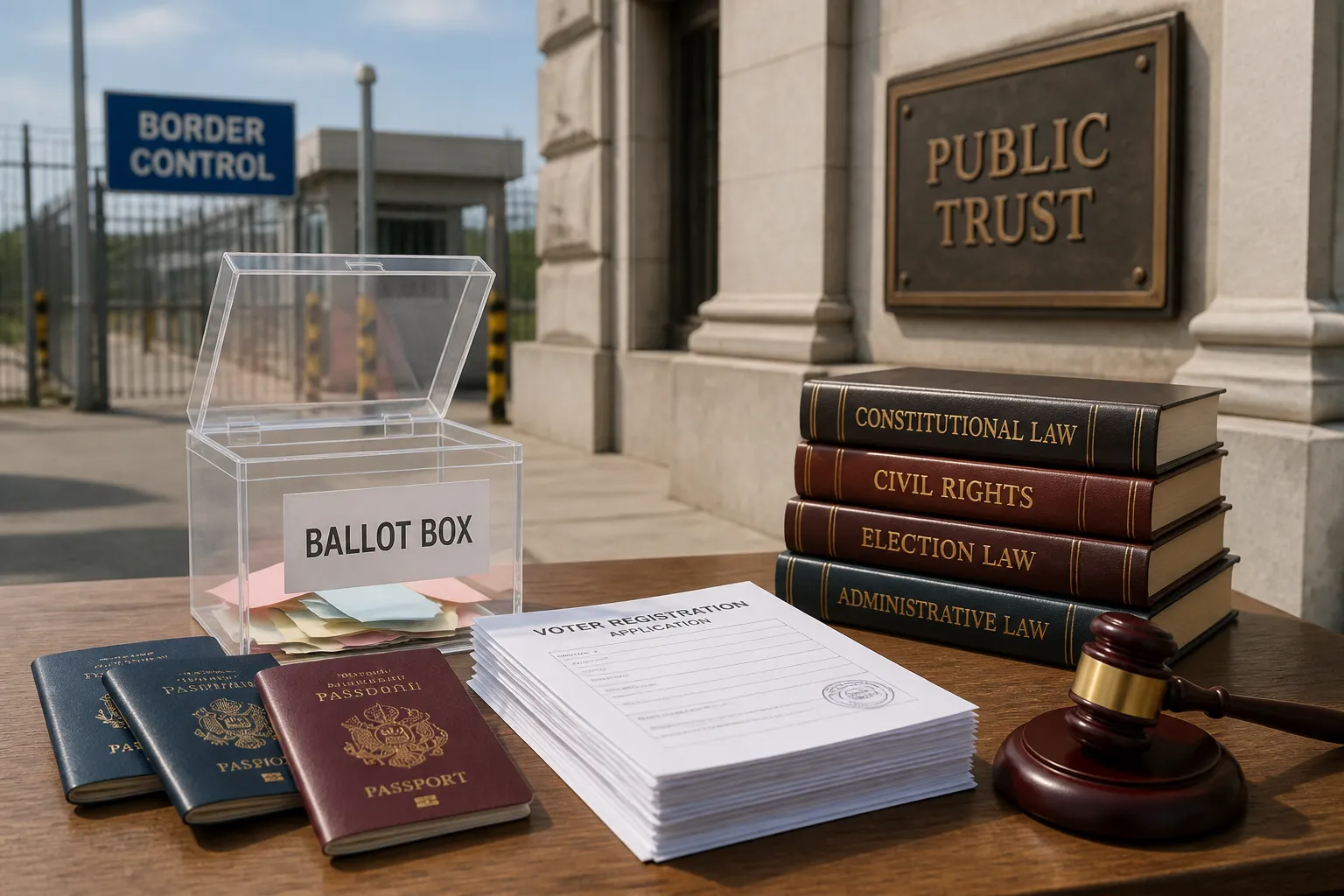
Mullin’s remarks came as part of a broader push by Republican lawmakers to pass the SAVE America Act, a House bill that would require voters to provide documentary proof of citizenship—such as a birth certificate or passport—when registering for federal elections. The act would make in‑person registration the only option for those who can produce the required documents.
The claim that non‑citizens are a significant threat to election integrity is not supported by data. According to the Heritage Foundation’s election‑fraud database, only 25 cases of non‑citizens being prosecuted for voter fraud have been recorded. The database also shows that the overall rate of voter fraud in federal elections is less than one‑tenth of a percent.
A study by the Center for Democracy and Civic Engagement found that the SAVE Act would effectively disenfranchise 21.3 million voting‑age Americans who lack ready access to documentary proof of citizenship. That number represents more than seven percent of the adult population. The study notes that many of those individuals either do not possess a birth certificate or passport or cannot obtain one quickly enough to register.
President Donald Trump has urged Republican senators to pass the SAVE Act through reconciliation, a procedural shortcut that would bypass the Democratic filibuster in the Senate. However, Senate Majority Leader Mitch McConnell and Senator Susan Collins said the idea was a non‑starter last week. The act remains a House‑passed bill that has yet to reach the Senate floor.
Mullin, who is the first member of the Cherokee Nation to serve in a U.S. cabinet, said that his comments were aimed at "making sure every vote actually counts" and that he was not suggesting that the Constitution be literally discarded. He added that he was "glad you had that look on your face," indicating that he intended to use the statement as a rhetorical device.
The debate over the SAVE Act reflects a larger national conversation about voter fraud and election security. While the Heritage Foundation’s data and the Center for Democracy and Civic Engagement’s study both point to the rarity of non‑citizen voting, the bill’s supporters argue that it would prevent even a single instance of fraud. Opponents warn that the requirement for proof of citizenship would disproportionately affect communities that already face barriers to obtaining the necessary documents.
As the 2026 midterm elections approach, the fate of the SAVE Act remains uncertain. The bill’s passage would require bipartisan cooperation in the Senate, and the current political climate suggests that such cooperation is unlikely. Meanwhile, the Department of Homeland Security, under Mullin’s leadership, continues to focus on broader homeland security priorities, including counterterrorism, cybersecurity, and immigration enforcement.
The current status of the SAVE Act is that it has passed the House and is awaiting consideration in the Senate. No further legislative action has been announced, and the bill’s future will depend on the willingness of Republican senators to engage in reconciliation or other procedural maneuvers. The debate over voter‑fraud legislation is likely to intensify as the election cycle progresses, with implications for voter registration practices and the accessibility of the electoral process for millions of Americans.
Mullin’s remarks came as part of a broader push by Republican lawmakers to pass the SAVE America Act, a House bill that would require voters to provide documentary proof of citizenship—such as a birth certificate or passport—when registering for federal elections. The act would make in‑person registration the only option for those who can produce the required documents.
The claim that non‑citizens are a significant threat to election integrity is not supported by data. According to the Heritage Foundation’s election‑fraud database, only 25 cases of non‑citizens being prosecuted for voter fraud have been recorded. The database also shows that the overall rate of voter fraud in federal elections is less than one‑tenth of a percent.
A study by the Center for Democracy and Civic Engagement found that the SAVE Act would effectively disenfranchise 21.3 million voting‑age Americans who lack ready access to documentary proof of citizenship. That number represents more than seven percent of the adult population. The study notes that many of those individuals either do not possess a birth certificate or passport or cannot obtain one quickly enough to register.
President Donald Trump has urged Republican senators to pass the SAVE Act through reconciliation, a procedural shortcut that would bypass the Democratic filibuster in the Senate. However, Senate Majority Leader Mitch McConnell and Senator Susan Collins said the idea was a non‑starter last week. The act remains a House‑passed bill that has yet to reach the Senate floor.
Mullin, who is the first member of the Cherokee Nation to serve in a U.S. cabinet, said that his comments were aimed at "making sure every vote actually counts" and that he was not suggesting that the Constitution be literally discarded. He added that he was "glad you had that look on your face," indicating that he intended to use the statement as a rhetorical device.
The debate over the SAVE Act reflects a larger national conversation about voter fraud and election security. While the Heritage Foundation’s data and the Center for Democracy and Civic Engagement’s study both point to the rarity of non‑citizen voting, the bill’s supporters argue that it would prevent even a single instance of fraud. Opponents warn that the requirement for proof of citizenship would disproportionately affect communities that already face barriers to obtaining the necessary documents.
As the 2026 midterm elections approach, the fate of the SAVE Act remains uncertain. The bill’s passage would require bipartisan cooperation in the Senate, and the current political climate suggests that such cooperation is unlikely. Meanwhile, the Department of Homeland Security, under Mullin’s leadership, continues to focus on broader homeland security priorities, including counterterrorism, cybersecurity, and immigration enforcement.
The current status of the SAVE Act is that it has passed the House and is awaiting consideration in the Senate. No further legislative action has been announced, and the bill’s future will depend on the willingness of Republican senators to engage in reconciliation or other procedural maneuvers. The debate over voter‑fraud legislation is likely to intensify as the election cycle progresses, with implications for voter registration practices and the accessibility of the electoral process for millions of Americans.