Blab News
Azerbaijan President Ilham Aliyev Opens International Conference on Peacebuilding in Shusha
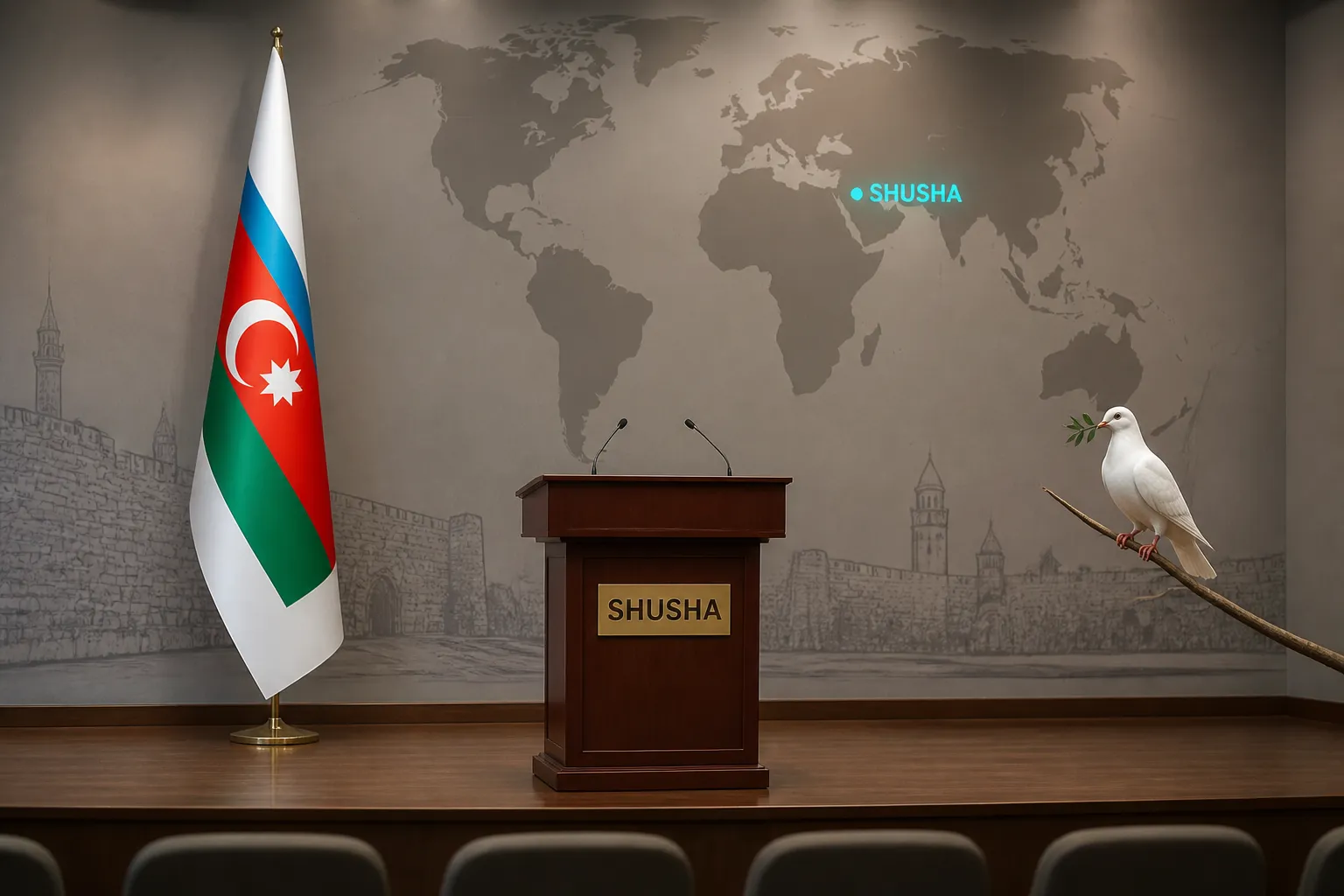
President Ilham Aliyev addressed participants of the international conference on "Regional Contribution to Global Security: Peacebuilding in the South Caucasus" held in the city of Shusha on 30 September 2026. The event, organized by the New Azerbaijan Party, has been held annually since 2022 and has grown in size each year.
In his speech Aliyev welcomed delegates from 182 countries and highlighted the conference’s role in fostering regional stability. He noted that the city of Shusha, which Azerbaijan retook in November 2020 after a three‑day battle, has become a symbol of the country’s restored sovereignty. "After regaining its independence, Azerbaijan, which has been subjected to occupation, international threats and injustice, has consistently fought to ensure its territorial integrity and the safety of its citizens," Aliyev said.
The president also referenced the 44‑day Patriotic War of 2020 and the 2023 anti‑terrorist operation, which ended the occupation of several districts and the Republic of Artsakh. "Azerbaijan fully restored its sovereignty and territorial integrity," he added, noting that the country implemented United Nations Security Council resolutions that had remained unenforced for nearly three decades.
Aliyev cited the Joint Declaration signed between Azerbaijan and Armenia in Washington in August 2025, witnessed by former U.S. President Donald Trump. The declaration, according to the president, reshaped the South Caucasus and paved the way for the Zangezur Corridor – a proposed 40‑kilometre transport link through Armenia’s Syunik province that would connect mainland Azerbaijan with its Nakhchivan exclave. "The Zangezur Corridor will become one of the key segments of the Middle Corridor," he said.
The conference also coincided with Azerbaijan’s designation of 2026 as the "Year of Urban Planning and Architecture" and the hosting of the 13th Session of the UN World Urban Forum (WUF13) in Baku. Aliyev highlighted the country’s urban development projects in the liberated Garabagh and East Zangezur economic regions, where more than 85,000 Azerbaijani citizens now live in safe and dignified conditions.
"Azerbaijan is working to transform not only the region, but also Eurasia as a whole, into a reliable space for cooperation," the president said. He emphasized the importance of the Turkic world, describing it as an influential geopolitical centre in the 21st century.
The conference was held on National Salvation Day, the anniversary of the country’s liberation, and the signing of the historic Shusha Declaration. Aliyev urged participants to continue constructive dialogue and joint activities based on national interests.
While the president’s remarks were largely celebratory, they also underscored ongoing geopolitical tensions. The Zangezur Corridor remains a contentious issue, with Armenia expressing concerns that the project deviates from the ceasefire terms and threatens its sovereignty. International observers are divided, with some viewing the corridor as a means to reduce Turkish‑Azeri influence, while others see it as a potential security risk for Armenians.
The conference concluded with a call for sustained cooperation among the attending nations. Aliyev expressed confidence that the gathering would serve as a flexible mechanism for preserving sustainable cooperation and contributing to regional peace.
The event was reported by AzerNEWS, which provided a full transcript of the president’s address. The speech was also referenced in several international media outlets covering the conference and the broader geopolitical context of the South Caucasus.
The conference’s outcomes are expected to influence future diplomatic initiatives, infrastructure projects, and regional security arrangements. Further developments will likely be announced by the Azerbaijani government and its partners in the coming months.
In his speech Aliyev welcomed delegates from 182 countries and highlighted the conference’s role in fostering regional stability. He noted that the city of Shusha, which Azerbaijan retook in November 2020 after a three‑day battle, has become a symbol of the country’s restored sovereignty. "After regaining its independence, Azerbaijan, which has been subjected to occupation, international threats and injustice, has consistently fought to ensure its territorial integrity and the safety of its citizens," Aliyev said.
The president also referenced the 44‑day Patriotic War of 2020 and the 2023 anti‑terrorist operation, which ended the occupation of several districts and the Republic of Artsakh. "Azerbaijan fully restored its sovereignty and territorial integrity," he added, noting that the country implemented United Nations Security Council resolutions that had remained unenforced for nearly three decades.
Aliyev cited the Joint Declaration signed between Azerbaijan and Armenia in Washington in August 2025, witnessed by former U.S. President Donald Trump. The declaration, according to the president, reshaped the South Caucasus and paved the way for the Zangezur Corridor – a proposed 40‑kilometre transport link through Armenia’s Syunik province that would connect mainland Azerbaijan with its Nakhchivan exclave. "The Zangezur Corridor will become one of the key segments of the Middle Corridor," he said.
The conference also coincided with Azerbaijan’s designation of 2026 as the "Year of Urban Planning and Architecture" and the hosting of the 13th Session of the UN World Urban Forum (WUF13) in Baku. Aliyev highlighted the country’s urban development projects in the liberated Garabagh and East Zangezur economic regions, where more than 85,000 Azerbaijani citizens now live in safe and dignified conditions.
"Azerbaijan is working to transform not only the region, but also Eurasia as a whole, into a reliable space for cooperation," the president said. He emphasized the importance of the Turkic world, describing it as an influential geopolitical centre in the 21st century.
The conference was held on National Salvation Day, the anniversary of the country’s liberation, and the signing of the historic Shusha Declaration. Aliyev urged participants to continue constructive dialogue and joint activities based on national interests.
While the president’s remarks were largely celebratory, they also underscored ongoing geopolitical tensions. The Zangezur Corridor remains a contentious issue, with Armenia expressing concerns that the project deviates from the ceasefire terms and threatens its sovereignty. International observers are divided, with some viewing the corridor as a means to reduce Turkish‑Azeri influence, while others see it as a potential security risk for Armenians.
The conference concluded with a call for sustained cooperation among the attending nations. Aliyev expressed confidence that the gathering would serve as a flexible mechanism for preserving sustainable cooperation and contributing to regional peace.
The event was reported by AzerNEWS, which provided a full transcript of the president’s address. The speech was also referenced in several international media outlets covering the conference and the broader geopolitical context of the South Caucasus.
The conference’s outcomes are expected to influence future diplomatic initiatives, infrastructure projects, and regional security arrangements. Further developments will likely be announced by the Azerbaijani government and its partners in the coming months.