Blab News
Canadas Long-Term Defence Procurement Struggles Highlight Need for Systemic Reform
Canada’s protracted effort to replace its aging Sea King helicopters with the CH‑148 Cyclone has become a textbook illustration of how delayed, high‑cost procurements can undermine confidence in a nation’s defence capabilities. The original 1986 plan to build a domestic helicopter aimed to modernise the Royal Canadian Navy’s fleet and stimulate a domestic aerospace industry. Yet the project was repeatedly cancelled, redesigned, and overrun, with the first Cyclone delivered in 2015 and entering operational service only in 2018.
The Cyclone saga reveals the difficulties of aligning a sophisticated, high‑technology acquisition with shifting military needs. The 28‑unit order, slated for 2009, faced continual postponements because the Sikorsky‑designed platform required modifications to meet Canadian specifications. Six helicopters entered service in June 2015, but the fleet was grounded in early 2020 after a crash that investigators traced to documentation and software problems. Cost overruns multiplied, and the aircraft’s dependence on components manufactured by Sikorsky in Connecticut limits Canada’s control over critical electronics and flight‑control systems.
In response, Prime Minister Mark Carney’s government unveiled a Defence Industrial Strategy (DIS) in February 2026 that seeks to transform Canada’s military and industrial base. The DIS proposes more than $500 billion of investment over a decade, the creation of 125,000 jobs, and a tripling of the defence industry’s size. It also commits $81.8 billion over five years to modernise the Canadian Armed Forces and $357.7 million through a Regional Defence Investment Initiative designed to build manufacturing clusters across the country.
Nonetheless, the DIS must navigate entrenched bureaucratic inertia. Canada’s procurement system requires sign‑offs from multiple agencies—including the Department of National Defence, Public Services and Procurement Canada, Treasury Board, and Innovation, Science and Economic Development Canada—before major contracts can be awarded. The newly created Defence Investment Agency, established in October 2025, intends to streamline approvals for projects above $100 million, but its focus on large contracts may sideline the small and medium‑sized enterprises that make up 92 percent of the domestic defence supply chain. Intellectual‑property protection is another weakness; a 2023 study by the Centre for International Governance Innovation found that most IP generated by Canadian universities ends up in foreign hands, often in the United States. The Cyclone’s reliance on U.S. technology further illustrates how Canadian firms can become dependent on foreign components, and U.S. International Traffic in Arms Regulations restrict Canadian exports of systems that contain U.S. technology, potentially limiting participation in multinational programmes.
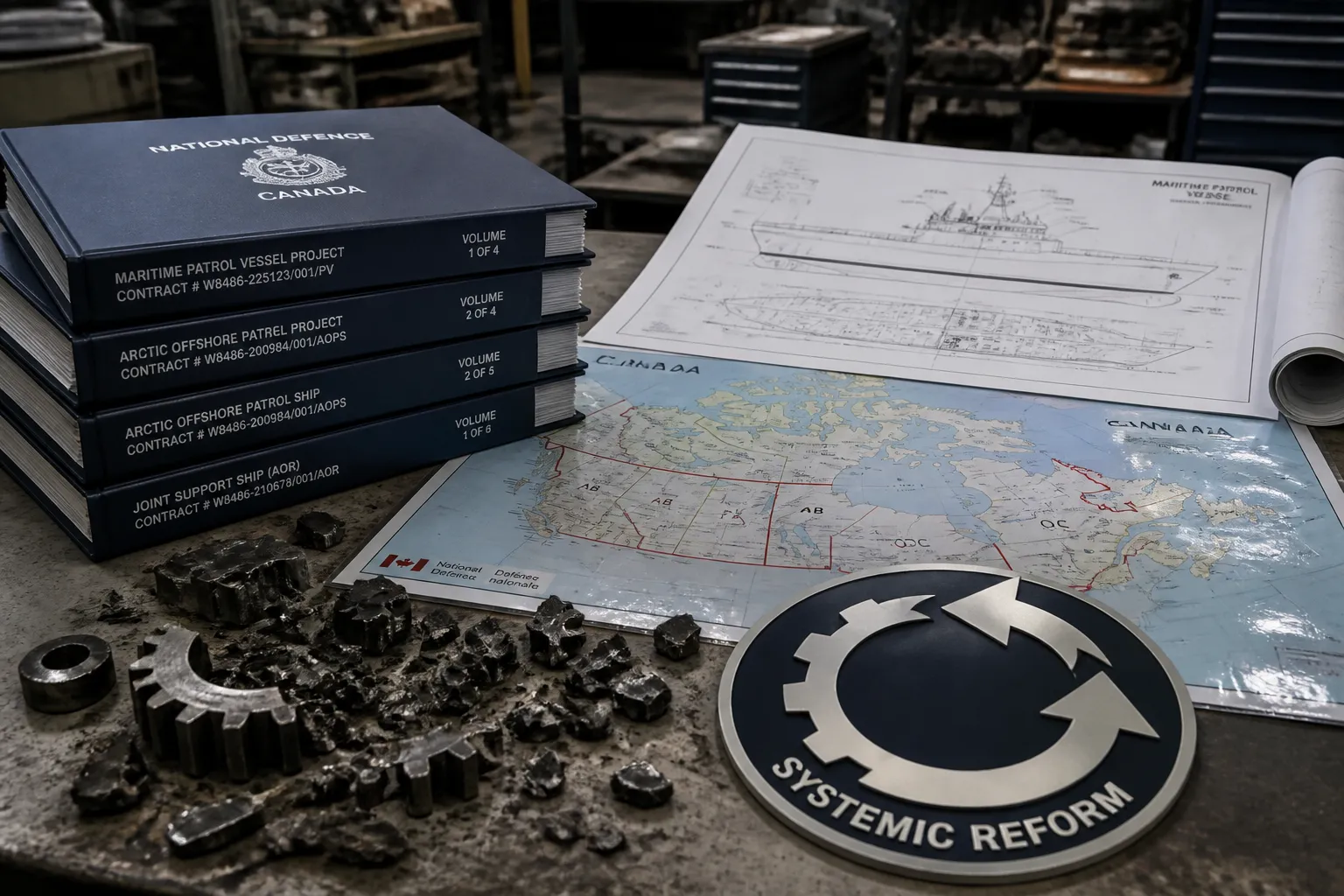
The National Shipbuilding Strategy (NSS) offers a parallel illustration of cost overruns and delays. Launched in 2010 with an initial budget of $38 billion, the NSS has now exceeded $84.5 billion by 2022, with the first of fifteen River‑class destroyers expected only in the early 2030s and the final vessels in 2049. While the NSS has created jobs and contributed to GDP, it also demonstrates how domestic production can lag behind international timelines. Public opinion surveys from late 2025 show that 65 percent of Canadians consider a strong defence essential for international influence, yet the projected 3.5 percent of GDP—roughly $150 billion annually—raises concerns about fiscal sustainability and political vulnerability. Analysts warn that without clear mechanisms to ensure investment translates into sustainable, Canadian‑controlled capabilities, the country risks repeating past mistakes.
Looking ahead, Canada’s success will hinge on fostering dual‑use technologies—drones, robotics, artificial intelligence—that can serve both civilian and military needs, securing intellectual property, and protecting against cyber threats. The government’s current emphasis on large, high‑profile contracts may not match the incremental, risk‑managed procurement that has proved effective elsewhere, such as Ukraine’s rapid cycles. In sum, Canada’s defence procurement history—from the Cyclone to the NSS—highlights systemic issues in governance, IP protection, and industrial capacity. The DIS represents a bold attempt to address these problems, but its effectiveness will depend on overcoming bureaucratic inertia, securing domestic control over critical technologies, and ensuring that public investment yields long‑term, operationally relevant capabilities.
The Cyclone saga reveals the difficulties of aligning a sophisticated, high‑technology acquisition with shifting military needs. The 28‑unit order, slated for 2009, faced continual postponements because the Sikorsky‑designed platform required modifications to meet Canadian specifications. Six helicopters entered service in June 2015, but the fleet was grounded in early 2020 after a crash that investigators traced to documentation and software problems. Cost overruns multiplied, and the aircraft’s dependence on components manufactured by Sikorsky in Connecticut limits Canada’s control over critical electronics and flight‑control systems.
In response, Prime Minister Mark Carney’s government unveiled a Defence Industrial Strategy (DIS) in February 2026 that seeks to transform Canada’s military and industrial base. The DIS proposes more than $500 billion of investment over a decade, the creation of 125,000 jobs, and a tripling of the defence industry’s size. It also commits $81.8 billion over five years to modernise the Canadian Armed Forces and $357.7 million through a Regional Defence Investment Initiative designed to build manufacturing clusters across the country.
Nonetheless, the DIS must navigate entrenched bureaucratic inertia. Canada’s procurement system requires sign‑offs from multiple agencies—including the Department of National Defence, Public Services and Procurement Canada, Treasury Board, and Innovation, Science and Economic Development Canada—before major contracts can be awarded. The newly created Defence Investment Agency, established in October 2025, intends to streamline approvals for projects above $100 million, but its focus on large contracts may sideline the small and medium‑sized enterprises that make up 92 percent of the domestic defence supply chain. Intellectual‑property protection is another weakness; a 2023 study by the Centre for International Governance Innovation found that most IP generated by Canadian universities ends up in foreign hands, often in the United States. The Cyclone’s reliance on U.S. technology further illustrates how Canadian firms can become dependent on foreign components, and U.S. International Traffic in Arms Regulations restrict Canadian exports of systems that contain U.S. technology, potentially limiting participation in multinational programmes.
The National Shipbuilding Strategy (NSS) offers a parallel illustration of cost overruns and delays. Launched in 2010 with an initial budget of $38 billion, the NSS has now exceeded $84.5 billion by 2022, with the first of fifteen River‑class destroyers expected only in the early 2030s and the final vessels in 2049. While the NSS has created jobs and contributed to GDP, it also demonstrates how domestic production can lag behind international timelines. Public opinion surveys from late 2025 show that 65 percent of Canadians consider a strong defence essential for international influence, yet the projected 3.5 percent of GDP—roughly $150 billion annually—raises concerns about fiscal sustainability and political vulnerability. Analysts warn that without clear mechanisms to ensure investment translates into sustainable, Canadian‑controlled capabilities, the country risks repeating past mistakes.
Looking ahead, Canada’s success will hinge on fostering dual‑use technologies—drones, robotics, artificial intelligence—that can serve both civilian and military needs, securing intellectual property, and protecting against cyber threats. The government’s current emphasis on large, high‑profile contracts may not match the incremental, risk‑managed procurement that has proved effective elsewhere, such as Ukraine’s rapid cycles. In sum, Canada’s defence procurement history—from the Cyclone to the NSS—highlights systemic issues in governance, IP protection, and industrial capacity. The DIS represents a bold attempt to address these problems, but its effectiveness will depend on overcoming bureaucratic inertia, securing domestic control over critical technologies, and ensuring that public investment yields long‑term, operationally relevant capabilities.