Blab News
Exeter Museum Unveils Rare Revolutionary Artifacts Ahead of New Hampshires 250th Anniversary
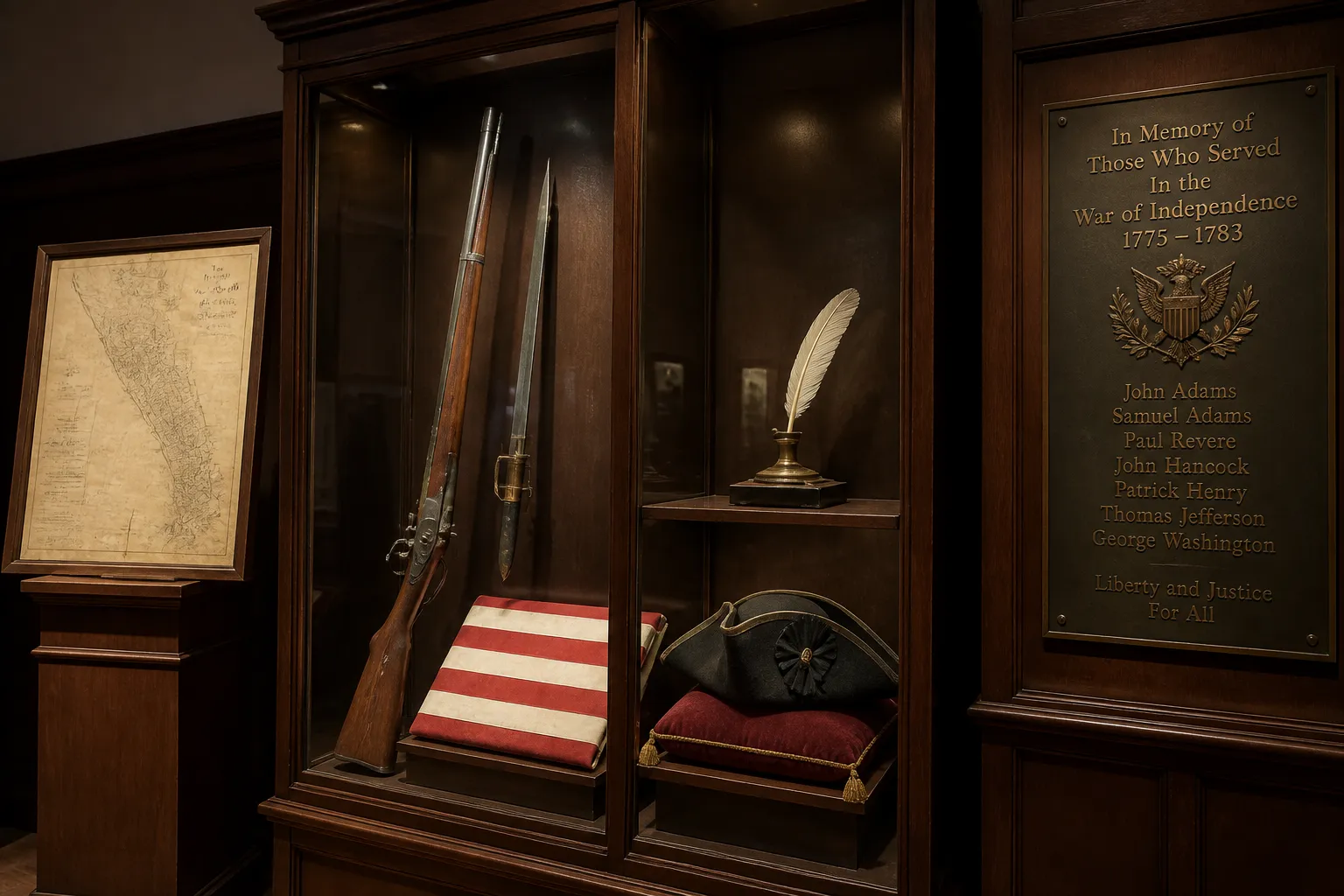
The American Independence Center, housed in Exeter’s historic Ladd‑Gilman House, has opened a new collection that sheds light on the state’s role in the American Revolution just in time for New Hampshire’s 250th‑anniversary celebrations.
The first exhibit maps the colony’s shifting seats of power. Portsmouth, the colonial capital until 1775, was abandoned when rebel leaders deposed Governor Benning Wentworth. The patriots then relocated the capital to Exeter, where they drafted New Hampshire’s first written constitution. Executive Director Joe Pace notes that the document was adopted six months before the Declaration of Independence, and its “thoroughly apologetic tone” reflects a hope that the conflict would end and the community could reunite. The constitution itself is on display.
Next, the museum turns to the colony’s distinctive currency. While the Ladd‑Gilman House served as state treasurer Nicholas Gilman’s office, it also handled the circulation of money during a period when each state issued its own paper notes. Curator Kali Kraemer explains that colonial currency was printed on parchment and featured intricate designs. Pieces dated 1773 to 1785 are on view, and Pace describes the notes as “baseball cards, if they’d been done by Tolkien.” He also points out that varying exchange rates between states contributed to the failure of the Articles of Confederation and the eventual drafting of the U.S. Constitution.
A highlight of the collection is a pristine Dunlap Broadside—the first printed copy of the Declaration of Independence. John Dunlap printed the document on the night of July 4, 1776, and copies were sent to the colonies. An attic search in 1985 uncovered a New Hampshire copy in the Ladd‑Gilman House. The museum displays a replica while the original is stored in a climate‑controlled facility; it will be on public view during the summer’s American Independence Festival.
The Center also showcases a Badge of Military Merit, the precursor to the modern Purple Heart. According to Kraemer, George Washington created the badge to honor ordinary soldiers, as other honors were reserved for officers. The small purple cloth heart is one of only two surviving examples.
Another exhibit tells the story of a brief breakfast George Washington shared with Exeter residents. Washington stopped in Exeter on November 4, 1789, during a tour of New Hampshire. The Folsom Tavern, built in 1775, hosted the former president in its large parlor, and Washington’s portrait hangs in the tavern to commemorate the visit. The museum notes that a planned parade in Exeter was canceled because Washington was tired of parades.
The American Independence Center’s displays provide a tangible link to New Hampshire’s early history and its contribution to the nation’s founding. The museum is part of the state’s broader 250th‑anniversary celebrations, which include festivals, fireworks, and educational programs across New Hampshire. The upcoming American Independence Festival will feature the original Dunlap Broadside and additional events that highlight the state’s revolutionary heritage.
The exhibits underscore how local actions—drafting a constitution, issuing currency, and honoring soldiers—played a role in the broader struggle for independence. They also illustrate the practical challenges of early American governance and the ways in which New Hampshire’s history is woven into the national narrative.
The American Independence Center invites visitors to explore these artifacts and learn how Exeter’s past continues to shape the present. The museum’s opening in 2026 aligns with the state’s celebration of 250 years of independence, offering a unique opportunity to reflect on the enduring legacy of the Revolution.
The first exhibit maps the colony’s shifting seats of power. Portsmouth, the colonial capital until 1775, was abandoned when rebel leaders deposed Governor Benning Wentworth. The patriots then relocated the capital to Exeter, where they drafted New Hampshire’s first written constitution. Executive Director Joe Pace notes that the document was adopted six months before the Declaration of Independence, and its “thoroughly apologetic tone” reflects a hope that the conflict would end and the community could reunite. The constitution itself is on display.
Next, the museum turns to the colony’s distinctive currency. While the Ladd‑Gilman House served as state treasurer Nicholas Gilman’s office, it also handled the circulation of money during a period when each state issued its own paper notes. Curator Kali Kraemer explains that colonial currency was printed on parchment and featured intricate designs. Pieces dated 1773 to 1785 are on view, and Pace describes the notes as “baseball cards, if they’d been done by Tolkien.” He also points out that varying exchange rates between states contributed to the failure of the Articles of Confederation and the eventual drafting of the U.S. Constitution.
A highlight of the collection is a pristine Dunlap Broadside—the first printed copy of the Declaration of Independence. John Dunlap printed the document on the night of July 4, 1776, and copies were sent to the colonies. An attic search in 1985 uncovered a New Hampshire copy in the Ladd‑Gilman House. The museum displays a replica while the original is stored in a climate‑controlled facility; it will be on public view during the summer’s American Independence Festival.
The Center also showcases a Badge of Military Merit, the precursor to the modern Purple Heart. According to Kraemer, George Washington created the badge to honor ordinary soldiers, as other honors were reserved for officers. The small purple cloth heart is one of only two surviving examples.
Another exhibit tells the story of a brief breakfast George Washington shared with Exeter residents. Washington stopped in Exeter on November 4, 1789, during a tour of New Hampshire. The Folsom Tavern, built in 1775, hosted the former president in its large parlor, and Washington’s portrait hangs in the tavern to commemorate the visit. The museum notes that a planned parade in Exeter was canceled because Washington was tired of parades.
The American Independence Center’s displays provide a tangible link to New Hampshire’s early history and its contribution to the nation’s founding. The museum is part of the state’s broader 250th‑anniversary celebrations, which include festivals, fireworks, and educational programs across New Hampshire. The upcoming American Independence Festival will feature the original Dunlap Broadside and additional events that highlight the state’s revolutionary heritage.
The exhibits underscore how local actions—drafting a constitution, issuing currency, and honoring soldiers—played a role in the broader struggle for independence. They also illustrate the practical challenges of early American governance and the ways in which New Hampshire’s history is woven into the national narrative.
The American Independence Center invites visitors to explore these artifacts and learn how Exeter’s past continues to shape the present. The museum’s opening in 2026 aligns with the state’s celebration of 250 years of independence, offering a unique opportunity to reflect on the enduring legacy of the Revolution.