Blab News
Rupee Gains as Oil Prices Fall After US-Iran Ceasefire
The Indian rupee surged to 94.4625 per dollar on Monday, its strongest level in seven weeks, as global oil prices slipped following the announcement of a 60‑day ceasefire between the United States and Iran.
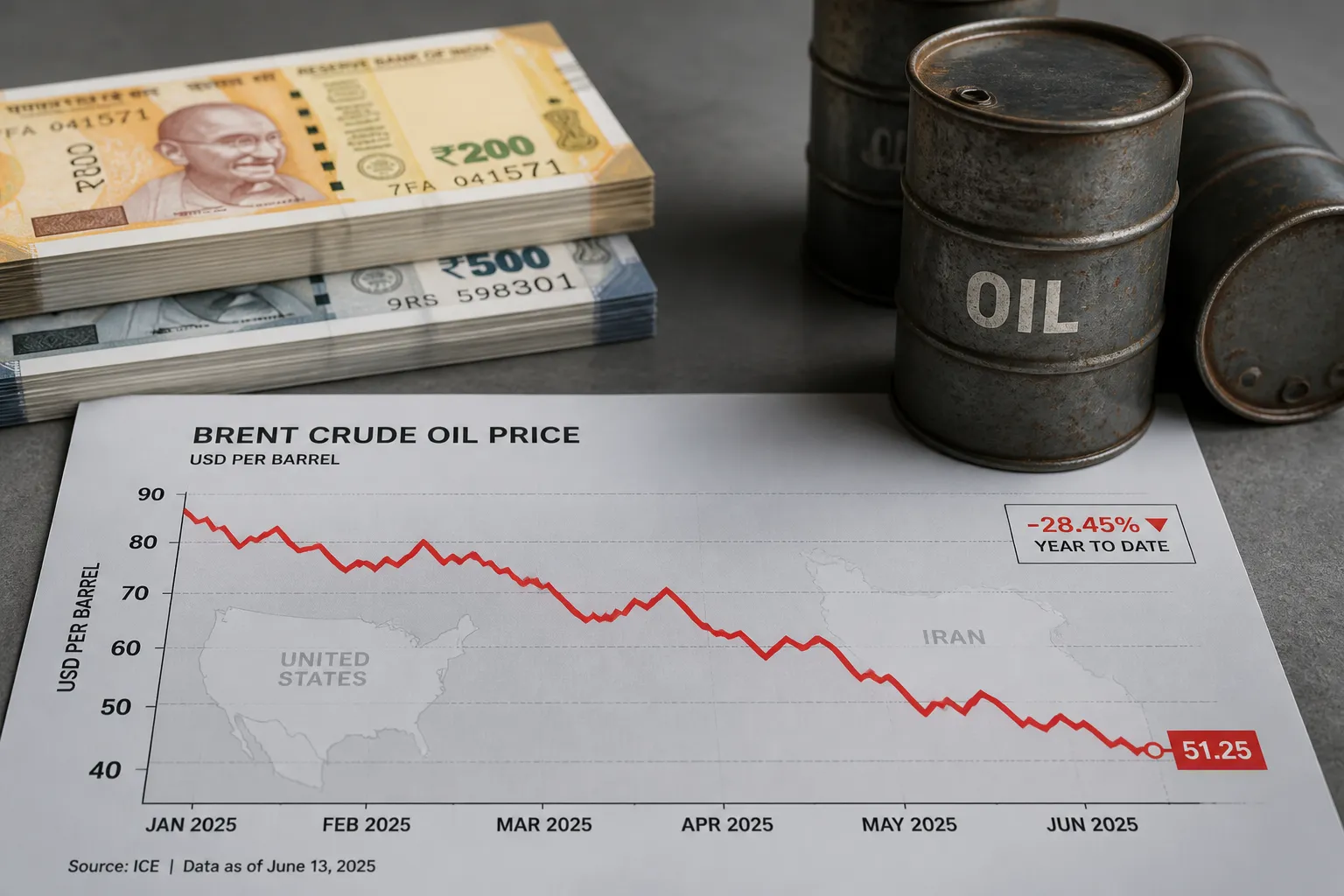
The rally came after Washington and Tehran lifted a U.S. naval blockade of the Strait of Hormuz and cleared the waterway for shipping. The deal, brokered by Pakistan and Qatar, ended hostilities in the 2026 Iran war and triggered a sharp drop in Brent and WTI crude prices. Lower oil costs have eased pressure on India’s import bill and current‑account deficit, while the Reserve Bank of India (RBI) has taken steps to attract foreign inflows.
"The rupee is now about 2.5 % above the all‑time low of roughly 97 per dollar that it hit a month ago," said Gaura Sen Gupta, economist at IDFC First Bank. "The drop in oil prices reinforces the RBI’s recent measures to support the balance of payments."
Among those measures is a foreign‑currency deposit scheme that allows banks to raise $35–40 billion from non‑resident Indians. Punjab National Bank expects the scheme to bring in that amount, according to a Reuters interview on June 8. The initiative is designed to boost liquidity, strengthen foreign‑exchange reserves and improve funding conditions.
Economists now project a modest current‑account surplus for the fiscal year, a shift from earlier forecasts of a $70 billion deficit. The rupee’s year‑to‑date loss of 5.6 % has narrowed, and it is the second‑best‑performing Asian currency on the day, trailing only the Indonesian rupiah.
"If the oil price decline continues, the rupee could appreciate toward the 93–94 level by September," Gupta added. "The RBI may also use any strength to manage its sizeable forward‑FX book and avoid excessive appreciation."
Market observers note that the rupee had been vulnerable due to high oil prices and expectations of further losses. The recent price slump, combined with the RBI’s inflow‑attracting scheme, has shifted sentiment.
The US‑Iran ceasefire is part of a broader effort to stabilize the region. The agreement, announced on June 14, 2026, included reopening the Strait of Hormuz, negotiating limits on Iran’s nuclear program, and addressing sanctions relief. While the deal is a temporary 60‑day extension, it has already had a measurable impact on global commodity markets.
India’s import bill is heavily weighted toward oil, making the rupee sensitive to price swings. Lower oil costs reduce the trade deficit and improve the current account, which in turn supports the currency. The RBI’s policy of attracting foreign deposits also adds to demand for rupees.
The rupee’s recent rally is expected to continue as long as oil prices remain subdued and the RBI’s inflow‑attracting measures stay in place. However, the central bank may limit appreciation to avoid overheating the economy and to keep its foreign‑exchange reserves in balance.
In the coming weeks, the rupee’s trajectory will depend on the durability of the oil price decline and the pace of inflows under the RBI’s deposit scheme. The RBI has not announced any policy rate changes, and market participants are watching for signals that could indicate a shift in monetary policy.
The rupee’s strengthening is a positive development for India’s trade balance and foreign‑exchange reserves, but the currency remains exposed to global commodity volatility and geopolitical developments in the Middle East.
The situation will be closely monitored as the ceasefire enters its 60‑day window and as the global oil market continues to adjust to the new geopolitical reality.
The rally came after Washington and Tehran lifted a U.S. naval blockade of the Strait of Hormuz and cleared the waterway for shipping. The deal, brokered by Pakistan and Qatar, ended hostilities in the 2026 Iran war and triggered a sharp drop in Brent and WTI crude prices. Lower oil costs have eased pressure on India’s import bill and current‑account deficit, while the Reserve Bank of India (RBI) has taken steps to attract foreign inflows.
"The rupee is now about 2.5 % above the all‑time low of roughly 97 per dollar that it hit a month ago," said Gaura Sen Gupta, economist at IDFC First Bank. "The drop in oil prices reinforces the RBI’s recent measures to support the balance of payments."
Among those measures is a foreign‑currency deposit scheme that allows banks to raise $35–40 billion from non‑resident Indians. Punjab National Bank expects the scheme to bring in that amount, according to a Reuters interview on June 8. The initiative is designed to boost liquidity, strengthen foreign‑exchange reserves and improve funding conditions.
Economists now project a modest current‑account surplus for the fiscal year, a shift from earlier forecasts of a $70 billion deficit. The rupee’s year‑to‑date loss of 5.6 % has narrowed, and it is the second‑best‑performing Asian currency on the day, trailing only the Indonesian rupiah.
"If the oil price decline continues, the rupee could appreciate toward the 93–94 level by September," Gupta added. "The RBI may also use any strength to manage its sizeable forward‑FX book and avoid excessive appreciation."
Market observers note that the rupee had been vulnerable due to high oil prices and expectations of further losses. The recent price slump, combined with the RBI’s inflow‑attracting scheme, has shifted sentiment.
The US‑Iran ceasefire is part of a broader effort to stabilize the region. The agreement, announced on June 14, 2026, included reopening the Strait of Hormuz, negotiating limits on Iran’s nuclear program, and addressing sanctions relief. While the deal is a temporary 60‑day extension, it has already had a measurable impact on global commodity markets.
India’s import bill is heavily weighted toward oil, making the rupee sensitive to price swings. Lower oil costs reduce the trade deficit and improve the current account, which in turn supports the currency. The RBI’s policy of attracting foreign deposits also adds to demand for rupees.
The rupee’s recent rally is expected to continue as long as oil prices remain subdued and the RBI’s inflow‑attracting measures stay in place. However, the central bank may limit appreciation to avoid overheating the economy and to keep its foreign‑exchange reserves in balance.
In the coming weeks, the rupee’s trajectory will depend on the durability of the oil price decline and the pace of inflows under the RBI’s deposit scheme. The RBI has not announced any policy rate changes, and market participants are watching for signals that could indicate a shift in monetary policy.
The rupee’s strengthening is a positive development for India’s trade balance and foreign‑exchange reserves, but the currency remains exposed to global commodity volatility and geopolitical developments in the Middle East.
The situation will be closely monitored as the ceasefire enters its 60‑day window and as the global oil market continues to adjust to the new geopolitical reality.