Blab News
Tokyo Protesters Rally Against Japan's Military Expansion and Constitutional Revision Plans
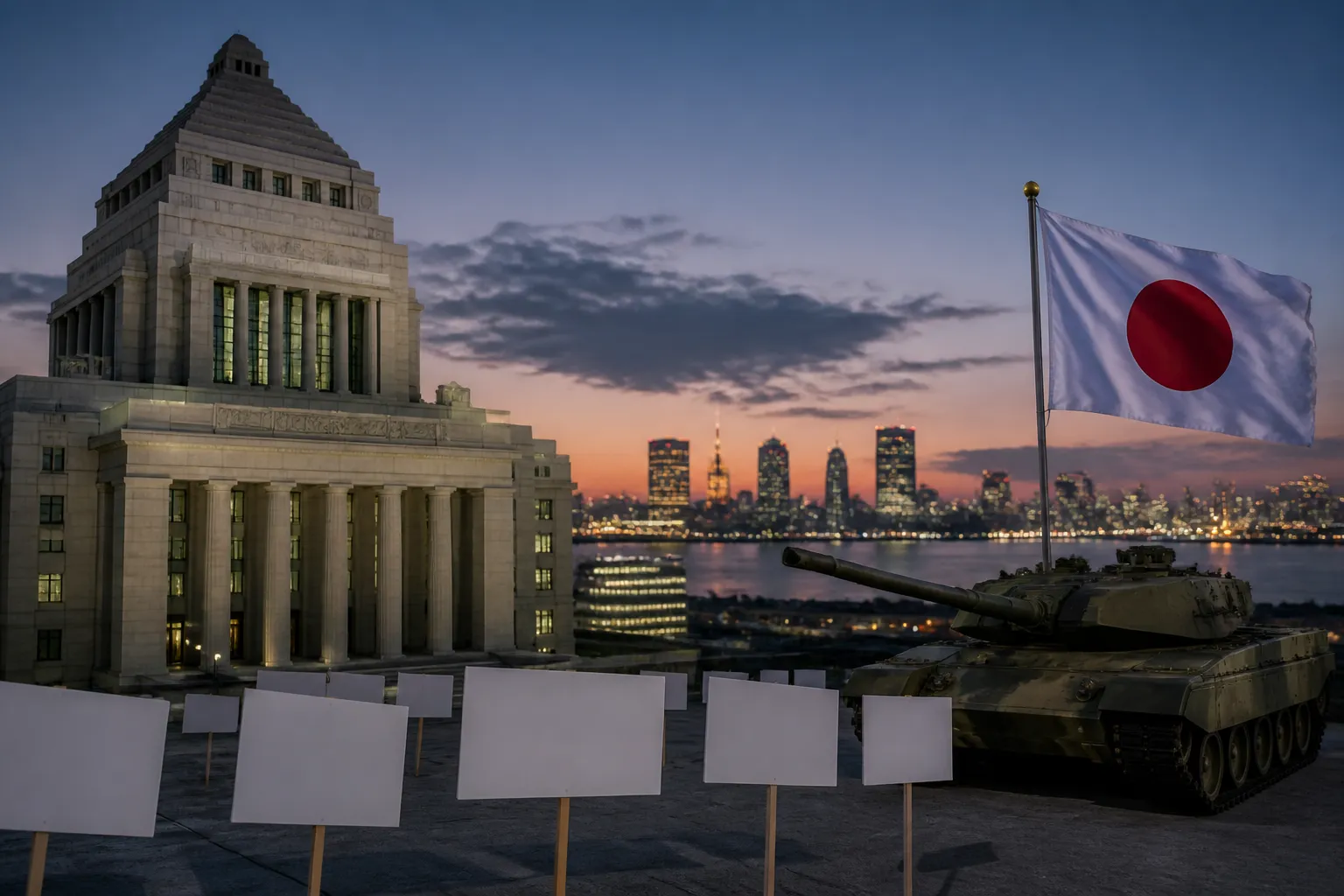
In the afternoon of Sunday, 15 June 2026, thousands of Japanese citizens gathered in central Tokyo to protest the government’s recent moves to expand the country’s military capabilities and to revise its constitution. The demonstrators, many wearing helmets emblazoned with “Anti‑war” and “Peace,” chanted slogans such as “No to constitutional revision” and “Stop war.” The protest was organized by civil‑society groups that argue the government, led by Prime Minister Sanae Takaichi and the ruling Liberal Democratic Party (LDP), is steering Japan toward a path that could lead to war.
The protestors cited several policy actions that they say undermine Japan’s post‑war pacifist tradition. The government has continued to strengthen the Japan‑U.S. security alliance, expanded the Self‑Defense Forces (SDF), and accelerated a push toward remilitarization. According to the organizers, these steps could erode the constitutional guarantee that Japan will not maintain war potential. The LDP approved a draft proposal on 9 June to revise the country’s three key security documents, a move that includes further increases in defense spending and a call to raise the manning rate of SDF reserve personnel. The proposal also seeks to broaden the scope of the SDF to include space operations, a change that was announced in a recent government statement.
Kashimura, a protester who spoke to Xinhua, said that rising prices, increasing tax burdens, and growing social‑security spending are adding pressure on ordinary citizens. He added that the government is also pushing for legislation that would restrict freedom of expression and suppress anti‑war voices. “People will lose the space to express themselves freely,” Kashimura said. Junko Kaji, another demonstrator, said that there is little meaningful opposition within the Japanese parliament and that war‑related bills are being passed one after another. “Today, large numbers of workers and ordinary citizens have gathered around the Diet. Only by bringing down the Takaichi administration through public opposition can war be prevented,” she said.
The protest comes amid a broader debate over Japan’s constitutional revision. Article 9 of the Constitution, adopted in 1947, renounces war and prohibits the maintenance of armed forces. Since the end of the Cold War, the Japanese government has repeatedly argued that the SDF is a defensive force and that Article 9 can be interpreted to allow collective self‑defense. In 2015, legislation was passed that enabled the SDF to assist an allied country under attack. Critics say that the current push to formalize the status of the SDF and to expand its capabilities is a step toward a conventional military that could be used in offensive operations.
The LDP has long supported increased defense spending and a closer alliance with the United States. Prime Minister Takaichi, who became LDP president in October 2025, has pledged to accelerate Japan’s military buildup amid rising tensions with China, North Korea, and Russia. The government’s recent policy documents also outline a plan to strengthen the SDF’s presence in Okinawa and to enhance its operational reach in the Indo‑Pacific region. These developments have sparked widespread public concern, with many citizens fearing that Japan could become entangled in future conflicts.
The protestors’ demands include a halt to the revision of the security documents, a return to the original interpretation of Article 9, and the protection of civil liberties such as freedom of expression. The organizers also called for greater transparency in the government’s security policy and for a public debate that includes diverse voices. The protest was peaceful, and no arrests were reported. Police officers were present in the area but did not intervene.
As the government moves forward with its security agenda, the public’s reaction remains a key factor in shaping Japan’s future. The LDP’s recent victory in the 2026 general election gave it a majority in the House of Representatives, but the opposition parties and civil‑society groups continue to voice concerns about the direction of national security policy. The Japanese public will likely keep a close eye on the next steps the government takes, especially as the country prepares to host a series of international security talks in the coming months.
The protest in Tokyo is part of a series of demonstrations across the country that have highlighted the tension between Japan’s pacifist constitution and the perceived need for a stronger defense posture. Whether the government will heed the calls for restraint remains to be seen, but the voices of ordinary citizens have added a new dimension to the debate over Japan’s role in a rapidly changing regional security environment.
The protestors cited several policy actions that they say undermine Japan’s post‑war pacifist tradition. The government has continued to strengthen the Japan‑U.S. security alliance, expanded the Self‑Defense Forces (SDF), and accelerated a push toward remilitarization. According to the organizers, these steps could erode the constitutional guarantee that Japan will not maintain war potential. The LDP approved a draft proposal on 9 June to revise the country’s three key security documents, a move that includes further increases in defense spending and a call to raise the manning rate of SDF reserve personnel. The proposal also seeks to broaden the scope of the SDF to include space operations, a change that was announced in a recent government statement.
Kashimura, a protester who spoke to Xinhua, said that rising prices, increasing tax burdens, and growing social‑security spending are adding pressure on ordinary citizens. He added that the government is also pushing for legislation that would restrict freedom of expression and suppress anti‑war voices. “People will lose the space to express themselves freely,” Kashimura said. Junko Kaji, another demonstrator, said that there is little meaningful opposition within the Japanese parliament and that war‑related bills are being passed one after another. “Today, large numbers of workers and ordinary citizens have gathered around the Diet. Only by bringing down the Takaichi administration through public opposition can war be prevented,” she said.
The protest comes amid a broader debate over Japan’s constitutional revision. Article 9 of the Constitution, adopted in 1947, renounces war and prohibits the maintenance of armed forces. Since the end of the Cold War, the Japanese government has repeatedly argued that the SDF is a defensive force and that Article 9 can be interpreted to allow collective self‑defense. In 2015, legislation was passed that enabled the SDF to assist an allied country under attack. Critics say that the current push to formalize the status of the SDF and to expand its capabilities is a step toward a conventional military that could be used in offensive operations.
The LDP has long supported increased defense spending and a closer alliance with the United States. Prime Minister Takaichi, who became LDP president in October 2025, has pledged to accelerate Japan’s military buildup amid rising tensions with China, North Korea, and Russia. The government’s recent policy documents also outline a plan to strengthen the SDF’s presence in Okinawa and to enhance its operational reach in the Indo‑Pacific region. These developments have sparked widespread public concern, with many citizens fearing that Japan could become entangled in future conflicts.
The protestors’ demands include a halt to the revision of the security documents, a return to the original interpretation of Article 9, and the protection of civil liberties such as freedom of expression. The organizers also called for greater transparency in the government’s security policy and for a public debate that includes diverse voices. The protest was peaceful, and no arrests were reported. Police officers were present in the area but did not intervene.
As the government moves forward with its security agenda, the public’s reaction remains a key factor in shaping Japan’s future. The LDP’s recent victory in the 2026 general election gave it a majority in the House of Representatives, but the opposition parties and civil‑society groups continue to voice concerns about the direction of national security policy. The Japanese public will likely keep a close eye on the next steps the government takes, especially as the country prepares to host a series of international security talks in the coming months.
The protest in Tokyo is part of a series of demonstrations across the country that have highlighted the tension between Japan’s pacifist constitution and the perceived need for a stronger defense posture. Whether the government will heed the calls for restraint remains to be seen, but the voices of ordinary citizens have added a new dimension to the debate over Japan’s role in a rapidly changing regional security environment.