Blab News
Trump Celebrates Iran Deal While Russia Launches Overnight Attack on Kyiv
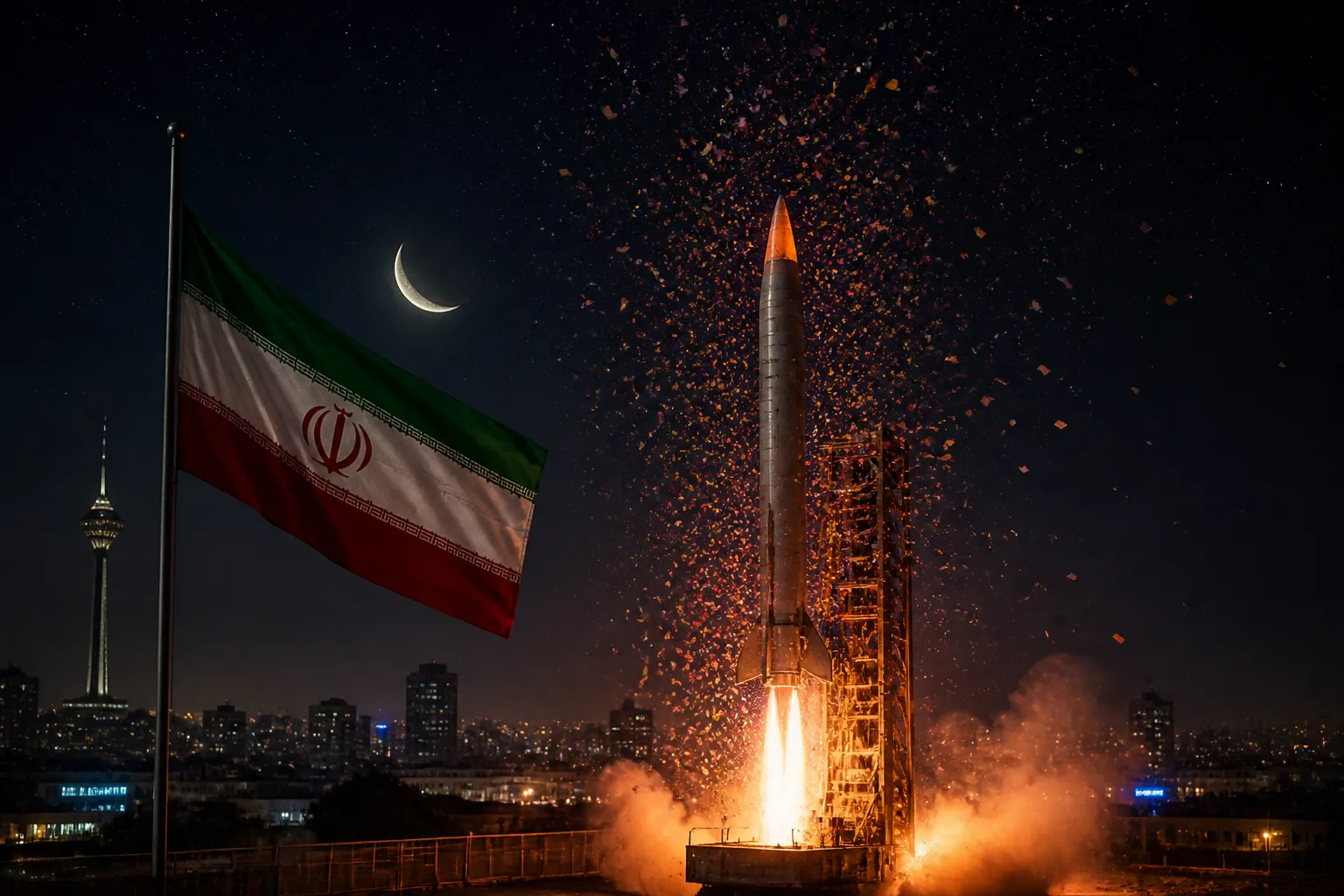
On June 14, a quiet post on Truth Social by former President Donald Trump sent ripples across the globe: the United States and Iran had reached a peace agreement that would, according to Trump, end the war between the two nations. The deal—mediated by Pakistan and Qatar—reopens the Strait of Hormuz, lifts the U.S. naval blockade that had been in place for months, and opens a 60‑day window for further talks on Iran’s nuclear program.
The same day, Russian forces carried out a massive overnight strike on Ukrainian cities. Ukrainian authorities reported that the attack began Sunday night and continued into Monday morning. Russian air power launched 70 missiles and 611 drones, of which Ukraine’s air defenses intercepted 50 missiles and 582 drones. The assault killed five rescue workers in Kharkiv and four people in Kyiv, and caused extensive damage to residential towers and other infrastructure.
The most visible wreckage appeared at the Kyiv‑Pechersk Lavra, a UNESCO World Heritage site and one of the city’s most prominent religious landmarks. The complex, which includes the Dormition Cathedral, suffered a direct hit that set the roof on fire. Epiphanius I, head of the Orthodox Church of Ukraine, said the roof of the Dormition Cathedral had caught fire and condemned the attack as “another Russian crime against humanity, against history and against Christianity.” Tymur Tkachenko, head of Kyiv’s military administration, said the strike caused extensive damage at the monastery and claimed it had been a deliberate decision by Moscow.
Ukrainian President Volodymyr Zelensky also condemned the attack. In a statement, Zelensky called the strike “one of Russia’s gravest crimes against Christian culture.” He urged Western allies to increase sanctions and pressure on Moscow and to provide more assistance for Ukraine’s air‑defense systems, especially anti‑missile capabilities. The assault came hours after Trump spoke Sunday with Russian President Vladimir Putin and Zelensky on his 80th birthday.
The Kyiv strike was part of a broader pattern of Russian attacks on Ukrainian cities. In addition to the Lavra, several other cities were hit, and 140,000 residents were left without electricity. In Kharkiv, the second‑largest city in Ukraine, five rescue workers were killed in a second hit at the same location, and five others were wounded. Russian officials said the strike targeted military industry sites and air bases in Kyiv, Kharkiv and Dnipro, and claimed all the attacks were successful.
Ukraine has responded by launching more drone attacks deep inside Russian territory, targeting oil and energy facilities. Recent strikes have caused fuel shortages in several Russian regions, especially in Crimea, which Russia annexed in 2014. The Ukrainian government has also targeted bridges leading to Crimea and reported a drone attack on the industrial city of Tula, where three people were killed and three wounded.
These twin developments illustrate the complex geopolitical landscape in which Trump’s administration is operating. While the president has celebrated a diplomatic breakthrough with Iran, the war with Russia continues unabated, and the conflict in Ukraine remains a central focus for U.S. foreign policy. The upcoming G7 summit in France will bring together leaders from the United States, United Kingdom, France, Germany, Italy, Canada, Japan and the European Union to discuss sanctions, aid for Ukraine and broader security issues.
At present, the U.S. and Iran have signed a memorandum of understanding that temporarily halts hostilities, but the long‑term status of the agreement remains uncertain. In Ukraine, the war is in its fifth year, with Russian forces occupying roughly 20 % of the country. The Russian attack on Kyiv and Kharkiv underscores that the conflict is still active, and further developments are expected as both sides continue to engage in military and diplomatic actions.
The situation remains fluid. U.S. officials are monitoring the impact of the Iran deal on regional stability, while Ukrainian authorities are assessing the damage to cultural heritage sites and civilian infrastructure. The G7 summit will likely address the need for additional sanctions and military support for Ukraine, and the U.S. will continue to evaluate its role in both the Middle East and Eastern European security.
The same day, Russian forces carried out a massive overnight strike on Ukrainian cities. Ukrainian authorities reported that the attack began Sunday night and continued into Monday morning. Russian air power launched 70 missiles and 611 drones, of which Ukraine’s air defenses intercepted 50 missiles and 582 drones. The assault killed five rescue workers in Kharkiv and four people in Kyiv, and caused extensive damage to residential towers and other infrastructure.
The most visible wreckage appeared at the Kyiv‑Pechersk Lavra, a UNESCO World Heritage site and one of the city’s most prominent religious landmarks. The complex, which includes the Dormition Cathedral, suffered a direct hit that set the roof on fire. Epiphanius I, head of the Orthodox Church of Ukraine, said the roof of the Dormition Cathedral had caught fire and condemned the attack as “another Russian crime against humanity, against history and against Christianity.” Tymur Tkachenko, head of Kyiv’s military administration, said the strike caused extensive damage at the monastery and claimed it had been a deliberate decision by Moscow.
Ukrainian President Volodymyr Zelensky also condemned the attack. In a statement, Zelensky called the strike “one of Russia’s gravest crimes against Christian culture.” He urged Western allies to increase sanctions and pressure on Moscow and to provide more assistance for Ukraine’s air‑defense systems, especially anti‑missile capabilities. The assault came hours after Trump spoke Sunday with Russian President Vladimir Putin and Zelensky on his 80th birthday.
The Kyiv strike was part of a broader pattern of Russian attacks on Ukrainian cities. In addition to the Lavra, several other cities were hit, and 140,000 residents were left without electricity. In Kharkiv, the second‑largest city in Ukraine, five rescue workers were killed in a second hit at the same location, and five others were wounded. Russian officials said the strike targeted military industry sites and air bases in Kyiv, Kharkiv and Dnipro, and claimed all the attacks were successful.
Ukraine has responded by launching more drone attacks deep inside Russian territory, targeting oil and energy facilities. Recent strikes have caused fuel shortages in several Russian regions, especially in Crimea, which Russia annexed in 2014. The Ukrainian government has also targeted bridges leading to Crimea and reported a drone attack on the industrial city of Tula, where three people were killed and three wounded.
These twin developments illustrate the complex geopolitical landscape in which Trump’s administration is operating. While the president has celebrated a diplomatic breakthrough with Iran, the war with Russia continues unabated, and the conflict in Ukraine remains a central focus for U.S. foreign policy. The upcoming G7 summit in France will bring together leaders from the United States, United Kingdom, France, Germany, Italy, Canada, Japan and the European Union to discuss sanctions, aid for Ukraine and broader security issues.
At present, the U.S. and Iran have signed a memorandum of understanding that temporarily halts hostilities, but the long‑term status of the agreement remains uncertain. In Ukraine, the war is in its fifth year, with Russian forces occupying roughly 20 % of the country. The Russian attack on Kyiv and Kharkiv underscores that the conflict is still active, and further developments are expected as both sides continue to engage in military and diplomatic actions.
The situation remains fluid. U.S. officials are monitoring the impact of the Iran deal on regional stability, while Ukrainian authorities are assessing the damage to cultural heritage sites and civilian infrastructure. The G7 summit will likely address the need for additional sanctions and military support for Ukraine, and the U.S. will continue to evaluate its role in both the Middle East and Eastern European security.