Blab News
Alberta Premier to Announce Fuel Tax Adjustment Amid Rising Gas Prices
Gasoline pumps in Edmonton have been climbing faster than the price of a cup of coffee. By the time Premier Danielle Smith steps onto the podium later today, Albertans will be watching closely to see if a new fuel‑tax adjustment will finally ease the weight of rising fuel costs.
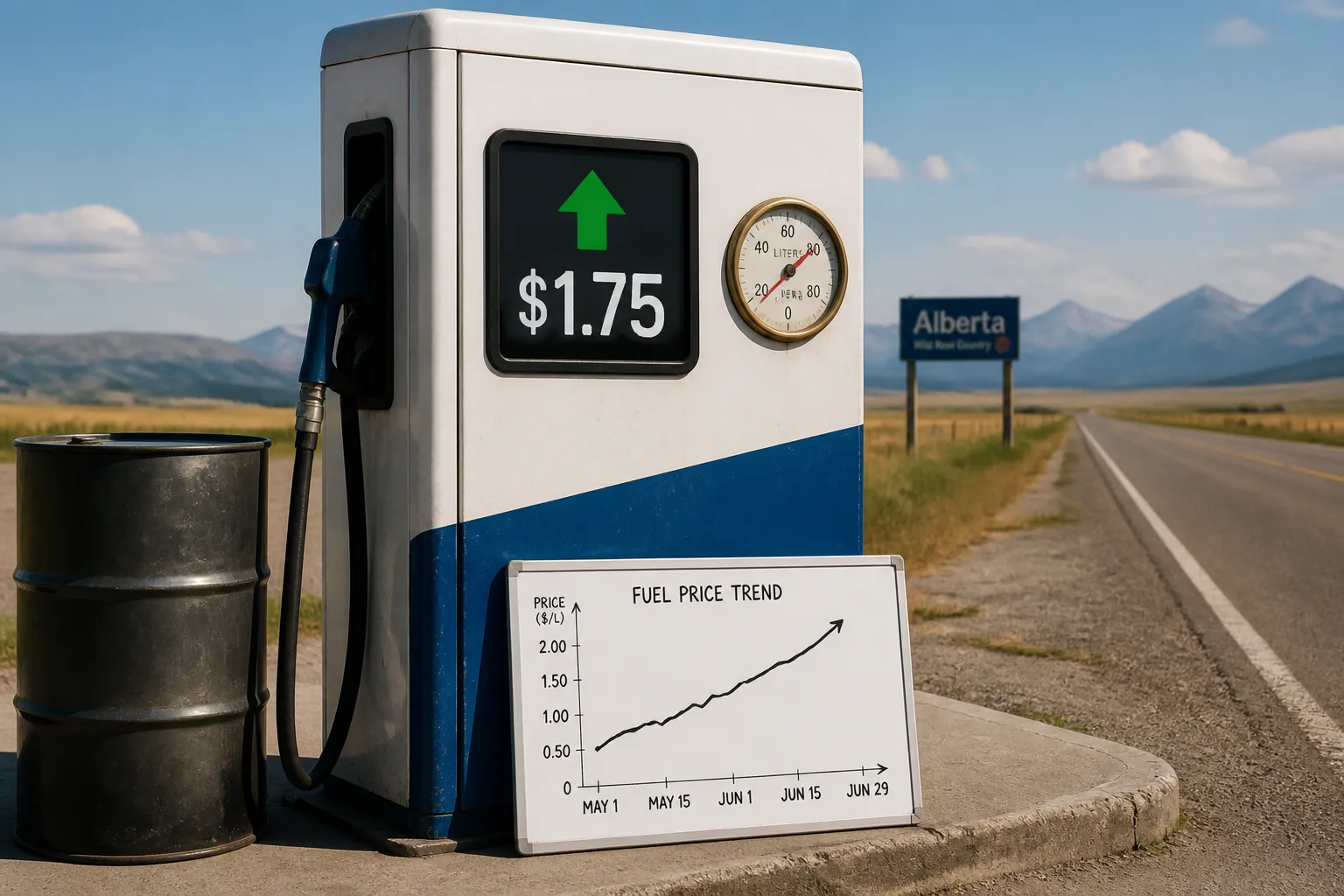
The announcement comes on the heels of a sharp spike in North American gasoline prices that began when the U.S.–Iran conflict erupted on February 28, 2026. Disruptions in the Strait of Hormuz sent Brent crude over $120 per barrel, sending gasoline on the province’s pumps to more than $4.50 per gallon—an inflationary level not seen since the 1970s energy crisis. Alberta’s stations have mirrored this trend, with average pump prices up roughly 15% since the war’s onset.
Alberta’s economy, long tied to the oil and gas sector, has felt the dual pressure of a high‑price windfall and a looming budget shortfall. The 2026 budget, released in late February, projects a $9.4 billion deficit for the 2026–27 fiscal year. The shortfall stems largely from a sharp decline in oil prices that averaged $60.50 per barrel in 2026, down from $100 in 2024. While higher oil prices have temporarily boosted provincial royalties and tax receipts, the revenue contraction before the conflict and unchanged spending on health, education, and infrastructure leave the budget in the red.
To address the gap, the government will rely on a mix of debt and future tax adjustments. The budget already earmarks $1.9 billion for health spending and a $28.3 billion capital plan, but officials say the shortfall will be financed through a combination of borrowing and incremental changes to the tax structure.
The United Conservative Party (UCP) has defended its sliding‑scale gasoline‑tax formula, which links the provincial tax rate to the price of crude oil. Under the current arrangement, the tax is lowered when oil prices fall below a set threshold and increased when they rise above it. The party argues that this mechanism keeps Alberta’s fuel tax competitive with neighbouring provinces while protecting the province’s revenue base. According to UCP officials, the tax could be lowered from July 1, 2026, if oil prices remain below the threshold specified in the budget.
The Alberta New Democratic Party (NDP) has called for an immediate removal of the provincial fuel tax, arguing that lower gasoline prices would free up household spending for essentials such as food and rent. The party points to the province’s high cost of living, noting that the average monthly expenses for a single person were estimated at $1,428.70 in 2026. The NDP’s proposal would also require a review of the provincial tax structure to ensure that any reduction does not undermine funding for public services.
Premier Smith’s cabinet has indicated that the forthcoming announcement will detail the specific mechanism for the tax adjustment and outline any accompanying measures to support low‑income households. The government has also pledged to monitor the impact of the sliding‑scale formula on provincial revenue and to adjust the threshold if necessary.
Analysts note that the timing of the announcement—coinciding with the start of the fiscal year and the surge in fuel prices—positions the measure as a response to both economic and political pressures. As the province prepares to unveil the new policy, Albertans and industry stakeholders are watching closely for the exact details of the tax reduction and any conditions that may accompany it.
The decision will likely influence Alberta’s fiscal trajectory for the next few years and could affect the broader debate over the province’s energy‑driven economy and its role in Canada’s national budget. The announcement is expected later today, with the measure slated to take effect on July 1, 2026, pending final approval of the budget and any necessary legislative changes.
The announcement comes on the heels of a sharp spike in North American gasoline prices that began when the U.S.–Iran conflict erupted on February 28, 2026. Disruptions in the Strait of Hormuz sent Brent crude over $120 per barrel, sending gasoline on the province’s pumps to more than $4.50 per gallon—an inflationary level not seen since the 1970s energy crisis. Alberta’s stations have mirrored this trend, with average pump prices up roughly 15% since the war’s onset.
Alberta’s economy, long tied to the oil and gas sector, has felt the dual pressure of a high‑price windfall and a looming budget shortfall. The 2026 budget, released in late February, projects a $9.4 billion deficit for the 2026–27 fiscal year. The shortfall stems largely from a sharp decline in oil prices that averaged $60.50 per barrel in 2026, down from $100 in 2024. While higher oil prices have temporarily boosted provincial royalties and tax receipts, the revenue contraction before the conflict and unchanged spending on health, education, and infrastructure leave the budget in the red.
To address the gap, the government will rely on a mix of debt and future tax adjustments. The budget already earmarks $1.9 billion for health spending and a $28.3 billion capital plan, but officials say the shortfall will be financed through a combination of borrowing and incremental changes to the tax structure.
The United Conservative Party (UCP) has defended its sliding‑scale gasoline‑tax formula, which links the provincial tax rate to the price of crude oil. Under the current arrangement, the tax is lowered when oil prices fall below a set threshold and increased when they rise above it. The party argues that this mechanism keeps Alberta’s fuel tax competitive with neighbouring provinces while protecting the province’s revenue base. According to UCP officials, the tax could be lowered from July 1, 2026, if oil prices remain below the threshold specified in the budget.
The Alberta New Democratic Party (NDP) has called for an immediate removal of the provincial fuel tax, arguing that lower gasoline prices would free up household spending for essentials such as food and rent. The party points to the province’s high cost of living, noting that the average monthly expenses for a single person were estimated at $1,428.70 in 2026. The NDP’s proposal would also require a review of the provincial tax structure to ensure that any reduction does not undermine funding for public services.
Premier Smith’s cabinet has indicated that the forthcoming announcement will detail the specific mechanism for the tax adjustment and outline any accompanying measures to support low‑income households. The government has also pledged to monitor the impact of the sliding‑scale formula on provincial revenue and to adjust the threshold if necessary.
Analysts note that the timing of the announcement—coinciding with the start of the fiscal year and the surge in fuel prices—positions the measure as a response to both economic and political pressures. As the province prepares to unveil the new policy, Albertans and industry stakeholders are watching closely for the exact details of the tax reduction and any conditions that may accompany it.
The decision will likely influence Alberta’s fiscal trajectory for the next few years and could affect the broader debate over the province’s energy‑driven economy and its role in Canada’s national budget. The announcement is expected later today, with the measure slated to take effect on July 1, 2026, pending final approval of the budget and any necessary legislative changes.