Blab News
Archaeologists Unearth Musket Balls and Earthen Fort at Bunker Hill Site
In a dig beneath the lawns of Boston’s Bunker Hill Monument, archaeologists have recovered a collection of musket balls, fragments of a musket, and everyday items left by soldiers who fought on June 17, 1775. The work, led by City of Boston archaeologist Joe Bagley, was guided by a centuries‑old map and ground‑penetrating radar that identified a shallow ditch built by colonial militiamen hours before the battle.
The excavation, which began in early June, is taking place in Charlestown’s Monument Square Park, the site of the first major engagement of the American Revolution. The fortification, an earthen redoubt on what is now known as Breed’s Hill, was hastily constructed by Patriots to slow the advance of British troops from Boston. The battle, fought on the same day as the earlier skirmishes at Lexington and Concord, resulted in a tactical British victory but inflicted heavy casualties on the regular army.
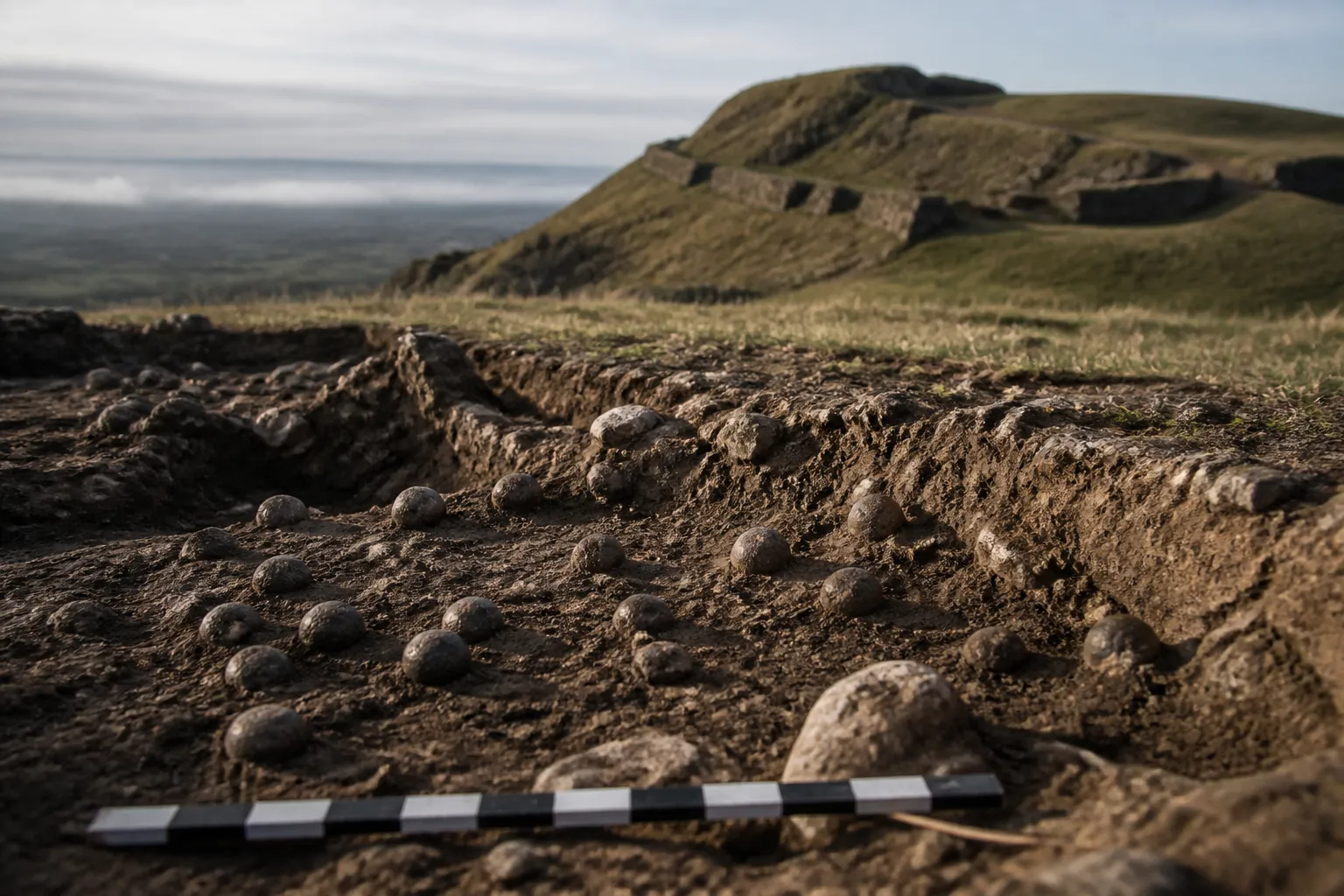
Bagley and his team removed soil in 4‑inch layers, placing the material in buckets and screening it for artifacts. The first trench yielded evidence of the ditch that the militiamen had dug the night before the fighting. Subsequent trenches uncovered 150‑plus musket balls, a broken musket part, and objects that appear to have been abandoned by British soldiers after the battle. Among the items were tea cups, tobacco pipes, sleeve buttons, and a wig curler.
"The part that's really crazy to me is that we get to stand in the same ditch," Bagley told visitors. "It’s a tangible link to the past.” The dig has not yet produced any human remains, although a forensic archaeologist is present to examine any bones that may surface.
The Battle of Bunker Hill is often cited as the first significant battle of the Revolution. While the original objective was to occupy Bunker Hill, the Patriots ultimately took a position on the smaller ridge of Breed’s Hill. The fighting lasted several hours, with the British eventually capturing the fortification on their third assault. British casualties numbered more than 1,000, while American losses were lower, though approximately 150 Patriots died.
The Bunker Hill Monument, a 221‑foot granite obelisk erected between 1825 and 1843, stands on the hill and serves as a memorial to the battle. The monument is part of the Freedom Trail and is managed by the National Park Service. The dig is one of the first archaeological investigations at the site in more than two centuries.
The use of ground‑penetrating radar was crucial in identifying subsurface features before excavation. The radar detected a shallow cavity that corresponded to the ditch, prompting the team to begin digging. The combination of modern technology and historical documentation has allowed the archaeologists to locate and document the fort’s remains.
The artifacts recovered provide a direct physical connection to the soldiers who fought there. Musket balls and a musket fragment confirm the use of long‑rifled weapons by both sides. The personal items left by British troops suggest that the soldiers abandoned their gear when they retreated.
The dig also offers visitors a new way to experience the site. As Bagley explained, the artifacts are now on display in a small exhibit within the monument’s visitor center, allowing people to hold a piece of the battle in their hands.
The City of Boston Archaeology Program, which oversees the dig, plans to continue excavating the area over the next several months. The team will work to map the full extent of the fortification and to recover additional artifacts that may shed light on the daily lives of soldiers during the battle.
The findings underscore the significance of the Battle of Bunker Hill as a turning point in the Revolutionary War, demonstrating that colonial militia could stand up to regular British troops. They also highlight the importance of preserving and studying historic sites to deepen public understanding of the nation’s past.
As the dig progresses, officials will likely release further reports on the artifacts and any new discoveries. The project remains a collaborative effort between the City of Boston, the National Park Service, and academic institutions.
The dig’s discoveries are a reminder that beneath the modern cityscape of Boston lie layers of history waiting to be uncovered, offering tangible links to the events that shaped the United States.
The excavation, which began in early June, is taking place in Charlestown’s Monument Square Park, the site of the first major engagement of the American Revolution. The fortification, an earthen redoubt on what is now known as Breed’s Hill, was hastily constructed by Patriots to slow the advance of British troops from Boston. The battle, fought on the same day as the earlier skirmishes at Lexington and Concord, resulted in a tactical British victory but inflicted heavy casualties on the regular army.
Bagley and his team removed soil in 4‑inch layers, placing the material in buckets and screening it for artifacts. The first trench yielded evidence of the ditch that the militiamen had dug the night before the fighting. Subsequent trenches uncovered 150‑plus musket balls, a broken musket part, and objects that appear to have been abandoned by British soldiers after the battle. Among the items were tea cups, tobacco pipes, sleeve buttons, and a wig curler.
"The part that's really crazy to me is that we get to stand in the same ditch," Bagley told visitors. "It’s a tangible link to the past.” The dig has not yet produced any human remains, although a forensic archaeologist is present to examine any bones that may surface.
The Battle of Bunker Hill is often cited as the first significant battle of the Revolution. While the original objective was to occupy Bunker Hill, the Patriots ultimately took a position on the smaller ridge of Breed’s Hill. The fighting lasted several hours, with the British eventually capturing the fortification on their third assault. British casualties numbered more than 1,000, while American losses were lower, though approximately 150 Patriots died.
The Bunker Hill Monument, a 221‑foot granite obelisk erected between 1825 and 1843, stands on the hill and serves as a memorial to the battle. The monument is part of the Freedom Trail and is managed by the National Park Service. The dig is one of the first archaeological investigations at the site in more than two centuries.
The use of ground‑penetrating radar was crucial in identifying subsurface features before excavation. The radar detected a shallow cavity that corresponded to the ditch, prompting the team to begin digging. The combination of modern technology and historical documentation has allowed the archaeologists to locate and document the fort’s remains.
The artifacts recovered provide a direct physical connection to the soldiers who fought there. Musket balls and a musket fragment confirm the use of long‑rifled weapons by both sides. The personal items left by British troops suggest that the soldiers abandoned their gear when they retreated.
The dig also offers visitors a new way to experience the site. As Bagley explained, the artifacts are now on display in a small exhibit within the monument’s visitor center, allowing people to hold a piece of the battle in their hands.
The City of Boston Archaeology Program, which oversees the dig, plans to continue excavating the area over the next several months. The team will work to map the full extent of the fortification and to recover additional artifacts that may shed light on the daily lives of soldiers during the battle.
The findings underscore the significance of the Battle of Bunker Hill as a turning point in the Revolutionary War, demonstrating that colonial militia could stand up to regular British troops. They also highlight the importance of preserving and studying historic sites to deepen public understanding of the nation’s past.
As the dig progresses, officials will likely release further reports on the artifacts and any new discoveries. The project remains a collaborative effort between the City of Boston, the National Park Service, and academic institutions.
The dig’s discoveries are a reminder that beneath the modern cityscape of Boston lie layers of history waiting to be uncovered, offering tangible links to the events that shaped the United States.