Blab News
DOT Proposes High-Visibility Dashboard to Speed U.S. Cargo Flow
At the Port of Los Angeles, where container cranes clang and cargo flows like a living artery, Transportation Secretary Sean Duffy unveiled a plan that could change the rhythm of America’s freight. On Friday, he announced the American Supply Chain Sovereignty Initiative (ASCI), a proposal to build a real‑time dashboard that links ports, ocean carriers, trucking firms, railroads and major retailers.
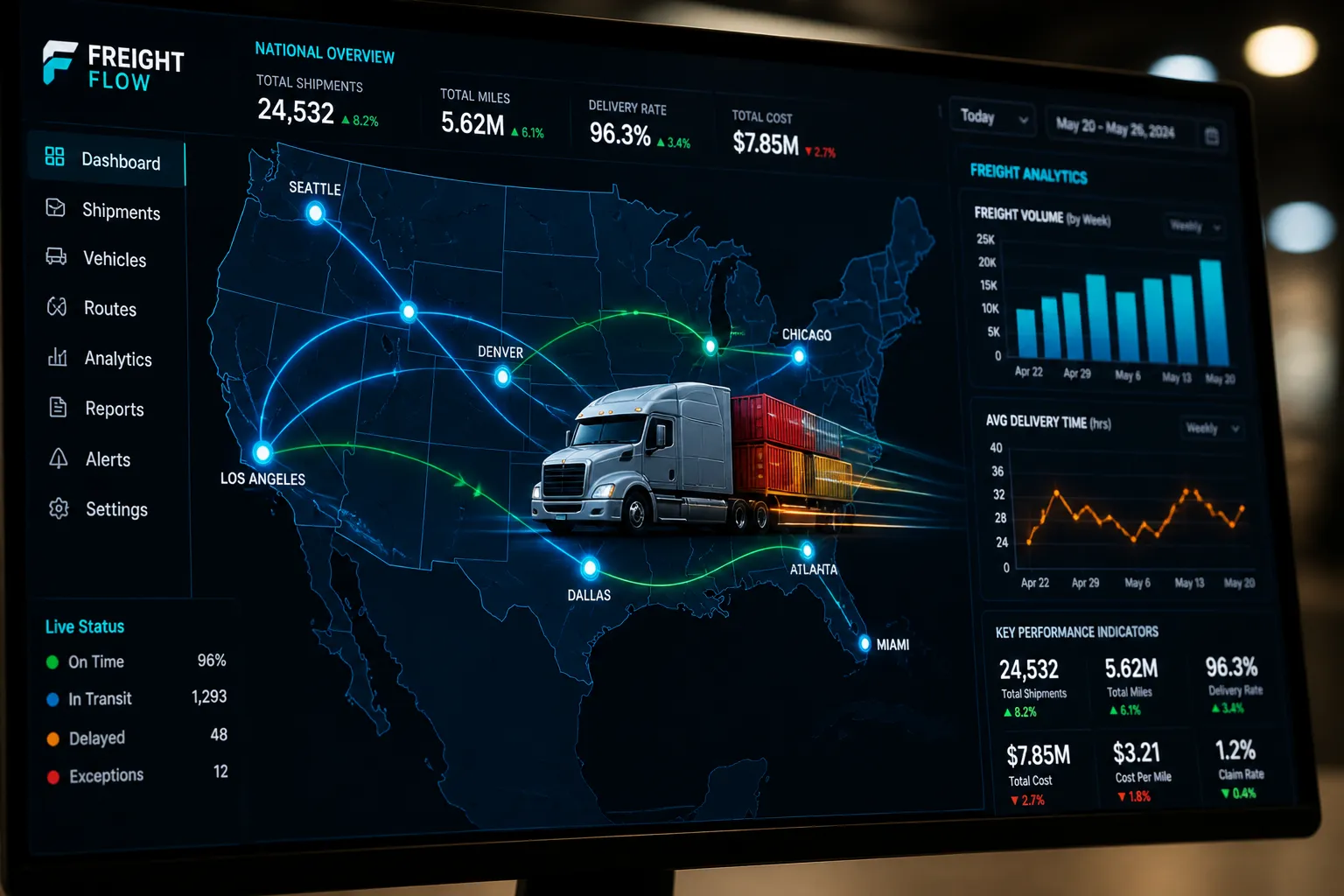
The envisioned dashboard would serve as a single, transparent window into inbound and outbound cargo movements. By flagging bottlenecks as they appear, shippers and carriers could reroute, reschedule or pre‑empt delays, cutting the time and cost that goods spend in transit. Duffy likened the system to TSA PreCheck, explaining that pre‑screened containers would move through a dedicated line while others would follow a separate path, speeding the overall flow.
The initiative remains a proposal. DOT officials will need congressional approval before it can be enacted, and Duffy urged lawmakers to embed the legislation in the 2026 National Defense Authorization Act. "When it comes to our supply chains, time is money. Fewer delays mean lower costs throughout the entire supply chain," he said, stressing that the effort is non‑partisan and a matter of American infrastructure.
ASCI builds on the DOT’s Freight Logistics Optimization Works (FLOW) program, which launched in March 2022 after weeks of backlogs at Los Angeles and Long Beach. FLOW allows companies to share data on imported 20‑foot equivalent units (TEUs) so that ports, terminal operators, truckers, railroads, warehouses and shippers can coordinate more effectively. As of April, FLOW had 86 members, including major retailers such as Walmart, Target, Nike, Ikea, Adidas, Gap, Dollar General, Ralph Lauren, UPS, FedEx, DHL, Maersk, Mediterranean Shipping Company, CMA CGM, Hapag‑Lloyd and C.H. Robinson, and the Ports of Los Angeles, Long Beach, Houston, New York, New Jersey and Savannah.
In May, the DOT released its 2026 National Freight Strategic Plan, which seeks to improve safety and efficiency across the nation’s freight network, reduce bottlenecks, enhance supply‑chain visibility, streamline federal project reviews and help states plan more effectively. The plan also aims to capitalize on growth in domestic energy and agriculture.
The Port of Los Angeles, the backdrop for the ASCI announcement, expects a 7 % decline in cargo flow for fiscal year 2026‑27, while its annual budget will rise 25 % to $3.4 billion. In May 2024 the port processed 840,165 TEUs, a 17.2 % increase over the same month last year. The Port of Long Beach reported 842,030 TEUs in May, a 31.7 % rise driven by a 40 % jump in imports. Both ports noted that the uptick was partly due to shippers pulling forward cargo ahead of the June 1 bunker‑fuel adjustments and the favorable comparison to May after the U.S. imposed tariffs in early April.
By providing a unified view of cargo movements, the ASCI dashboard could shorten the time containers spend in port, lowering logistics costs for businesses and consumers alike. However, the program’s success hinges on private‑sector participation and the dashboard’s ability to weave data from diverse stakeholders into a coherent feed.
The DOT’s push for a high‑visibility dashboard reflects a broader effort to modernize America’s freight network and to address challenges arising from increased e‑commerce, shifting trade patterns and recent tariff changes. The outcome of the congressional debate will determine whether ASCI can move from concept to reality, shaping the future of goods moving across the nation.
The envisioned dashboard would serve as a single, transparent window into inbound and outbound cargo movements. By flagging bottlenecks as they appear, shippers and carriers could reroute, reschedule or pre‑empt delays, cutting the time and cost that goods spend in transit. Duffy likened the system to TSA PreCheck, explaining that pre‑screened containers would move through a dedicated line while others would follow a separate path, speeding the overall flow.
The initiative remains a proposal. DOT officials will need congressional approval before it can be enacted, and Duffy urged lawmakers to embed the legislation in the 2026 National Defense Authorization Act. "When it comes to our supply chains, time is money. Fewer delays mean lower costs throughout the entire supply chain," he said, stressing that the effort is non‑partisan and a matter of American infrastructure.
ASCI builds on the DOT’s Freight Logistics Optimization Works (FLOW) program, which launched in March 2022 after weeks of backlogs at Los Angeles and Long Beach. FLOW allows companies to share data on imported 20‑foot equivalent units (TEUs) so that ports, terminal operators, truckers, railroads, warehouses and shippers can coordinate more effectively. As of April, FLOW had 86 members, including major retailers such as Walmart, Target, Nike, Ikea, Adidas, Gap, Dollar General, Ralph Lauren, UPS, FedEx, DHL, Maersk, Mediterranean Shipping Company, CMA CGM, Hapag‑Lloyd and C.H. Robinson, and the Ports of Los Angeles, Long Beach, Houston, New York, New Jersey and Savannah.
In May, the DOT released its 2026 National Freight Strategic Plan, which seeks to improve safety and efficiency across the nation’s freight network, reduce bottlenecks, enhance supply‑chain visibility, streamline federal project reviews and help states plan more effectively. The plan also aims to capitalize on growth in domestic energy and agriculture.
The Port of Los Angeles, the backdrop for the ASCI announcement, expects a 7 % decline in cargo flow for fiscal year 2026‑27, while its annual budget will rise 25 % to $3.4 billion. In May 2024 the port processed 840,165 TEUs, a 17.2 % increase over the same month last year. The Port of Long Beach reported 842,030 TEUs in May, a 31.7 % rise driven by a 40 % jump in imports. Both ports noted that the uptick was partly due to shippers pulling forward cargo ahead of the June 1 bunker‑fuel adjustments and the favorable comparison to May after the U.S. imposed tariffs in early April.
By providing a unified view of cargo movements, the ASCI dashboard could shorten the time containers spend in port, lowering logistics costs for businesses and consumers alike. However, the program’s success hinges on private‑sector participation and the dashboard’s ability to weave data from diverse stakeholders into a coherent feed.
The DOT’s push for a high‑visibility dashboard reflects a broader effort to modernize America’s freight network and to address challenges arising from increased e‑commerce, shifting trade patterns and recent tariff changes. The outcome of the congressional debate will determine whether ASCI can move from concept to reality, shaping the future of goods moving across the nation.