Blab News
Eight Killed in B-52 Bomber Crash at Edwards Air Force Base, California
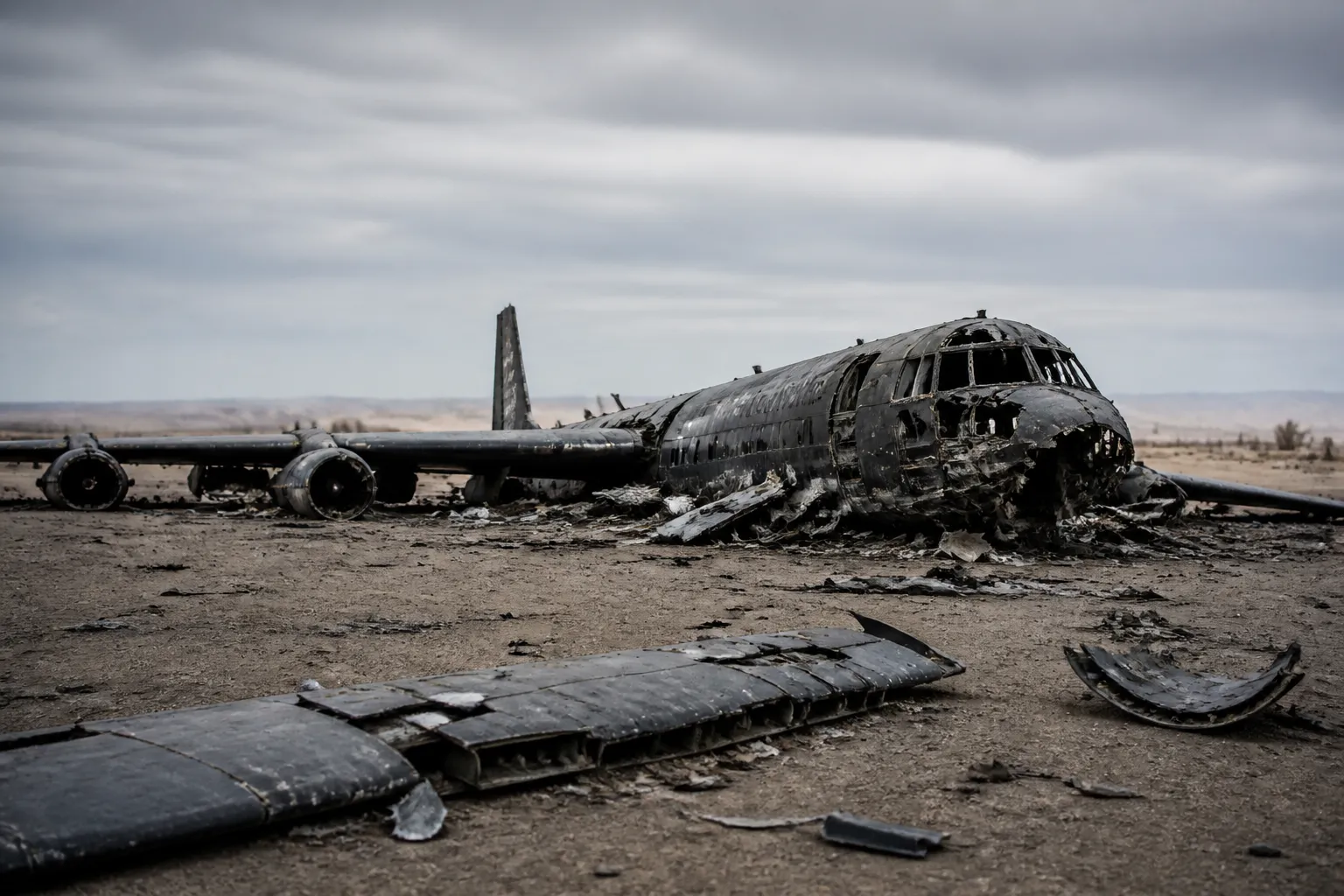
In a sudden and deadly turn, a United States Air Force Boeing B‑52H Stratofortress crashed minutes after take‑off from Edwards Air Force Base (AFB) in the Mojave Desert on Monday, June 15, 2026, killing all eight people aboard. The bomber, which was preparing for a routine test mission that included both service members and contractors, erupted in flames immediately after leaving the runway, sending a plume of black smoke that was visible from miles away.
On June 17, the 412th Test Wing released the names of the victims. The crew consisted of: • Col. Gregory Watson, 53, weapon systems officer, Boeing, a reservist assigned to the 10th Air Force at Naval Air Station Joint Reserve Base Fort Worth, Texas; • Lt. Col. Gabriel Estrella, 40, weapon systems officer, Air Force Operational Test and Evaluation Center, Detachment 5, Edwards AFB; • Retired Lt. Col. Miles Middleton, 50, pilot, Boeing, Tehachapi, California; • Maj. Alexander Davis, 34, weapon systems officer, 419th Flight Test Squadron, Lancaster, California; • Maj. Robert Dee, 40, pilot, 419th Flight Test Squadron, Edwards AFB; • Maj. Brad Hovey, 35, pilot, 419th Flight Test Squadron, Edwards AFB; • Jeromy Smith, 32, flight test engineer, 419th Flight Test Squadron, Rosamond, California; and • Christopher Rischar, 41, flight test engineer, JT4 contractor, Lancaster, California.
The B‑52H, with a fuel capacity of 312,197 pounds (141,610 kilograms), lifted off at 11:20 a.m. local time. According to Air Force officials, the aircraft crashed almost immediately after take‑off, and the fire was fueled by the bomber’s full tanks, producing a dramatic black smoke column.
Edwards AFB’s airfield was shut down right after the incident to allow emergency responders to focus on the scene. The closure remains in effect while an Interim Safety Investigation Board works to reconstruct the events.
This tragedy is the most serious loss of life at Edwards AFB since a B‑50D bomber crashed near the base in 1951. It is also the first B‑52 crash in ten years; the last B‑52 incident occurred on May 19, 2016, when a B‑52H from Minot AFB, North Dakota, overran the runway during an aborted take‑off at Andersen AFB, Guam, but all seven crew members survived.
The B‑52 that crashed was reportedly supporting the base’s radar modernization program. The 412th Test Wing said the aircraft was on a local test sortie for the new active electronically scanned array (AESA) radar, part of the Air Force’s effort to upgrade the bomber fleet’s radar capabilities.
The investigation is expected to take several months. Officials have described the crash as “unrecoverable” and “unsurvivable” after reviewing footage of the event, but the Air Force has not yet released a preliminary cause, and no definitive explanation has been provided.
Families of the victims have been notified, and the Air Force has pledged to provide support and resources. The 412th Test Wing emphasized that the focus remains on supporting the families and ensuring that all appropriate resources are available.
At present, the situation remains under investigation. The Air Force has not announced any changes to the B‑52 program or the radar modernization effort. The next steps will include a detailed safety investigation, a review of the test mission parameters, and an assessment of any potential systemic issues.
The incident underscores the risks inherent in flight testing and the importance of rigorous safety protocols for aging aircraft in the U.S. military fleet.
On June 17, the 412th Test Wing released the names of the victims. The crew consisted of: • Col. Gregory Watson, 53, weapon systems officer, Boeing, a reservist assigned to the 10th Air Force at Naval Air Station Joint Reserve Base Fort Worth, Texas; • Lt. Col. Gabriel Estrella, 40, weapon systems officer, Air Force Operational Test and Evaluation Center, Detachment 5, Edwards AFB; • Retired Lt. Col. Miles Middleton, 50, pilot, Boeing, Tehachapi, California; • Maj. Alexander Davis, 34, weapon systems officer, 419th Flight Test Squadron, Lancaster, California; • Maj. Robert Dee, 40, pilot, 419th Flight Test Squadron, Edwards AFB; • Maj. Brad Hovey, 35, pilot, 419th Flight Test Squadron, Edwards AFB; • Jeromy Smith, 32, flight test engineer, 419th Flight Test Squadron, Rosamond, California; and • Christopher Rischar, 41, flight test engineer, JT4 contractor, Lancaster, California.
The B‑52H, with a fuel capacity of 312,197 pounds (141,610 kilograms), lifted off at 11:20 a.m. local time. According to Air Force officials, the aircraft crashed almost immediately after take‑off, and the fire was fueled by the bomber’s full tanks, producing a dramatic black smoke column.
Edwards AFB’s airfield was shut down right after the incident to allow emergency responders to focus on the scene. The closure remains in effect while an Interim Safety Investigation Board works to reconstruct the events.
This tragedy is the most serious loss of life at Edwards AFB since a B‑50D bomber crashed near the base in 1951. It is also the first B‑52 crash in ten years; the last B‑52 incident occurred on May 19, 2016, when a B‑52H from Minot AFB, North Dakota, overran the runway during an aborted take‑off at Andersen AFB, Guam, but all seven crew members survived.
The B‑52 that crashed was reportedly supporting the base’s radar modernization program. The 412th Test Wing said the aircraft was on a local test sortie for the new active electronically scanned array (AESA) radar, part of the Air Force’s effort to upgrade the bomber fleet’s radar capabilities.
The investigation is expected to take several months. Officials have described the crash as “unrecoverable” and “unsurvivable” after reviewing footage of the event, but the Air Force has not yet released a preliminary cause, and no definitive explanation has been provided.
Families of the victims have been notified, and the Air Force has pledged to provide support and resources. The 412th Test Wing emphasized that the focus remains on supporting the families and ensuring that all appropriate resources are available.
At present, the situation remains under investigation. The Air Force has not announced any changes to the B‑52 program or the radar modernization effort. The next steps will include a detailed safety investigation, a review of the test mission parameters, and an assessment of any potential systemic issues.
The incident underscores the risks inherent in flight testing and the importance of rigorous safety protocols for aging aircraft in the U.S. military fleet.