Blab News
Federal Reserve Holds Rates Steady in First Meeting Under New Chair Kevin Warsh
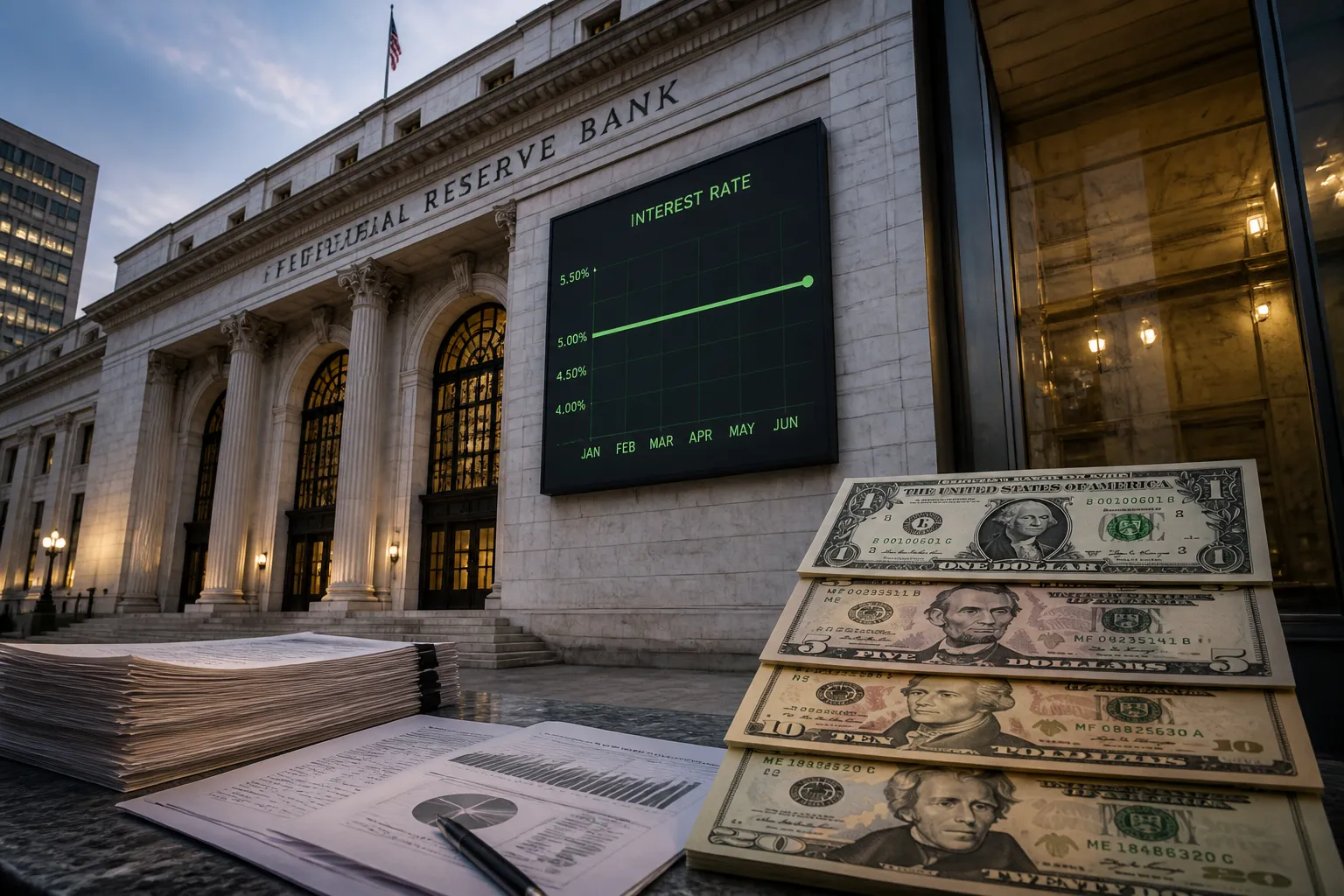
On Wednesday, the Federal Reserve chose to keep its key interest rate unchanged, marking the first policy decision of new Chair Kevin Warsh and reinforcing the bank’s commitment to a balanced economic outlook. The Federal Open Market Committee (FOMC) voted unanimously to maintain the federal funds rate in the 3.5%–3.75% target range.
In its statement, the Fed explained that the unchanged rate would support its dual mandate of full employment and a 2% inflation target. Officials highlighted that economic activity was continuing at a solid pace, with low unemployment, strong productivity, and robust investment. Yet they also noted that inflation remained above the 2% goal and that geopolitical events—including the ongoing conflict with Iran—added uncertainty to projections.
Chair Warsh’s press briefing was concise. He underscored that the committee’s decision‑making process relies on a broad set of data points and that he intends to review these inputs closely as the economy evolves. Warsh also mentioned the growing importance of artificial intelligence, stating that while AI presents opportunities for the United States, it could also influence economic dynamics.
Markets reacted to the announcement by pushing short‑term interest rates higher. Analysts pointed out that the Fed’s stance leaves open the possibility of a rate increase later in the year, depending on how inflation and employment trends develop.
Warsh’s confirmation as chair was the narrowest in Fed history. He was confirmed by the Senate in May 2026 after a contentious nomination process that included a hearing before the Senate Banking, Housing and Urban Affairs Committee. His background includes service on the Federal Reserve Board of Governors from 2006 to 2011 and a career in investment banking and public policy.
The Fed’s decision to hold rates steady follows a series of meetings in which the committee has kept the target range unchanged. The policy stance reflects the Fed’s assessment that the economy is resilient but that inflationary pressures persist. The committee’s March projections indicated that real GDP growth would remain positive, unemployment would stay near its historical low, and inflation would gradually decline toward the 2% target.
Geopolitical risk remains a concern for the Fed. The war with Iran, which began earlier in the year, has introduced volatility into global markets and raised questions about potential supply‑chain disruptions and energy price swings. While the Fed did not provide specific forecasts for the conflict’s impact, it acknowledged that such events can affect economic outlooks.
The Fed’s statement also emphasized the importance of maintaining the independence of monetary policy. Warsh reiterated that the committee’s decisions are based on economic data rather than political considerations.
Looking ahead, the Fed will continue to monitor inflation, employment, and global developments. The next FOMC meeting is scheduled for late July, at which the committee will evaluate whether the current stance remains appropriate. Market participants are watching closely for any signals that the Fed might shift its policy path.
In summary, the Federal Reserve’s decision to keep rates unchanged marks a continuation of its current policy approach under new leadership. The Fed remains focused on balancing the twin goals of employment and price stability while navigating uncertainties from geopolitical tensions and evolving technology trends.
In its statement, the Fed explained that the unchanged rate would support its dual mandate of full employment and a 2% inflation target. Officials highlighted that economic activity was continuing at a solid pace, with low unemployment, strong productivity, and robust investment. Yet they also noted that inflation remained above the 2% goal and that geopolitical events—including the ongoing conflict with Iran—added uncertainty to projections.
Chair Warsh’s press briefing was concise. He underscored that the committee’s decision‑making process relies on a broad set of data points and that he intends to review these inputs closely as the economy evolves. Warsh also mentioned the growing importance of artificial intelligence, stating that while AI presents opportunities for the United States, it could also influence economic dynamics.
Markets reacted to the announcement by pushing short‑term interest rates higher. Analysts pointed out that the Fed’s stance leaves open the possibility of a rate increase later in the year, depending on how inflation and employment trends develop.
Warsh’s confirmation as chair was the narrowest in Fed history. He was confirmed by the Senate in May 2026 after a contentious nomination process that included a hearing before the Senate Banking, Housing and Urban Affairs Committee. His background includes service on the Federal Reserve Board of Governors from 2006 to 2011 and a career in investment banking and public policy.
The Fed’s decision to hold rates steady follows a series of meetings in which the committee has kept the target range unchanged. The policy stance reflects the Fed’s assessment that the economy is resilient but that inflationary pressures persist. The committee’s March projections indicated that real GDP growth would remain positive, unemployment would stay near its historical low, and inflation would gradually decline toward the 2% target.
Geopolitical risk remains a concern for the Fed. The war with Iran, which began earlier in the year, has introduced volatility into global markets and raised questions about potential supply‑chain disruptions and energy price swings. While the Fed did not provide specific forecasts for the conflict’s impact, it acknowledged that such events can affect economic outlooks.
The Fed’s statement also emphasized the importance of maintaining the independence of monetary policy. Warsh reiterated that the committee’s decisions are based on economic data rather than political considerations.
Looking ahead, the Fed will continue to monitor inflation, employment, and global developments. The next FOMC meeting is scheduled for late July, at which the committee will evaluate whether the current stance remains appropriate. Market participants are watching closely for any signals that the Fed might shift its policy path.
In summary, the Federal Reserve’s decision to keep rates unchanged marks a continuation of its current policy approach under new leadership. The Fed remains focused on balancing the twin goals of employment and price stability while navigating uncertainties from geopolitical tensions and evolving technology trends.