Blab News
Hollywood Faces Rising Costs as States Race to Offer Film Tax Incentives
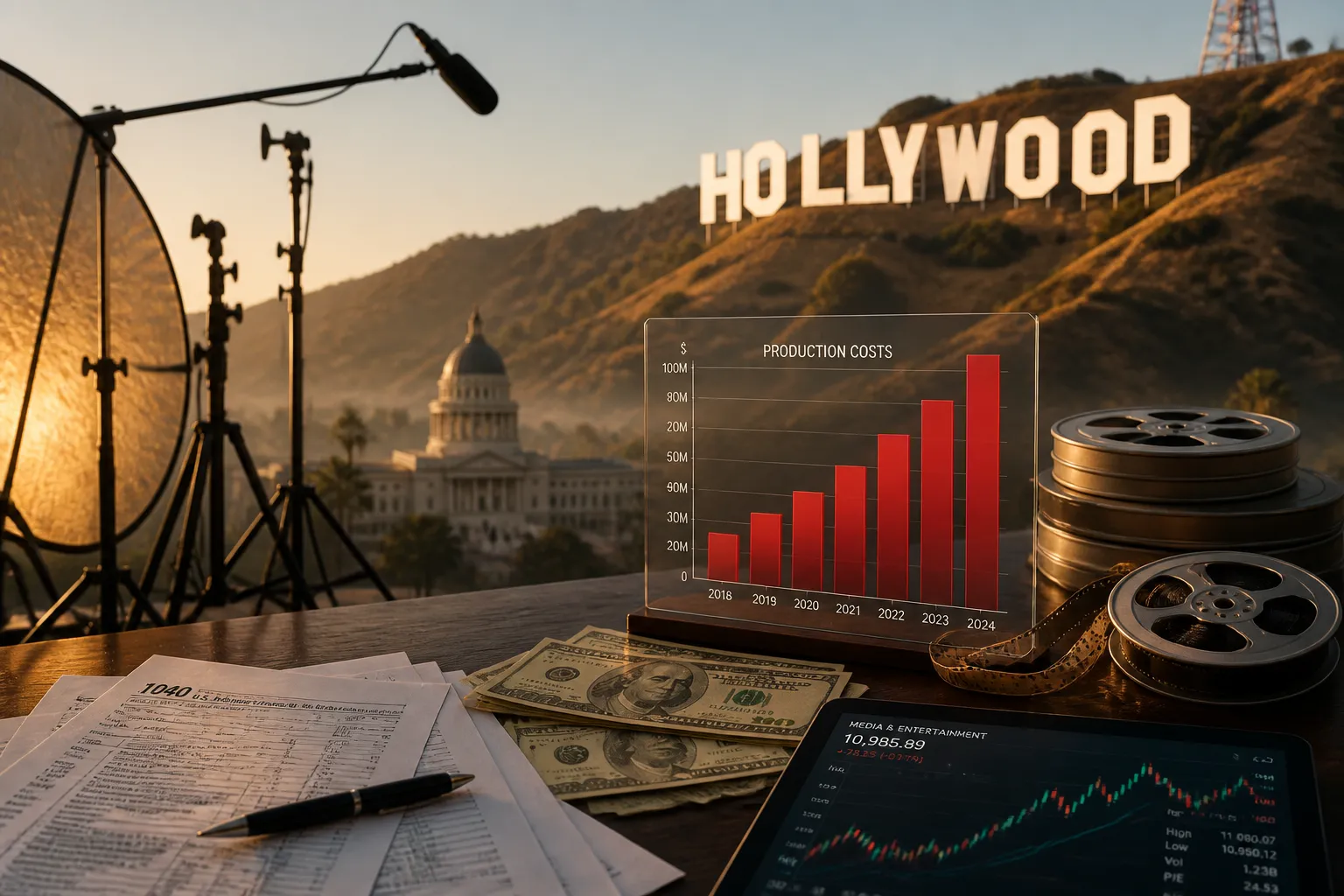
Hollywood, once the glittering heart of American cinema, is now a city of empty stages and fading box‑office receipts. Since the pandemic, ticket sales have slipped below pre‑COVID‑19 levels, and the number of productions shooting in Los Angeles has been steadily declining. The culprit? A relentless rise in production costs.
Labor in Los Angeles is expensive. A high cost of living, coupled with strong union agreements, drives wages higher than in many other parts of the country. Meanwhile, states and countries around the world have built their own crew bases, offer more flexible arrangements, and provide generous tax credits. The result is that studios increasingly choose to film abroad or in other U.S. states, sidestepping the financial burden of shooting on the West Coast.
Senator Adam Schiff (D‑California) has responded by championing a federal film‑production tax credit. In March he announced that he had drafted a bill and was seeking bipartisan support. Schiff argues that a national incentive would keep the industry in America and counter the advantage of state and foreign credits.
Today, more than half of U.S. states and territories offer film and television incentives. Georgia’s program, launched in 2005, allows studios that spend at least $500,000 in the state to claim a tax credit of up to 30 % of in‑state production expenses. The state has increased its program to $750 million in 2025. California has also expanded its incentive. Governor Gavin Newsom doubled the state program to $750 million in 2025, and lawmakers have debated covering above‑the‑line salaries for actors, writers and producers.
Other states have matched or exceeded Hollywood’s incentives. Massachusetts, for instance, funded up to 60 % of the production budget for the 2021 film Don’t Look Up. Reality star Spencer Pratt, who ran for Los Angeles mayor, pledged to fight for uncapped production tax credits in the city.
However, large incentives have not guaranteed a return. Studies repeatedly show that production credits cost more than they generate. A 2016 Variety article called film tax incentives a "giant waste of money." A 2023 audit by Georgia State University calculated a fiscal return on investment of 0.19 for FY 2024, an 81 % loss. The audit also found that Georgia spent $160,009 for every net job created.
The problem is that studios often sell unused credits to other taxpayers. A 2022 report from the Georgia Department of Audits and Accounts said that 97 % of credits generated in 2016 were transferred to another taxpayer, while less than 1 % were used by production companies against their own tax liability. Virginia’s 2017 report concluded that its tax credit had little effect on film location decisions and provided a negligible benefit to the state economy.
The race to the bottom has led to striking consequences. The Wall Street Journal reported in January that millions of square feet of production facilities in Georgia sit empty, and that studios such as Marvel have moved major projects to the United Kingdom, where labor and production costs are lower. Critics of Schiff’s proposal warn that a national credit could simply shift production to the state with the most generous offer, leaving other states with unused facilities and sunk costs.
Los Angeles has lost its concentration of talent and infrastructure, a fact noted by Gene Maddaus in Variety. The city’s high living costs and union agreements make it less attractive compared to locations that can offer lower expenses and more flexible production arrangements.
In the absence of a national incentive, some analysts suggest that states should eliminate their film credits entirely. That would stop the cycle of subsidizing studios that ultimately spend elsewhere.
The current situation remains unresolved. Schiff’s bill is still under consideration, and state incentives continue to grow. The industry watches closely as lawmakers weigh the cost of subsidies against the potential economic benefits of keeping film production in the United States. The outcome will shape whether Hollywood can regain its pre‑pandemic footing or whether the industry will continue to fragment across the globe.
Labor in Los Angeles is expensive. A high cost of living, coupled with strong union agreements, drives wages higher than in many other parts of the country. Meanwhile, states and countries around the world have built their own crew bases, offer more flexible arrangements, and provide generous tax credits. The result is that studios increasingly choose to film abroad or in other U.S. states, sidestepping the financial burden of shooting on the West Coast.
Senator Adam Schiff (D‑California) has responded by championing a federal film‑production tax credit. In March he announced that he had drafted a bill and was seeking bipartisan support. Schiff argues that a national incentive would keep the industry in America and counter the advantage of state and foreign credits.
Today, more than half of U.S. states and territories offer film and television incentives. Georgia’s program, launched in 2005, allows studios that spend at least $500,000 in the state to claim a tax credit of up to 30 % of in‑state production expenses. The state has increased its program to $750 million in 2025. California has also expanded its incentive. Governor Gavin Newsom doubled the state program to $750 million in 2025, and lawmakers have debated covering above‑the‑line salaries for actors, writers and producers.
Other states have matched or exceeded Hollywood’s incentives. Massachusetts, for instance, funded up to 60 % of the production budget for the 2021 film Don’t Look Up. Reality star Spencer Pratt, who ran for Los Angeles mayor, pledged to fight for uncapped production tax credits in the city.
However, large incentives have not guaranteed a return. Studies repeatedly show that production credits cost more than they generate. A 2016 Variety article called film tax incentives a "giant waste of money." A 2023 audit by Georgia State University calculated a fiscal return on investment of 0.19 for FY 2024, an 81 % loss. The audit also found that Georgia spent $160,009 for every net job created.
The problem is that studios often sell unused credits to other taxpayers. A 2022 report from the Georgia Department of Audits and Accounts said that 97 % of credits generated in 2016 were transferred to another taxpayer, while less than 1 % were used by production companies against their own tax liability. Virginia’s 2017 report concluded that its tax credit had little effect on film location decisions and provided a negligible benefit to the state economy.
The race to the bottom has led to striking consequences. The Wall Street Journal reported in January that millions of square feet of production facilities in Georgia sit empty, and that studios such as Marvel have moved major projects to the United Kingdom, where labor and production costs are lower. Critics of Schiff’s proposal warn that a national credit could simply shift production to the state with the most generous offer, leaving other states with unused facilities and sunk costs.
Los Angeles has lost its concentration of talent and infrastructure, a fact noted by Gene Maddaus in Variety. The city’s high living costs and union agreements make it less attractive compared to locations that can offer lower expenses and more flexible production arrangements.
In the absence of a national incentive, some analysts suggest that states should eliminate their film credits entirely. That would stop the cycle of subsidizing studios that ultimately spend elsewhere.
The current situation remains unresolved. Schiff’s bill is still under consideration, and state incentives continue to grow. The industry watches closely as lawmakers weigh the cost of subsidies against the potential economic benefits of keeping film production in the United States. The outcome will shape whether Hollywood can regain its pre‑pandemic footing or whether the industry will continue to fragment across the globe.