Blab News
Israeli Settlers Set Fire to Mosques in Two West Bank Villages, Officials Confirm Arson
On Wednesday, June 17 2026, Israeli settlers set fire to mosques in the Palestinian villages of Jiljiliya and Mazari an‑Nubani in the West Bank. The incidents were confirmed by the Israeli military and reported by local officials.
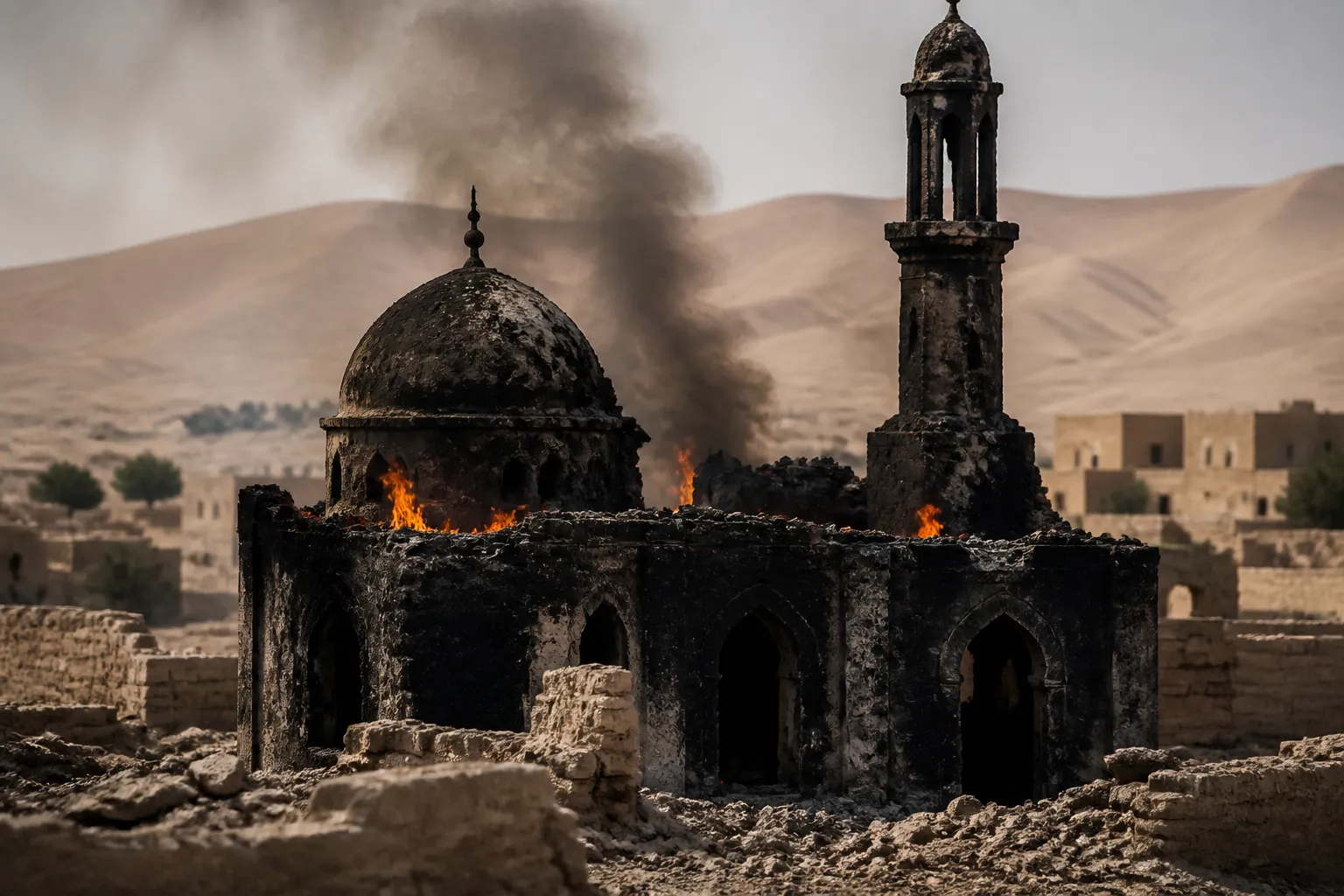
In Jiljiliya, north of Ramallah, settlers arrived between 2 a.m. and 3 a.m. and attempted to burn the village’s main mosque. The mosque’s door was locked, so the attackers set fire to an ablution room on a lower floor. According to the village council head, Osama Abdullah, the blaze scorched the room’s ceiling, walls and floors. AFP journalists who visited the site noted blackened surfaces and graffiti in Hebrew, including slogans such as “vengeance” and “Hi, from the Hilltop Youth.” The Hilltop Youth is an extremist settler group that has been linked to violence against Palestinians.
The Israeli military issued a statement confirming the arson and the presence of graffiti. It said that forces searched the area, found two burnt mosques and the graffiti, but that the suspects had fled before the forces arrived.
Palestinian civil‑defence crews and local villagers extinguished the fire in Jiljiliya. Mayor Abdullah said the attackers had used Molotov cocktails and that the mosque’s ablution room was the only part that could be set on fire.
In Mazari an‑Nubani, settlers arrived around 3 a.m. and used Molotov cocktails to attack one of the village’s three mosques. The head of the village council, Saad Dagher, told AFP that the attackers fled after setting the mosque on fire, and that residents put out the blaze.
The Palestinian Ministry of Religious Affairs condemned the attacks as “dangerous aggressions” and called on the international community to intervene. The ministry’s statement was issued in the same evening as the incidents.
These events occur amid a broader pattern of increased settler attacks on Palestinian communities in the West Bank since the Gaza war began in October 2023. According to reports, settler violence has risen sharply during that period, with numerous incidents of vandalism, arson and physical assault.
The West Bank has been under Israeli occupation since the 1967 Six‑Day War. Israel’s settlements in the area are considered illegal under international law, and the Israeli government has been criticized for tolerating or even encouraging settler violence. The Hilltop Youth, in particular, has been sanctioned by the European Union and the U.S. Office of Foreign Assets Control for its violent activities.
The Israeli military’s statement did not name the perpetrators, and the Israeli police are reportedly investigating the incidents. No arrests have been reported as of the latest updates.
The Palestinian community in both villages has expressed anger and fear over the attacks. Local residents described the mosques as places of worship and community gathering, and the damage has disrupted religious services.
The international community has reacted with concern. The Palestinian Ministry of Religious Affairs’ call for intervention has been echoed by several human‑rights organizations, which have urged the United Nations and other bodies to monitor the situation.
At present, the Israeli military has confirmed the arson and graffiti but has not identified the attackers. The police investigation is ongoing, and no further statements have been released. The Palestinian Ministry of Religious Affairs has issued a condemnation and appealed for international support.
The incidents underscore the continued volatility in the West Bank and the challenges of ensuring security and protection for Palestinian communities amid ongoing settlement expansion and settler violence.
The situation remains fluid. The Israeli police are expected to release further details as the investigation proceeds, and the Palestinian authorities may seek additional international assistance to address the security concerns raised by these attacks.
The West Bank’s status as an occupied territory and the international legal framework surrounding Israeli settlements remain central to the broader conflict. The recent arson incidents add to the urgency of addressing the security and legal issues that have long plagued the region.
The international community continues to monitor the situation closely, and further developments are anticipated as the investigations unfold.
In Jiljiliya, north of Ramallah, settlers arrived between 2 a.m. and 3 a.m. and attempted to burn the village’s main mosque. The mosque’s door was locked, so the attackers set fire to an ablution room on a lower floor. According to the village council head, Osama Abdullah, the blaze scorched the room’s ceiling, walls and floors. AFP journalists who visited the site noted blackened surfaces and graffiti in Hebrew, including slogans such as “vengeance” and “Hi, from the Hilltop Youth.” The Hilltop Youth is an extremist settler group that has been linked to violence against Palestinians.
The Israeli military issued a statement confirming the arson and the presence of graffiti. It said that forces searched the area, found two burnt mosques and the graffiti, but that the suspects had fled before the forces arrived.
Palestinian civil‑defence crews and local villagers extinguished the fire in Jiljiliya. Mayor Abdullah said the attackers had used Molotov cocktails and that the mosque’s ablution room was the only part that could be set on fire.
In Mazari an‑Nubani, settlers arrived around 3 a.m. and used Molotov cocktails to attack one of the village’s three mosques. The head of the village council, Saad Dagher, told AFP that the attackers fled after setting the mosque on fire, and that residents put out the blaze.
The Palestinian Ministry of Religious Affairs condemned the attacks as “dangerous aggressions” and called on the international community to intervene. The ministry’s statement was issued in the same evening as the incidents.
These events occur amid a broader pattern of increased settler attacks on Palestinian communities in the West Bank since the Gaza war began in October 2023. According to reports, settler violence has risen sharply during that period, with numerous incidents of vandalism, arson and physical assault.
The West Bank has been under Israeli occupation since the 1967 Six‑Day War. Israel’s settlements in the area are considered illegal under international law, and the Israeli government has been criticized for tolerating or even encouraging settler violence. The Hilltop Youth, in particular, has been sanctioned by the European Union and the U.S. Office of Foreign Assets Control for its violent activities.
The Israeli military’s statement did not name the perpetrators, and the Israeli police are reportedly investigating the incidents. No arrests have been reported as of the latest updates.
The Palestinian community in both villages has expressed anger and fear over the attacks. Local residents described the mosques as places of worship and community gathering, and the damage has disrupted religious services.
The international community has reacted with concern. The Palestinian Ministry of Religious Affairs’ call for intervention has been echoed by several human‑rights organizations, which have urged the United Nations and other bodies to monitor the situation.
At present, the Israeli military has confirmed the arson and graffiti but has not identified the attackers. The police investigation is ongoing, and no further statements have been released. The Palestinian Ministry of Religious Affairs has issued a condemnation and appealed for international support.
The incidents underscore the continued volatility in the West Bank and the challenges of ensuring security and protection for Palestinian communities amid ongoing settlement expansion and settler violence.
The situation remains fluid. The Israeli police are expected to release further details as the investigation proceeds, and the Palestinian authorities may seek additional international assistance to address the security concerns raised by these attacks.
The West Bank’s status as an occupied territory and the international legal framework surrounding Israeli settlements remain central to the broader conflict. The recent arson incidents add to the urgency of addressing the security and legal issues that have long plagued the region.
The international community continues to monitor the situation closely, and further developments are anticipated as the investigations unfold.