Blab News
Los Angeles Mayors 2026 Primary Sends Karen Bass and Nithya Raman to November Runoff
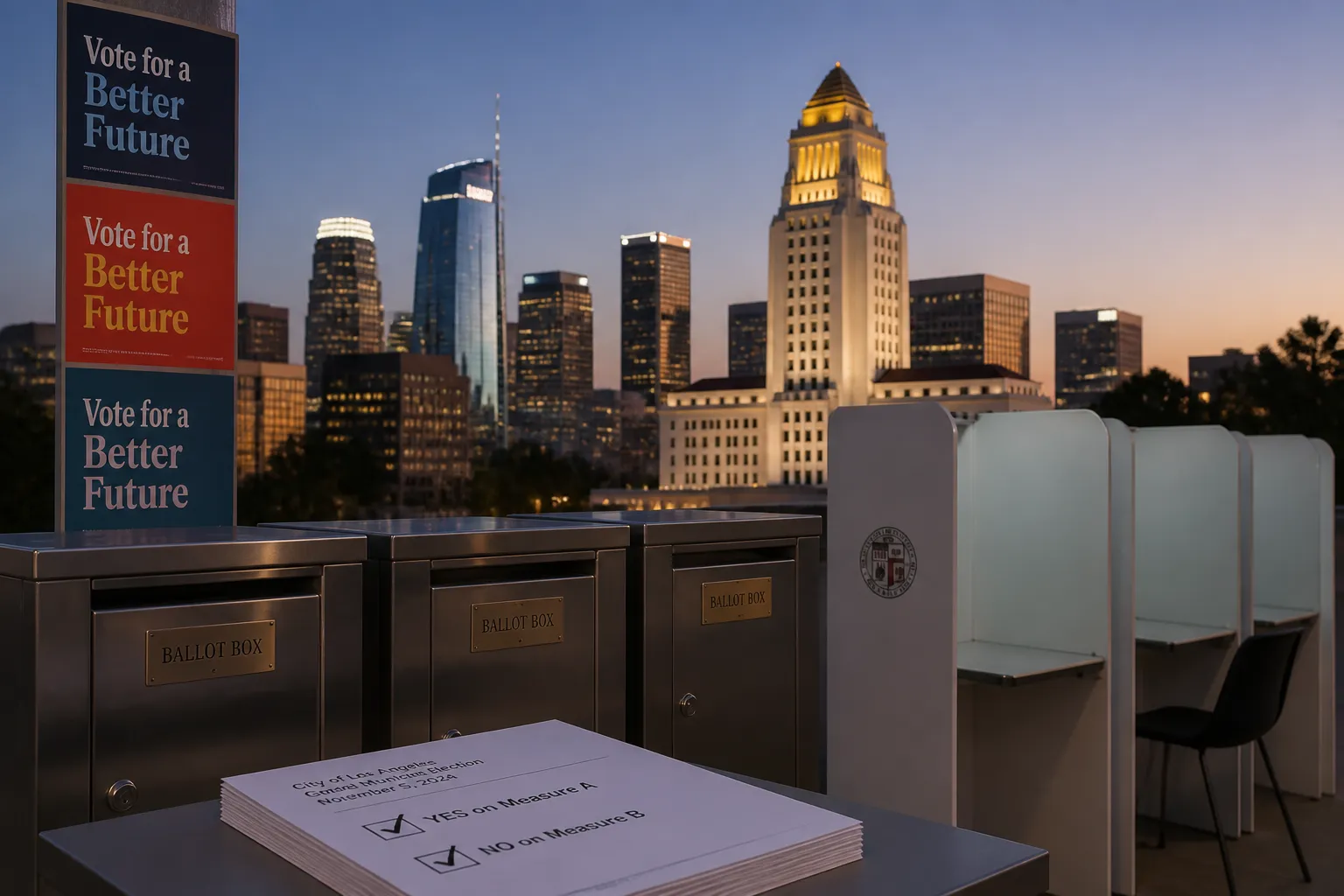
On June 2, the sprawling metropolis of Los Angeles turned its civic lights on to decide its next leader. The nonpartisan primary for the 2026 mayoral race produced a clear outcome: incumbent Mayor Karen Bass and City Councilmember Nithya Raman advanced to the November 3 runoff, while reality‑TV personality Spencer Pratt was eliminated.
California’s municipal elections run on a nonpartisan format, meaning party labels do not appear on the ballot. Yet voters and observers know the political leanings of the candidates: Bass is a Democrat, Raman is a Democrat and a member of the Democratic Socialists of America, and Pratt is a Republican. The state’s election law guarantees that every registered voter receives a mail‑in ballot automatically—a system that was expanded during the COVID‑19 pandemic and made permanent in 2026. Ballots may be returned up to a week after Election Day, and early voting is available at polling places.
The 2026 Los Angeles elections also featured contests for fifteen city council seats, three seats on the Los Angeles Unified School District Board of Education, and several other municipal offices. However, the mayoral race dominated headlines, drawing national attention from outlets such as NBC News, Fox 11, USA Today, and the Los Angeles Times.
Karen Bass, who announced her re‑election bid in July 2024, is the city’s first woman mayor and a Democrat who has served since 2022. Her administration has focused on public safety, homelessness, and economic development. Bass’s campaign emphasized continuity and experience, and she secured a majority of the early vote in the primary.
Nithya Raman, a city councilmember for the 4th district since 2020, is known for her activism on housing and environmental issues. A graduate of the University of California, Berkeley, Raman has championed progressive policies such as support for encampments near schools and reductions in the police force. Her campaign highlighted a vision of inclusive growth and community‑driven solutions.
Spencer Pratt, a former reality‑TV star, entered the race in 2026 after a high‑profile lawsuit against the city following the destruction of his Pacific Palisades home in the 2025 Palisades Fire. Pratt’s platform centered on fiscal conservatism and criticism of city spending. While he enjoyed early popularity, he finished third in the primary, receiving fewer votes than both Bass and Raman.
Election observers concluded on June 8 that Bass and Raman had advanced to the general election, effectively eliminating Pratt from the race. The Los Angeles County Registrar‑Recorder/County Clerk certified the final primary results, and city officials confirmed that the runoff would take place on November 3, 2026.
The mayoral term in Los Angeles is four years; the winner of the November runoff will assume office in December 2026. The election is part of California’s broader electoral system, which includes statewide races for governor, U.S. Senate, and other offices. The state’s mail‑in voting system, while widely used, has been the subject of ongoing debate about accessibility and security.
As the city prepares for the November runoff, voters will weigh the experience of an incumbent against the progressive platform of a councilmember. The outcome will shape Los Angeles’s policy direction on issues ranging from public safety to housing and economic development.
The Los Angeles mayoral race remains a key indicator of the city’s political climate and will be closely watched by observers of California politics nationwide.
California’s municipal elections run on a nonpartisan format, meaning party labels do not appear on the ballot. Yet voters and observers know the political leanings of the candidates: Bass is a Democrat, Raman is a Democrat and a member of the Democratic Socialists of America, and Pratt is a Republican. The state’s election law guarantees that every registered voter receives a mail‑in ballot automatically—a system that was expanded during the COVID‑19 pandemic and made permanent in 2026. Ballots may be returned up to a week after Election Day, and early voting is available at polling places.
The 2026 Los Angeles elections also featured contests for fifteen city council seats, three seats on the Los Angeles Unified School District Board of Education, and several other municipal offices. However, the mayoral race dominated headlines, drawing national attention from outlets such as NBC News, Fox 11, USA Today, and the Los Angeles Times.
Karen Bass, who announced her re‑election bid in July 2024, is the city’s first woman mayor and a Democrat who has served since 2022. Her administration has focused on public safety, homelessness, and economic development. Bass’s campaign emphasized continuity and experience, and she secured a majority of the early vote in the primary.
Nithya Raman, a city councilmember for the 4th district since 2020, is known for her activism on housing and environmental issues. A graduate of the University of California, Berkeley, Raman has championed progressive policies such as support for encampments near schools and reductions in the police force. Her campaign highlighted a vision of inclusive growth and community‑driven solutions.
Spencer Pratt, a former reality‑TV star, entered the race in 2026 after a high‑profile lawsuit against the city following the destruction of his Pacific Palisades home in the 2025 Palisades Fire. Pratt’s platform centered on fiscal conservatism and criticism of city spending. While he enjoyed early popularity, he finished third in the primary, receiving fewer votes than both Bass and Raman.
Election observers concluded on June 8 that Bass and Raman had advanced to the general election, effectively eliminating Pratt from the race. The Los Angeles County Registrar‑Recorder/County Clerk certified the final primary results, and city officials confirmed that the runoff would take place on November 3, 2026.
The mayoral term in Los Angeles is four years; the winner of the November runoff will assume office in December 2026. The election is part of California’s broader electoral system, which includes statewide races for governor, U.S. Senate, and other offices. The state’s mail‑in voting system, while widely used, has been the subject of ongoing debate about accessibility and security.
As the city prepares for the November runoff, voters will weigh the experience of an incumbent against the progressive platform of a councilmember. The outcome will shape Los Angeles’s policy direction on issues ranging from public safety to housing and economic development.
The Los Angeles mayoral race remains a key indicator of the city’s political climate and will be closely watched by observers of California politics nationwide.