Blab News
Pew Research Finds U.S. Voters Split into Nine Ideological Groups, Not Just Red and Blue
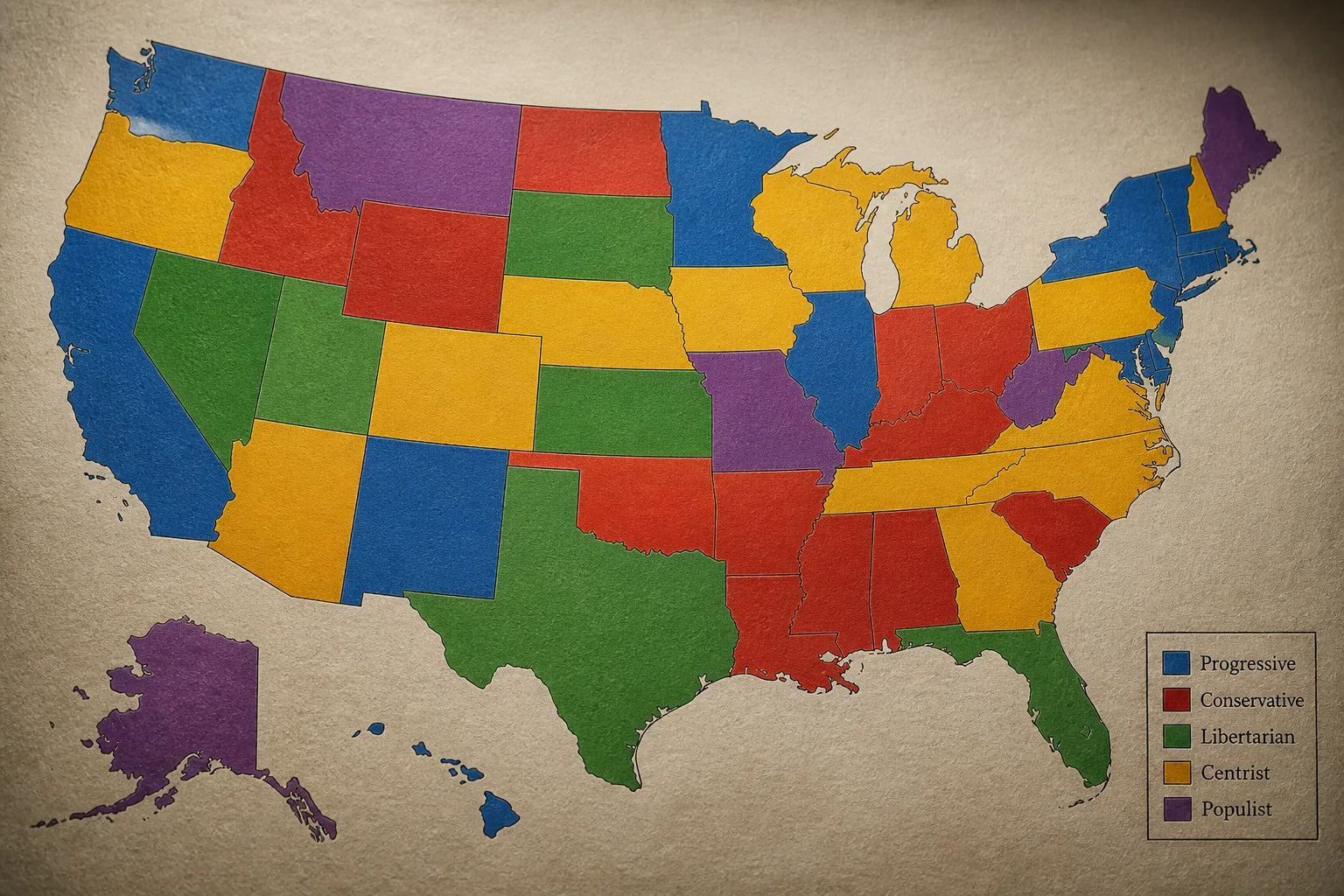
A fresh Pew Research Center analysis released in June 2026 reveals that the American electorate is far more fragmented than the classic red‑state versus blue‑state narrative suggests. The study uncovers nine distinct political typology groups that spread across the ideological spectrum, from the left to the right, and includes several blended or disengaged factions in between. The findings show that most voters hold mixed or cross‑pressured views that do not fit neatly with either major party.
Pew’s typology, updated every few years, categorizes voters into the following groups: Outsider Left, Progressive Left, Establishment Liberals, Democratic Mainstays, Stressed Sideliners, Ambivalent Right, Populist Right, Committed Conservatives, and Faithful Conservatives. According to the analysis, the most ideologically extreme groups—those on the far left and far right—make up a minority of the electorate. Instead, a large portion of Americans occupy the middle of the spectrum, blending traditionally left‑leaning and right‑leaning positions on issues such as immigration, government spending, and cultural policy.
The report also highlights inconsistencies within partisan identities. Some Republicans hold policy positions that place them closer to the political center, while some Democrats express more conservative views on specific issues. This cross‑pressure, researchers note, explains why party labels often fail to capture the full range of public opinion.
Engagement is a key factor in the perceived polarization of the political climate. Pew finds that the most ideologically consistent voters are also the most politically engaged. Those on the far left and far right are more likely to follow politics closely, vote consistently, and discuss political issues frequently. They also report that the party controlling Congress matters greatly as the 2026 midterm elections approach. In contrast, voters with more moderate or blended views tend to be less engaged.
Social media amplification further skews public perception. Posts that are emotional, confrontational, or highly partisan generate more engagement than moderate or mixed viewpoints. Algorithms that reward high engagement reinforce the visibility of extreme voices, creating an impression of a sharply divided electorate even when the underlying data shows a more nuanced distribution.
A separate CNN poll conducted in 2026 found that 47% of Americans now identify as independents, the highest level in more than a decade. The poll suggests that a large share of voters do not feel fully aligned with either major party, even if they still vote for candidates from one side or the other in practice.
The Pew analysis therefore paints a more complex picture of American politics than the binary red‑blue narrative. While the public discourse often emphasizes deep division, the data indicates that most voters hold a mix of positions that cross traditional party lines. The visibility of extreme voices on social media and the engagement habits of ideologically consistent voters contribute to the perception of polarization.
The implications of these findings are significant for the 2026 midterm elections. Candidates and parties may need to address the diverse policy preferences of voters who do not fit neatly into the left‑right dichotomy. The high proportion of independents also suggests that outreach to non‑partisan voters could be a decisive factor in upcoming contests.
Pew’s research underscores the importance of nuanced voter segmentation for understanding contemporary American politics. By moving beyond a simplistic two‑party framework, the study offers a clearer view of the electorate’s ideological landscape and the forces that shape political engagement and discourse.
The Pew Research Center will continue to monitor shifts in voter typology as the 2026 election cycle progresses. The organization’s findings will likely inform campaign strategies, media coverage, and public policy discussions in the months ahead.
Pew’s typology, updated every few years, categorizes voters into the following groups: Outsider Left, Progressive Left, Establishment Liberals, Democratic Mainstays, Stressed Sideliners, Ambivalent Right, Populist Right, Committed Conservatives, and Faithful Conservatives. According to the analysis, the most ideologically extreme groups—those on the far left and far right—make up a minority of the electorate. Instead, a large portion of Americans occupy the middle of the spectrum, blending traditionally left‑leaning and right‑leaning positions on issues such as immigration, government spending, and cultural policy.
The report also highlights inconsistencies within partisan identities. Some Republicans hold policy positions that place them closer to the political center, while some Democrats express more conservative views on specific issues. This cross‑pressure, researchers note, explains why party labels often fail to capture the full range of public opinion.
Engagement is a key factor in the perceived polarization of the political climate. Pew finds that the most ideologically consistent voters are also the most politically engaged. Those on the far left and far right are more likely to follow politics closely, vote consistently, and discuss political issues frequently. They also report that the party controlling Congress matters greatly as the 2026 midterm elections approach. In contrast, voters with more moderate or blended views tend to be less engaged.
Social media amplification further skews public perception. Posts that are emotional, confrontational, or highly partisan generate more engagement than moderate or mixed viewpoints. Algorithms that reward high engagement reinforce the visibility of extreme voices, creating an impression of a sharply divided electorate even when the underlying data shows a more nuanced distribution.
A separate CNN poll conducted in 2026 found that 47% of Americans now identify as independents, the highest level in more than a decade. The poll suggests that a large share of voters do not feel fully aligned with either major party, even if they still vote for candidates from one side or the other in practice.
The Pew analysis therefore paints a more complex picture of American politics than the binary red‑blue narrative. While the public discourse often emphasizes deep division, the data indicates that most voters hold a mix of positions that cross traditional party lines. The visibility of extreme voices on social media and the engagement habits of ideologically consistent voters contribute to the perception of polarization.
The implications of these findings are significant for the 2026 midterm elections. Candidates and parties may need to address the diverse policy preferences of voters who do not fit neatly into the left‑right dichotomy. The high proportion of independents also suggests that outreach to non‑partisan voters could be a decisive factor in upcoming contests.
Pew’s research underscores the importance of nuanced voter segmentation for understanding contemporary American politics. By moving beyond a simplistic two‑party framework, the study offers a clearer view of the electorate’s ideological landscape and the forces that shape political engagement and discourse.
The Pew Research Center will continue to monitor shifts in voter typology as the 2026 election cycle progresses. The organization’s findings will likely inform campaign strategies, media coverage, and public policy discussions in the months ahead.