Blab News
Pew Research Finds U.S. Voters Spread Across Nine Political Typologies, Not Just Red and Blue
In a fresh Pew Research Center study unveiled on June 10, 2026, the American voting public reveals a surprisingly intricate mosaic—nine distinct political typologies instead of the familiar red‑and‑blue dichotomy.
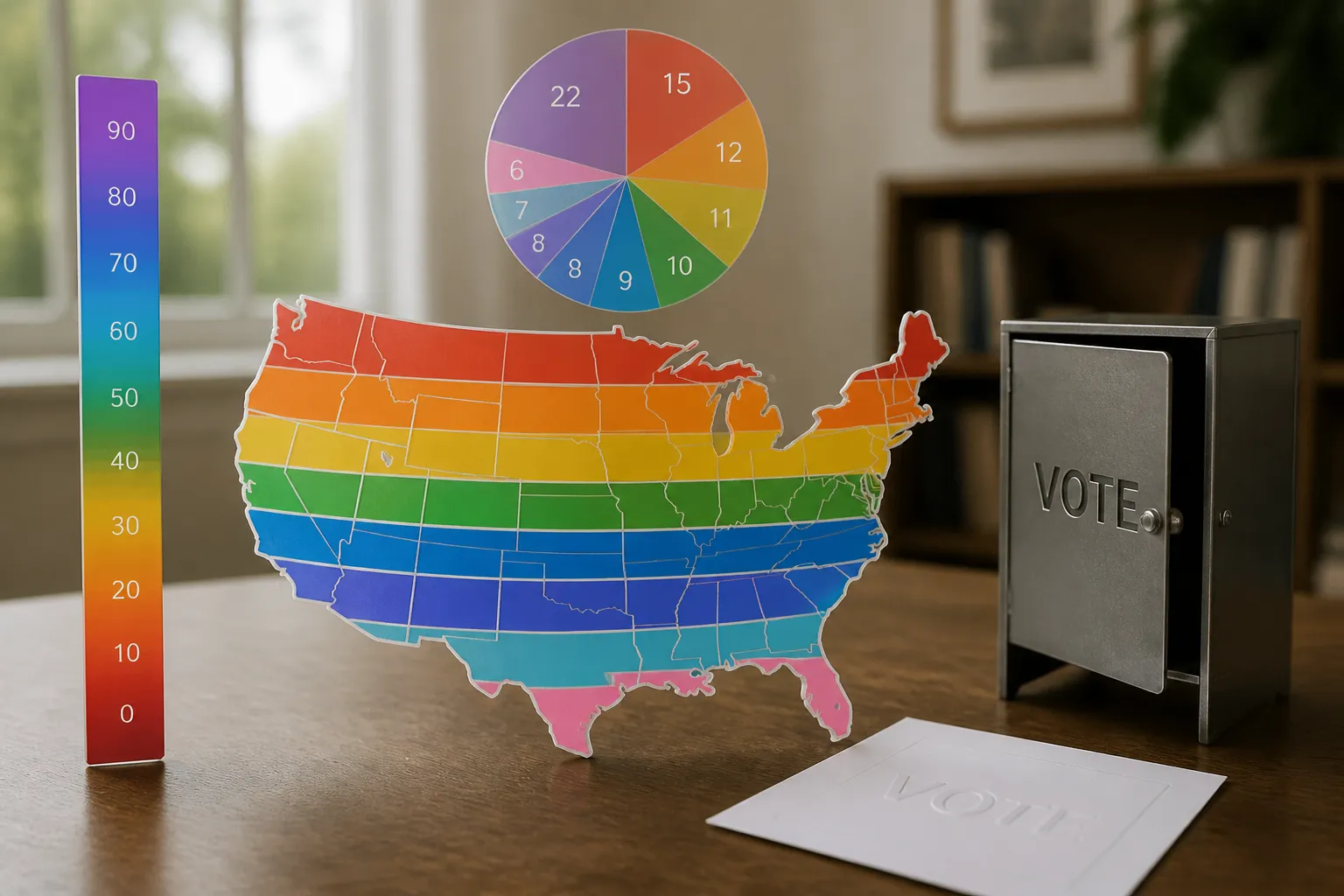
The survey, which canvassed more than 10,000 adults, identified the following nine categories: 1. Outsider left 2. Progressive left 3. Establishment liberals 4. Democratic mainstays 5. Stressed sideliners 6. Ambivalent right 7. Populist right 8. Committed conservatives 9. Faithful conservatives
The report points out that the bulk of voters sit outside the most ideologically extreme groups. Instead, many hold blended or cross‑pressured positions that resist easy alignment with either party’s platform.
Even among party‑identifying voters, cross‑pressured views surface. Some Republicans hold policy positions that pull them toward the political center, while some Democrats lean more conservative on specific issues. On matters such as immigration, government spending, and cultural policy, a significant portion of Americans mix traditionally left and right stances.
The study also draws a link between ideological consistency and political engagement. Voters who are most ideologically coherent—those in the far left or far right categories—tend to follow politics closely, vote consistently, and discuss political issues frequently. They also report that the outcome of Congress matters greatly to them as the 2026 midterm elections approach.
Social media amplifies this effect. Posts that are emotional, confrontational, or highly partisan attract more engagement than moderate or mixed viewpoints. Consequently, the most extreme voices are often the most visible in online conversations, reinforcing the perception of a sharply divided electorate.
Adding another layer, a separate CNN poll conducted in May 2026 found that 47% of Americans identify as independents, the highest level in more than a decade. The poll, carried out by SSRS, indicates that a large share of voters do not feel fully aligned with either major party, even if they still cast ballots for candidates from one side or the other in practice.
Together, the Pew typology and the CNN poll paint a more nuanced picture of American politics than the red‑vs‑blue narrative that often dominates media coverage. While the public discourse frequently appears polarized, the data suggest that the electorate is more fragmented, with many voters holding a mix of positions across the ideological spectrum.
The findings arrive at a critical juncture, as the 2026 midterm elections—scheduled for November 3, 2026—will decide control of the U.S. House of Representatives and 35 of the 100 Senate seats, along with more than 30 governorships. Historically, the party in power tends to lose seats in midterms, but the current level of independent voters and the presence of cross‑pressured groups could tip the balance.
Political analysts warn that the high level of independent identification may make the 2026 elections more unpredictable. Candidates might need to broaden their appeal to include those who hold cross‑pressured views on key issues. The Pew typology also suggests that outreach strategies based on a simple liberal‑conservative split risk overlooking significant portions of the electorate.
The Pew Research Center, a nonpartisan think tank based in Washington, D.C., has long studied public opinion and political attitudes. Its latest typology builds on earlier work that uncovered cracks within Democratic groups on social issues such as abortion, same‑sex marriage, and marijuana legalization. The current report shifts focus to how liberal the party should be, indicating that divisions now lie more in the degree of liberalism than in specific policy stances.
In short, the Pew analysis and the CNN poll reveal that the American electorate is more fragmented than the traditional two‑party model suggests. Most voters occupy middle or blended positions, and a growing share identify as independents. These dynamics could shape campaign strategies and voter turnout in the upcoming midterm elections, potentially affecting the balance of power in Congress.
The Pew report is available on the organization’s website, and the CNN poll data can be accessed through the network’s public polling archive. Both sources provide detailed methodology and demographic breakdowns that can help political observers and campaign teams understand the evolving landscape of U.S. voter preferences.
The survey, which canvassed more than 10,000 adults, identified the following nine categories: 1. Outsider left 2. Progressive left 3. Establishment liberals 4. Democratic mainstays 5. Stressed sideliners 6. Ambivalent right 7. Populist right 8. Committed conservatives 9. Faithful conservatives
The report points out that the bulk of voters sit outside the most ideologically extreme groups. Instead, many hold blended or cross‑pressured positions that resist easy alignment with either party’s platform.
Even among party‑identifying voters, cross‑pressured views surface. Some Republicans hold policy positions that pull them toward the political center, while some Democrats lean more conservative on specific issues. On matters such as immigration, government spending, and cultural policy, a significant portion of Americans mix traditionally left and right stances.
The study also draws a link between ideological consistency and political engagement. Voters who are most ideologically coherent—those in the far left or far right categories—tend to follow politics closely, vote consistently, and discuss political issues frequently. They also report that the outcome of Congress matters greatly to them as the 2026 midterm elections approach.
Social media amplifies this effect. Posts that are emotional, confrontational, or highly partisan attract more engagement than moderate or mixed viewpoints. Consequently, the most extreme voices are often the most visible in online conversations, reinforcing the perception of a sharply divided electorate.
Adding another layer, a separate CNN poll conducted in May 2026 found that 47% of Americans identify as independents, the highest level in more than a decade. The poll, carried out by SSRS, indicates that a large share of voters do not feel fully aligned with either major party, even if they still cast ballots for candidates from one side or the other in practice.
Together, the Pew typology and the CNN poll paint a more nuanced picture of American politics than the red‑vs‑blue narrative that often dominates media coverage. While the public discourse frequently appears polarized, the data suggest that the electorate is more fragmented, with many voters holding a mix of positions across the ideological spectrum.
The findings arrive at a critical juncture, as the 2026 midterm elections—scheduled for November 3, 2026—will decide control of the U.S. House of Representatives and 35 of the 100 Senate seats, along with more than 30 governorships. Historically, the party in power tends to lose seats in midterms, but the current level of independent voters and the presence of cross‑pressured groups could tip the balance.
Political analysts warn that the high level of independent identification may make the 2026 elections more unpredictable. Candidates might need to broaden their appeal to include those who hold cross‑pressured views on key issues. The Pew typology also suggests that outreach strategies based on a simple liberal‑conservative split risk overlooking significant portions of the electorate.
The Pew Research Center, a nonpartisan think tank based in Washington, D.C., has long studied public opinion and political attitudes. Its latest typology builds on earlier work that uncovered cracks within Democratic groups on social issues such as abortion, same‑sex marriage, and marijuana legalization. The current report shifts focus to how liberal the party should be, indicating that divisions now lie more in the degree of liberalism than in specific policy stances.
In short, the Pew analysis and the CNN poll reveal that the American electorate is more fragmented than the traditional two‑party model suggests. Most voters occupy middle or blended positions, and a growing share identify as independents. These dynamics could shape campaign strategies and voter turnout in the upcoming midterm elections, potentially affecting the balance of power in Congress.
The Pew report is available on the organization’s website, and the CNN poll data can be accessed through the network’s public polling archive. Both sources provide detailed methodology and demographic breakdowns that can help political observers and campaign teams understand the evolving landscape of U.S. voter preferences.