Blab News
Polish Activists Clash With Berlin Police Over Memorial Cross
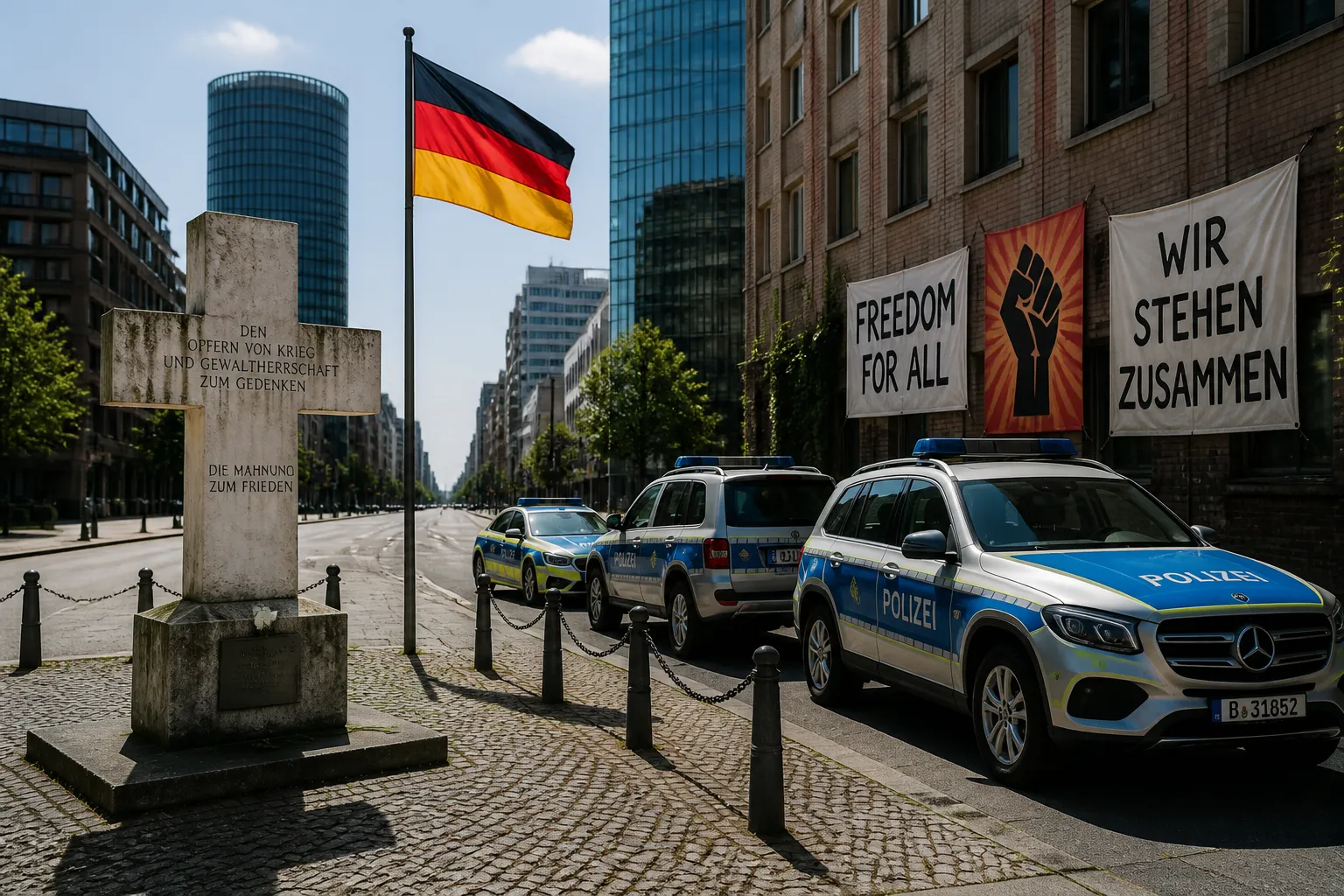
On Tuesday, a group of Polish demonstrators set out to place a wooden cross at a World War II memorial near Berlin’s Reichstag, only to be met by a forceful police response that left six participants detained. The confrontation was filmed and quickly circulated online, drawing attention to the fraught intersection of memory, politics, and public space.
The protest was organized by the Polish Border Defense Movement, a nationalist group that has publicly criticized the European Union’s migration policy and the handling of migrant returns from Germany to Poland. Their objective was clear: add a cross to a memorial that currently consists of a large boulder marking Polish victims of Nazi Germany. The movement believes the existing monument fails to capture the full scale of Poland’s suffering.
Footage released by the organizers shows officers pushing and shoving demonstrators as they approached the memorial. Several activists are seen being physically restrained, and officers are shown struggling with the cross. The video also depicts police attempting to wrest the cross from the activists’ hands.
According to a statement posted by the movement’s founder, Robert Bąkiewicz, the police “brutally attacked us” and “thrashed” participants. The statement claims that officers tried to seize the cross and that the activists refused to surrender it.
Berlin police, however, said they intervened after participants ignored instructions to either hold a stationary protest or visit the memorial individually. A police spokesperson added that “since resistance occurred… our operational forces applied coercive measures.” Six people were temporarily detained during the operation.
The Border Defense Movement argues that the current memorial does not adequately reflect the scale of Poland’s suffering during the war and that it lacks a cross and explicit national symbols. The group has been vocal about perceived threats to Polish sovereignty, citing its broader focus on border security.
Poland suffered an estimated six million deaths during the Nazi occupation, including about three million Polish Jews murdered in the Holocaust. The loss of life and the destruction of communities remain central to Polish collective memory and the nation’s post‑war identity.
The incident comes amid wider European debates about how to commemorate World War II. Several Eastern European states—Estonia, Latvia, and Lithuania—have removed Soviet‑era monuments and restricted public displays of Victory Day symbols. Moscow has repeatedly condemned such measures as attempts to rewrite history.
The clash also highlights the complex relationship between Germany and Poland. While the two countries are NATO and EU allies, historical grievances over the 1939 invasion and the post‑war border changes continue to influence diplomatic and public discourse.
At present, the Berlin police have released no further details about the legal status of the detained activists or whether charges will be filed. The incident has sparked discussion on social media, with some users noting the historical resonance of a protest at a site associated with Germany’s wartime occupation of Poland.
The situation remains unresolved, with no official statement from the German government regarding policy changes or investigations into the police’s conduct. The Polish Border Defense Movement has not announced further actions, and the fate of the detained participants is unknown.
The protest was organized by the Polish Border Defense Movement, a nationalist group that has publicly criticized the European Union’s migration policy and the handling of migrant returns from Germany to Poland. Their objective was clear: add a cross to a memorial that currently consists of a large boulder marking Polish victims of Nazi Germany. The movement believes the existing monument fails to capture the full scale of Poland’s suffering.
Footage released by the organizers shows officers pushing and shoving demonstrators as they approached the memorial. Several activists are seen being physically restrained, and officers are shown struggling with the cross. The video also depicts police attempting to wrest the cross from the activists’ hands.
According to a statement posted by the movement’s founder, Robert Bąkiewicz, the police “brutally attacked us” and “thrashed” participants. The statement claims that officers tried to seize the cross and that the activists refused to surrender it.
Berlin police, however, said they intervened after participants ignored instructions to either hold a stationary protest or visit the memorial individually. A police spokesperson added that “since resistance occurred… our operational forces applied coercive measures.” Six people were temporarily detained during the operation.
The Border Defense Movement argues that the current memorial does not adequately reflect the scale of Poland’s suffering during the war and that it lacks a cross and explicit national symbols. The group has been vocal about perceived threats to Polish sovereignty, citing its broader focus on border security.
Poland suffered an estimated six million deaths during the Nazi occupation, including about three million Polish Jews murdered in the Holocaust. The loss of life and the destruction of communities remain central to Polish collective memory and the nation’s post‑war identity.
The incident comes amid wider European debates about how to commemorate World War II. Several Eastern European states—Estonia, Latvia, and Lithuania—have removed Soviet‑era monuments and restricted public displays of Victory Day symbols. Moscow has repeatedly condemned such measures as attempts to rewrite history.
The clash also highlights the complex relationship between Germany and Poland. While the two countries are NATO and EU allies, historical grievances over the 1939 invasion and the post‑war border changes continue to influence diplomatic and public discourse.
At present, the Berlin police have released no further details about the legal status of the detained activists or whether charges will be filed. The incident has sparked discussion on social media, with some users noting the historical resonance of a protest at a site associated with Germany’s wartime occupation of Poland.
The situation remains unresolved, with no official statement from the German government regarding policy changes or investigations into the police’s conduct. The Polish Border Defense Movement has not announced further actions, and the fate of the detained participants is unknown.