Blab News
Idaho Lab Prepares First Full-Scale Tests of Mobile Nuclear Microreactors
Beneath Idaho’s rugged landscape, a quiet revolution is heating up. The Idaho National Laboratory (INL) is poised to ignite a fleet of microreactors—tiny, transportable nuclear power units—into a full‑scale test program that could reshape how remote communities and military bases generate electricity.
The Demonstration of Microreactor Experiments (DOME) facility, the world’s first dedicated microreactor test bed, is set to host a series of industry‑led experiments. These tests aim to prove that small nuclear devices, each producing less than 50 MWe, can safely deliver up to 20 MW of thermal energy—enough to light a small town or power a forward‑deployed army base.
Opened by the Department of Energy (DOE) in 2022, DOME offers developers a controlled environment that mirrors real‑world operating conditions. According to the DOE, the site will allow companies to evaluate a range of cooling systems, safety mechanisms, and power‑conversion technologies side by side. The laboratory’s 890‑square‑mile campus, managed by the Battelle Memorial Institute, has already hosted more than 50 reactors and has been the birthplace of many nuclear firsts.
One of the projects slated for DOME is the MARVEL microreactor, a sodium‑potassium cooled unit that produces 85 kW of electrical power. After a three‑month coolant‑system testing campaign at INL, the MARVEL team concluded that the liquid‑metal cooling system meets the performance and safety criteria required for further development. The success of this test demonstrates the feasibility of liquid‑metal cooling in a microreactor context.
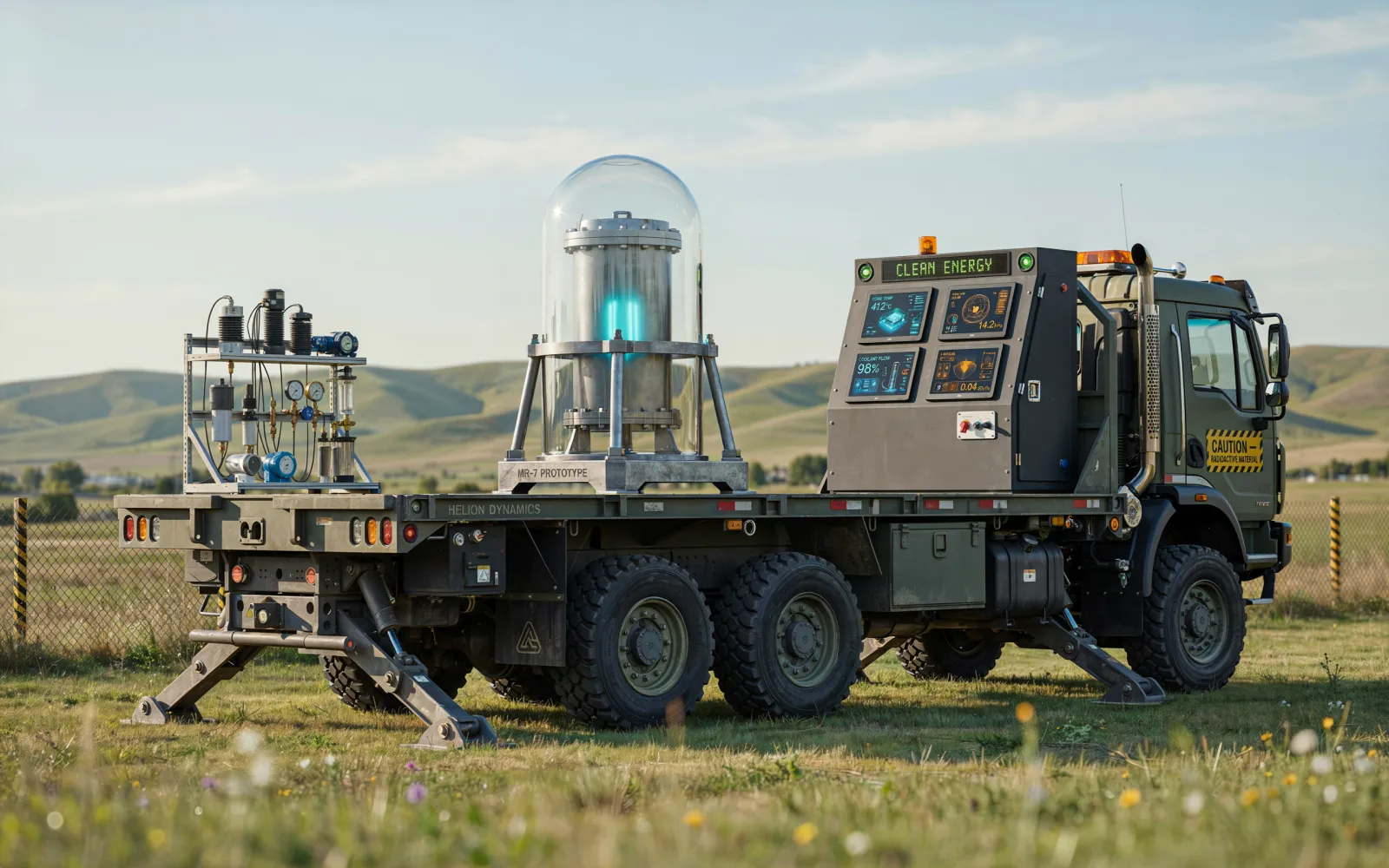
Military interest is mounting. The U.S. Army’s Janus program, which aims to field a mobile nuclear microreactor by 2028, sees these compact powerhouses as a way to enhance energy resilience for forward‑deployed units. The Army’s focus on mobility and rapid deployment dovetails with the microreactor’s design philosophy of small, transportable powerhouses.
Safety remains the central concern for microreactor developers. The technology incorporates passive safety features—built‑in sensors that monitor temperature, pressure, and other critical parameters—ensuring that the reactors can shut down automatically if conditions become unsafe. The DOE has stressed that microreactors must meet stringent safety standards, and the DOME facility will provide a platform to validate these systems under realistic operating scenarios.
The broader nuclear energy landscape is shifting. While the United States currently operates 94 commercial reactors with a net capacity of 97 GW, many of these plants are aging. New large‑scale projects have stalled, and the industry is exploring alternative designs. Microreactors offer a potential pathway to low‑carbon power for remote communities and specialized applications, complementing the existing fleet.
The upcoming tests at INL will be closely watched by developers, regulators, and policymakers. Successful demonstrations could accelerate the deployment of microreactors in both civilian and military contexts, providing a flexible, low‑emission power source that can be deployed where traditional grid infrastructure is unavailable.
The DOE and INL will continue to monitor the results of the DOME experiments and the MARVEL coolant test. The next phase will involve full‑scale power‑generation trials, safety validation, and potential licensing steps. The outcomes of these tests will shape the future of nuclear power in the United States and beyond.
The Demonstration of Microreactor Experiments (DOME) facility, the world’s first dedicated microreactor test bed, is set to host a series of industry‑led experiments. These tests aim to prove that small nuclear devices, each producing less than 50 MWe, can safely deliver up to 20 MW of thermal energy—enough to light a small town or power a forward‑deployed army base.
Opened by the Department of Energy (DOE) in 2022, DOME offers developers a controlled environment that mirrors real‑world operating conditions. According to the DOE, the site will allow companies to evaluate a range of cooling systems, safety mechanisms, and power‑conversion technologies side by side. The laboratory’s 890‑square‑mile campus, managed by the Battelle Memorial Institute, has already hosted more than 50 reactors and has been the birthplace of many nuclear firsts.
One of the projects slated for DOME is the MARVEL microreactor, a sodium‑potassium cooled unit that produces 85 kW of electrical power. After a three‑month coolant‑system testing campaign at INL, the MARVEL team concluded that the liquid‑metal cooling system meets the performance and safety criteria required for further development. The success of this test demonstrates the feasibility of liquid‑metal cooling in a microreactor context.
Military interest is mounting. The U.S. Army’s Janus program, which aims to field a mobile nuclear microreactor by 2028, sees these compact powerhouses as a way to enhance energy resilience for forward‑deployed units. The Army’s focus on mobility and rapid deployment dovetails with the microreactor’s design philosophy of small, transportable powerhouses.
Safety remains the central concern for microreactor developers. The technology incorporates passive safety features—built‑in sensors that monitor temperature, pressure, and other critical parameters—ensuring that the reactors can shut down automatically if conditions become unsafe. The DOE has stressed that microreactors must meet stringent safety standards, and the DOME facility will provide a platform to validate these systems under realistic operating scenarios.
The broader nuclear energy landscape is shifting. While the United States currently operates 94 commercial reactors with a net capacity of 97 GW, many of these plants are aging. New large‑scale projects have stalled, and the industry is exploring alternative designs. Microreactors offer a potential pathway to low‑carbon power for remote communities and specialized applications, complementing the existing fleet.
The upcoming tests at INL will be closely watched by developers, regulators, and policymakers. Successful demonstrations could accelerate the deployment of microreactors in both civilian and military contexts, providing a flexible, low‑emission power source that can be deployed where traditional grid infrastructure is unavailable.
The DOE and INL will continue to monitor the results of the DOME experiments and the MARVEL coolant test. The next phase will involve full‑scale power‑generation trials, safety validation, and potential licensing steps. The outcomes of these tests will shape the future of nuclear power in the United States and beyond.