Blab News
Chicago Climate Week Begins Amid Smoke-Heavy Air, Storm Watch, and Community-Driven Events
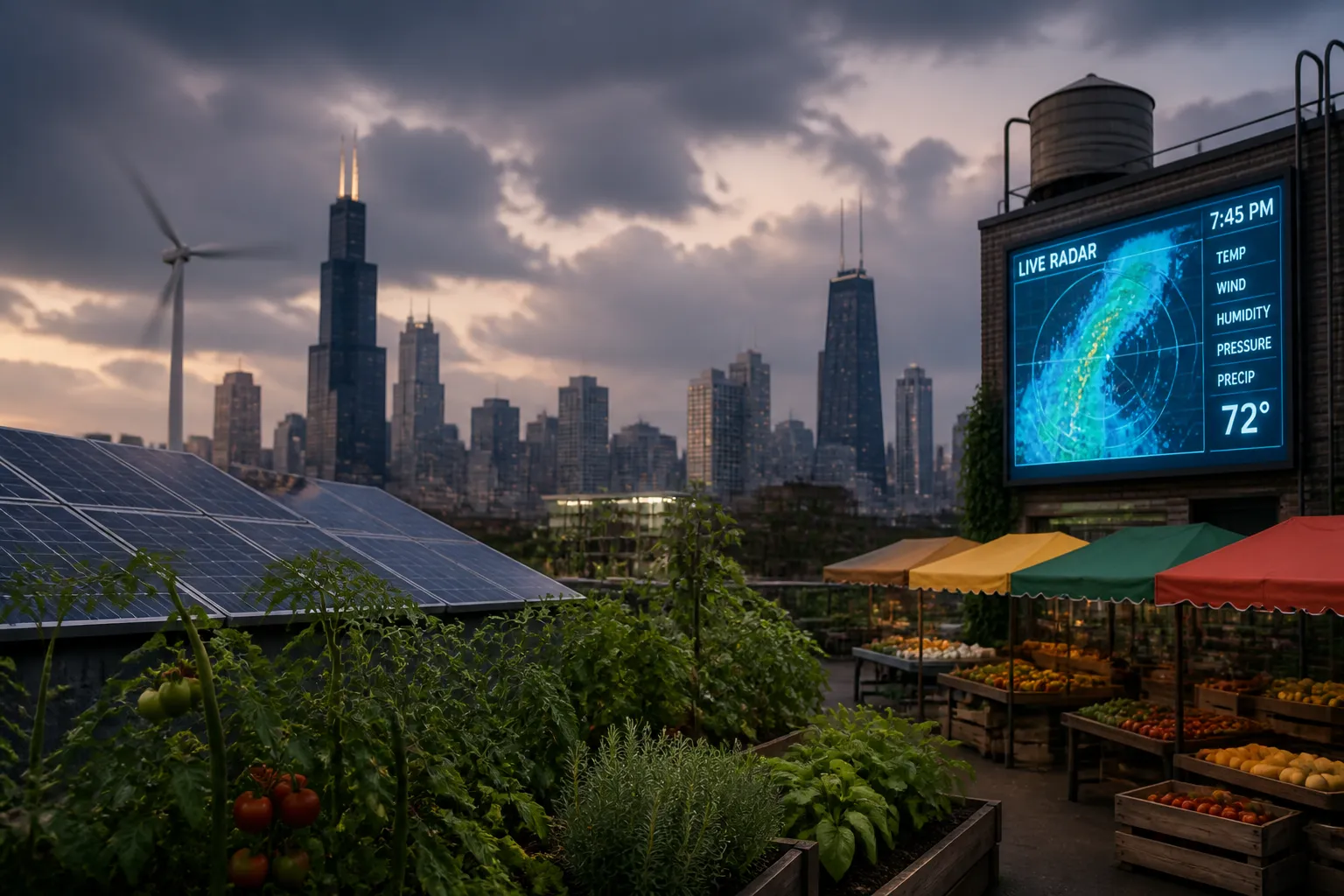
On July 18, 2026, Chicago’s first community‑led Climate Week opened as the city faced an Air Quality Alert triggered by smoke from Canadian wildfires.
The Illinois Environmental Protection Agency classified the morning air as moderate but warned it could become unhealthy for sensitive groups later as ozone levels rise.
A Severe Thunderstorm Watch covers Kankakee, Jasper and Newton counties until 7 p.m., with the National Weather Service extending the alert to parts of northwest Indiana until Monday.
Forecasts call for rain, hail, and damaging winds from noon to 5 p.m., and the smoke plume is expected to drift back into the Chicago area by 5 p.m. The combination of weather and smoke prompted the temporary closure of North Avenue Beach and raised concerns about visibility at O’Hare International Airport.
Despite the haze, the lakefront drew visitors who took advantage of the clearer air. Saron Assef, visiting from Ohio, said she had found the beach open and decided to go. Others attended the 19th‑year Volleywood volleyball festival, which organizers said would pause play if air quality worsened.
Chicago Climate Week, running through July 25, features dozens of sustainability‑focused activities. The Bevapalooza Reuse and Recycling Pop‑Up on the South Side, co‑organized by Randi Alexander, aims to bring recycling initiatives to a community that has historically lacked such programs. Volunteer Skye Kinlaw described the week as a “wake‑up call” that illustrates why the city is holding the event.
Stan’s Donut Run, held near Soldier Field, marked its 10th year with about 5,000 participants in a 10‑K, 5‑K and 1‑K kids’ dash. The event, which raises money for children battling pediatric cancer, drew runners who were mindful of the lingering smoke. Kennedy Khalimsky, the marketing coordinator, said organizers encouraged hydration and cautioned that the air had cleared enough for the race to proceed. Runners such as Becky Hoffman and Leo Escobar noted they adjusted their pace and breathing to accommodate the conditions.
Health experts warned that wildfire smoke contains particles similar to those in tobacco smoke, which can have lasting effects on the eyes and respiratory system. Dr. Soledad Cortina, a cornea specialist at the University of Illinois Chicago, said the tiny particles could damage the eyes and exacerbate chronic conditions. Patricia Ward, head scientist at the Griffin Museum of Science and Industry, added that weather patterns like this are expected to become more frequent as climate change intensifies.
The smoke originates from more than 190 active fires in northern Ontario, according to Premier Doug Ford. The fires have destroyed communities and forced evacuations, and the Canadian government has not yet responded to U.S. President Donald Trump’s social‑media post blaming Canada for forest management. Ford emphasized that Canada has assisted the U.S. in fighting fires.
The air quality alert has prompted practical advice from HVAC technicians. Karol Derezinski of Shavitz Heating and Air Conditioning advised homeowners to inspect filters and use recirculate mode in vehicles to reduce smoke exposure.
The combination of smoke, storms and heat has led to a spike in emergency department visits in the region. Dr. Juanita Mora of the American Lung Association urged people to stay indoors if possible and to stay hydrated.
While the week’s events continue, organizers remain vigilant. The Tacos y Tamales festival in Pilsen and the Roscoe Village Burger Fest, postponed from Friday, are monitoring weather conditions through the weekend. The Chicago Climate Week organizers say the goal is to generate ideas for protecting the environment and to encourage community action.
The current situation remains fluid. The air quality alert will likely lift as wind patterns shift on Monday, but the risk of a return of hazardous haze exists. Chicago’s Climate Week will continue to highlight the link between local weather, global wildfire activity and the city’s climate resilience efforts.
The Illinois Environmental Protection Agency classified the morning air as moderate but warned it could become unhealthy for sensitive groups later as ozone levels rise.
A Severe Thunderstorm Watch covers Kankakee, Jasper and Newton counties until 7 p.m., with the National Weather Service extending the alert to parts of northwest Indiana until Monday.
Forecasts call for rain, hail, and damaging winds from noon to 5 p.m., and the smoke plume is expected to drift back into the Chicago area by 5 p.m. The combination of weather and smoke prompted the temporary closure of North Avenue Beach and raised concerns about visibility at O’Hare International Airport.
Despite the haze, the lakefront drew visitors who took advantage of the clearer air. Saron Assef, visiting from Ohio, said she had found the beach open and decided to go. Others attended the 19th‑year Volleywood volleyball festival, which organizers said would pause play if air quality worsened.
Chicago Climate Week, running through July 25, features dozens of sustainability‑focused activities. The Bevapalooza Reuse and Recycling Pop‑Up on the South Side, co‑organized by Randi Alexander, aims to bring recycling initiatives to a community that has historically lacked such programs. Volunteer Skye Kinlaw described the week as a “wake‑up call” that illustrates why the city is holding the event.
Stan’s Donut Run, held near Soldier Field, marked its 10th year with about 5,000 participants in a 10‑K, 5‑K and 1‑K kids’ dash. The event, which raises money for children battling pediatric cancer, drew runners who were mindful of the lingering smoke. Kennedy Khalimsky, the marketing coordinator, said organizers encouraged hydration and cautioned that the air had cleared enough for the race to proceed. Runners such as Becky Hoffman and Leo Escobar noted they adjusted their pace and breathing to accommodate the conditions.
Health experts warned that wildfire smoke contains particles similar to those in tobacco smoke, which can have lasting effects on the eyes and respiratory system. Dr. Soledad Cortina, a cornea specialist at the University of Illinois Chicago, said the tiny particles could damage the eyes and exacerbate chronic conditions. Patricia Ward, head scientist at the Griffin Museum of Science and Industry, added that weather patterns like this are expected to become more frequent as climate change intensifies.
The smoke originates from more than 190 active fires in northern Ontario, according to Premier Doug Ford. The fires have destroyed communities and forced evacuations, and the Canadian government has not yet responded to U.S. President Donald Trump’s social‑media post blaming Canada for forest management. Ford emphasized that Canada has assisted the U.S. in fighting fires.
The air quality alert has prompted practical advice from HVAC technicians. Karol Derezinski of Shavitz Heating and Air Conditioning advised homeowners to inspect filters and use recirculate mode in vehicles to reduce smoke exposure.
The combination of smoke, storms and heat has led to a spike in emergency department visits in the region. Dr. Juanita Mora of the American Lung Association urged people to stay indoors if possible and to stay hydrated.
While the week’s events continue, organizers remain vigilant. The Tacos y Tamales festival in Pilsen and the Roscoe Village Burger Fest, postponed from Friday, are monitoring weather conditions through the weekend. The Chicago Climate Week organizers say the goal is to generate ideas for protecting the environment and to encourage community action.
The current situation remains fluid. The air quality alert will likely lift as wind patterns shift on Monday, but the risk of a return of hazardous haze exists. Chicago’s Climate Week will continue to highlight the link between local weather, global wildfire activity and the city’s climate resilience efforts.