Blab News
Lower Colorado River Authority to Open Floodgates at Mansfield Dam as Lake Travis Reaches Flood Pool
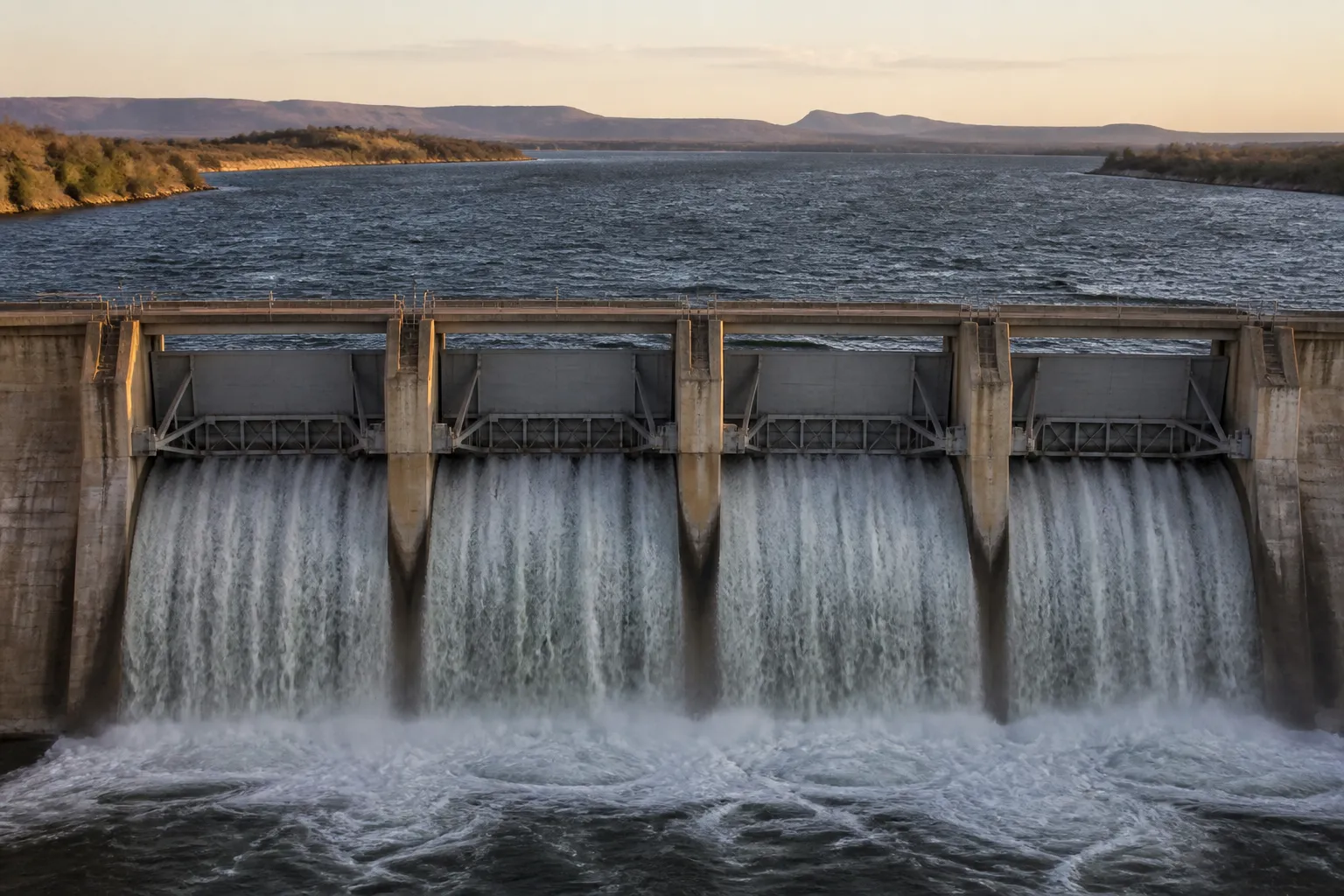
Heavy rains over the Hill Country have pushed Lake Travis into its flood pool, prompting the Lower Colorado River Authority (LCRA) to open at least two floodgates at Mansfield Dam for the first time since 2019. The first gate is slated to open at about 6 a.m. on Saturday, July 18, followed by a second at roughly 1 p.m.
Lake Travis is the reservoir created by Mansfield Dam that supplies water to Austin and its surrounding communities. Beyond its role as a water‑supply reservoir, the lake also functions as a flood‑control basin. When stormwater accumulates, the LCRA can release water through floodgates in a controlled fashion to keep downstream areas safe. The reservoir’s conservation pool—the target level for water supply—stands at 681 feet above mean sea level (MSL). Above that level, the lake enters a flood pool that can accommodate an additional 776,062 acre‑feet of water.
The LCRA emphasized that it will only open floodgates if the releases will not raise water levels on the Colorado River excessively at key downstream points. If Lake Travis continues to rise, the authority is permitted to release greater volumes with fewer downstream considerations. The agency also plans to open a floodgate at Tom Miller Dam, located downstream of Mansfield, on Friday to clear the path for Saturday’s releases.
Floodgates at Wirtz Dam and Starcke Dam—both further upstream on the Colorado River—were opened yesterday and will remain open. While the opening of multiple gates is relatively rare, it does not signal an imminent overflow of Lake Travis. The flood‑storage capacity of the lake is almost as large as its water‑supply storage, a fact noted by John Hofmann, LCRA’s executive vice president for water, during a conversation with KUT after similar flooding last year.
The LCRA warned that the increased flow downstream could generate fast currents and higher water levels at points below the dams. Residents and businesses downstream are advised to monitor local advisories and to be prepared for potential impacts on navigation and infrastructure.
This decision follows a period of intense rainfall across central Texas. The agency has been closely monitoring inflows to the Highland Lakes and has issued updates on its website and through local media. The floodgate operations will be carried out in a staged manner, with the first gate opening early Saturday morning and the second later in the afternoon.
The floodgate operations are part of the LCRA’s ongoing flood‑management strategy, which balances the need to protect downstream communities with the requirement to maintain adequate water supply for the region. Guided by its mission to manage the lower Colorado River and provide reliable water and power services, the authority’s actions aim to minimize downstream impacts while safeguarding the reservoir’s integrity.
At the time of this report, the LCRA continues to monitor Lake Travis levels and downstream conditions. No formal emergency declaration has been issued, but the agency has indicated that further releases may be necessary if the lake’s level rises above the flood‑pool threshold. Local officials and residents are advised to stay informed through official LCRA communications and local news outlets.
The LCRA’s floodgate operations underscore the importance of the Highland Lakes system in managing both water supply and flood risk for central Texas. Its careful approach to releasing water seeks to protect the communities that depend on the reservoir while maintaining the region’s water security.
Lake Travis is the reservoir created by Mansfield Dam that supplies water to Austin and its surrounding communities. Beyond its role as a water‑supply reservoir, the lake also functions as a flood‑control basin. When stormwater accumulates, the LCRA can release water through floodgates in a controlled fashion to keep downstream areas safe. The reservoir’s conservation pool—the target level for water supply—stands at 681 feet above mean sea level (MSL). Above that level, the lake enters a flood pool that can accommodate an additional 776,062 acre‑feet of water.
The LCRA emphasized that it will only open floodgates if the releases will not raise water levels on the Colorado River excessively at key downstream points. If Lake Travis continues to rise, the authority is permitted to release greater volumes with fewer downstream considerations. The agency also plans to open a floodgate at Tom Miller Dam, located downstream of Mansfield, on Friday to clear the path for Saturday’s releases.
Floodgates at Wirtz Dam and Starcke Dam—both further upstream on the Colorado River—were opened yesterday and will remain open. While the opening of multiple gates is relatively rare, it does not signal an imminent overflow of Lake Travis. The flood‑storage capacity of the lake is almost as large as its water‑supply storage, a fact noted by John Hofmann, LCRA’s executive vice president for water, during a conversation with KUT after similar flooding last year.
The LCRA warned that the increased flow downstream could generate fast currents and higher water levels at points below the dams. Residents and businesses downstream are advised to monitor local advisories and to be prepared for potential impacts on navigation and infrastructure.
This decision follows a period of intense rainfall across central Texas. The agency has been closely monitoring inflows to the Highland Lakes and has issued updates on its website and through local media. The floodgate operations will be carried out in a staged manner, with the first gate opening early Saturday morning and the second later in the afternoon.
The floodgate operations are part of the LCRA’s ongoing flood‑management strategy, which balances the need to protect downstream communities with the requirement to maintain adequate water supply for the region. Guided by its mission to manage the lower Colorado River and provide reliable water and power services, the authority’s actions aim to minimize downstream impacts while safeguarding the reservoir’s integrity.
At the time of this report, the LCRA continues to monitor Lake Travis levels and downstream conditions. No formal emergency declaration has been issued, but the agency has indicated that further releases may be necessary if the lake’s level rises above the flood‑pool threshold. Local officials and residents are advised to stay informed through official LCRA communications and local news outlets.
The LCRA’s floodgate operations underscore the importance of the Highland Lakes system in managing both water supply and flood risk for central Texas. Its careful approach to releasing water seeks to protect the communities that depend on the reservoir while maintaining the region’s water security.