Blab News
U.S. Airstrikes Hit Inland Iranian Targets as Iran Attacks Shipping and U.S. Forces in the Gulf
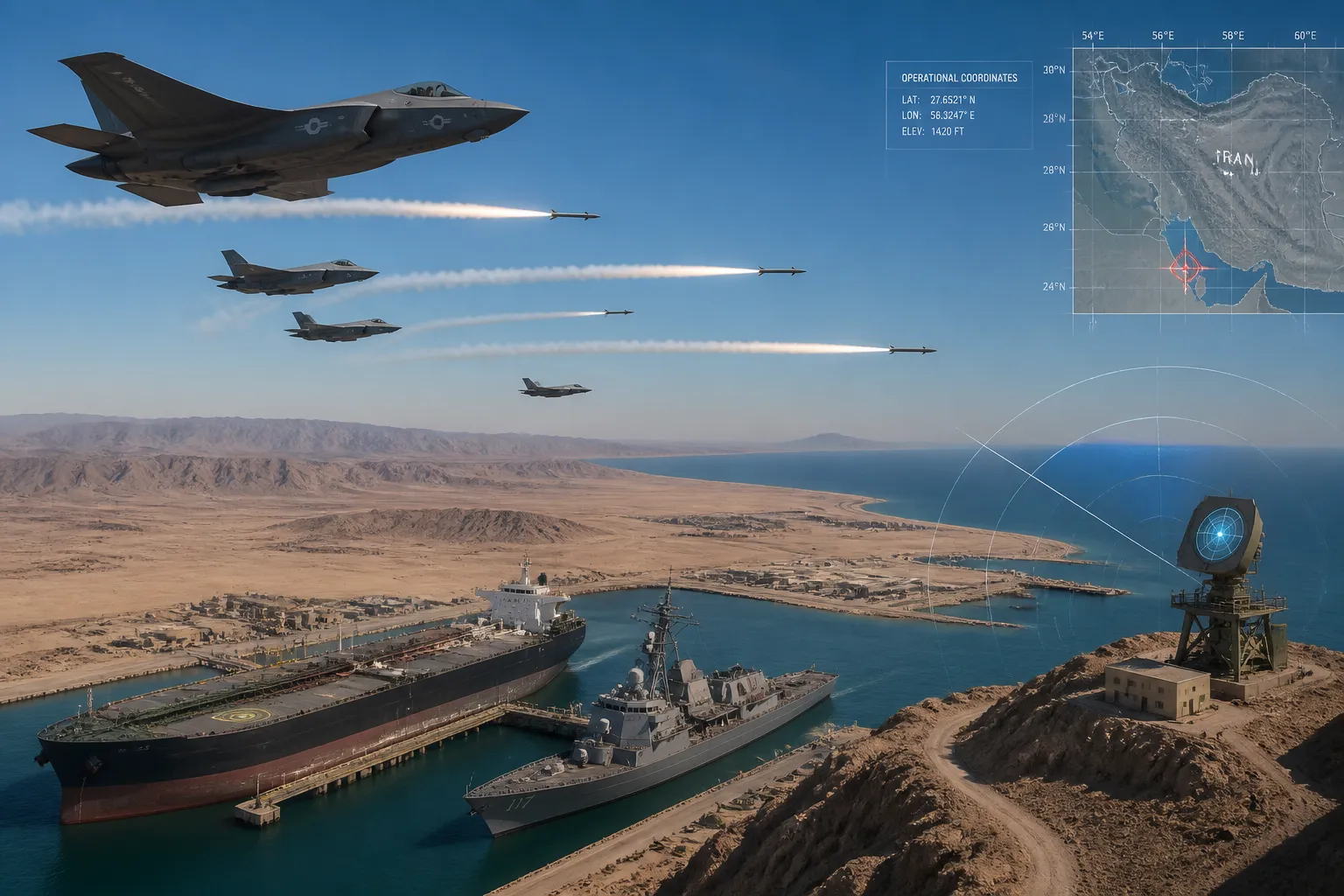
The United States has intensified its campaign against Iranian military infrastructure, striking the 388th Mechanized Assault Brigade barracks in Iranshahr and an additional Revolutionary Guard base in Saravan on July 15. According to reports from the Institute for the Study of War and the Critical Threats Project, the strike on the 388th Brigade’s barracks, located roughly 200 km from Iran’s coast, killed seven Artesh soldiers, wounded 13 others, and destroyed several buildings. A second inland target was reported in Saravan, also in Sistan and Baluchistan Province.
These inland attacks are notable because most U.S. airstrikes in July have focused on the southern coast of Iran. The 388th Brigade is part of the 88th Armored Division based in Zahedan, and its targeting suggests a shift toward disrupting Iranian ground forces deeper in the country.
In a separate escalation, Iran fired missiles at three commercial vessels in the Strait of Hormuz on July 13. Two of the ships were engaged in “shuttle runs,” short trips that allow oil to be moved through the strait while avoiding Iranian territorial waters. The attacks, reported by the Wall Street Journal, were part of a broader Iranian strategy to deter shipping companies from using alternative routes that bypass Iran’s control of the strait.
The impact on shipping is evident. Seven maritime security and shipping industry sources told Reuters on July 15 that companies are avoiding the southern route even when U.S. military escorts are present. The decision to stay away from the strait reflects a risk calculation that Iran’s attacks can still deter transit.
To counter Iran’s maritime aggression, the U.S. Treasury Department imposed sanctions on more than 50 individuals, entities, and vessels on July 14 for supporting Mohammad Hossein Shamkhani’s oil export, shipping, and sanctions‑evasion network. The sanctions target Shamkhani’s financiers, logistics facilitators, container shipping companies, vessel operators, and the Caspian Sea shipping network that moves Iranian and Russian petroleum products to Iranian‑backed actors. The Treasury’s action follows earlier sanctions in July 2025 and April 2026 that aimed to disrupt the Shamkhani network.
Iran’s attacks on U.S. forces extended beyond the Gulf of Oman. On July 15, Iranian‑backed forces reportedly struck U.S. bases in Bahrain and Kuwait and launched drones at the U.S. consulate in Erbil, Iraq. Iraqi media reported that six drones targeted Erbil International Airport and the U.S. consulate, but air defenses intercepted all of them. The attacks on Bahrain and Kuwait were confirmed by U.S. officials.
U.S. Secretary of Defense Pete Hegseth met with Iraqi Prime Minister Ali al‑Zaydi on July 14 to discuss the disarmament of Iranian‑backed Iraqi militias. Hegseth reiterated that the militias had carried out over 600 attacks on U.S. personnel during the war. The meeting led to the formation of an Iraqi committee to negotiate a new U.S.–Iraq security cooperation framework, ahead of the scheduled withdrawal of U.S. forces from Iraqi Kurdistan in September 2026.
In the broader regional context, U.S. officials are supporting Iraqi and Syrian efforts to revive the Kirkuk‑Baniyas pipeline that would connect Iraq’s eastern Mediterranean export route to the Mediterranean Sea. The U.S. is also backing a consortium of U.S. and Qatari companies to develop a pipeline from Basra to Peshkabour, linking to Turkish and Syrian pipelines.
The Iraqi federal government has recently designated Hezbollah as a terrorist organization and frozen assets of individuals and corporations affiliated with Hezbollah and ISIS. The designation follows U.S. pressure for Iraq to reduce Iranian influence by dismantling Iranian‑backed militia financial networks.
The current situation shows a continued U.S. focus on degrading Iran’s military capabilities while simultaneously applying economic pressure through sanctions. Iran remains active in attacking shipping and U.S. forces in the Gulf, and U.S. diplomatic efforts are underway to secure cooperation from Iraq and other regional partners. No new diplomatic agreements have been announced, and the U.S. continues to monitor Iranian activity closely.
These inland attacks are notable because most U.S. airstrikes in July have focused on the southern coast of Iran. The 388th Brigade is part of the 88th Armored Division based in Zahedan, and its targeting suggests a shift toward disrupting Iranian ground forces deeper in the country.
In a separate escalation, Iran fired missiles at three commercial vessels in the Strait of Hormuz on July 13. Two of the ships were engaged in “shuttle runs,” short trips that allow oil to be moved through the strait while avoiding Iranian territorial waters. The attacks, reported by the Wall Street Journal, were part of a broader Iranian strategy to deter shipping companies from using alternative routes that bypass Iran’s control of the strait.
The impact on shipping is evident. Seven maritime security and shipping industry sources told Reuters on July 15 that companies are avoiding the southern route even when U.S. military escorts are present. The decision to stay away from the strait reflects a risk calculation that Iran’s attacks can still deter transit.
To counter Iran’s maritime aggression, the U.S. Treasury Department imposed sanctions on more than 50 individuals, entities, and vessels on July 14 for supporting Mohammad Hossein Shamkhani’s oil export, shipping, and sanctions‑evasion network. The sanctions target Shamkhani’s financiers, logistics facilitators, container shipping companies, vessel operators, and the Caspian Sea shipping network that moves Iranian and Russian petroleum products to Iranian‑backed actors. The Treasury’s action follows earlier sanctions in July 2025 and April 2026 that aimed to disrupt the Shamkhani network.
Iran’s attacks on U.S. forces extended beyond the Gulf of Oman. On July 15, Iranian‑backed forces reportedly struck U.S. bases in Bahrain and Kuwait and launched drones at the U.S. consulate in Erbil, Iraq. Iraqi media reported that six drones targeted Erbil International Airport and the U.S. consulate, but air defenses intercepted all of them. The attacks on Bahrain and Kuwait were confirmed by U.S. officials.
U.S. Secretary of Defense Pete Hegseth met with Iraqi Prime Minister Ali al‑Zaydi on July 14 to discuss the disarmament of Iranian‑backed Iraqi militias. Hegseth reiterated that the militias had carried out over 600 attacks on U.S. personnel during the war. The meeting led to the formation of an Iraqi committee to negotiate a new U.S.–Iraq security cooperation framework, ahead of the scheduled withdrawal of U.S. forces from Iraqi Kurdistan in September 2026.
In the broader regional context, U.S. officials are supporting Iraqi and Syrian efforts to revive the Kirkuk‑Baniyas pipeline that would connect Iraq’s eastern Mediterranean export route to the Mediterranean Sea. The U.S. is also backing a consortium of U.S. and Qatari companies to develop a pipeline from Basra to Peshkabour, linking to Turkish and Syrian pipelines.
The Iraqi federal government has recently designated Hezbollah as a terrorist organization and frozen assets of individuals and corporations affiliated with Hezbollah and ISIS. The designation follows U.S. pressure for Iraq to reduce Iranian influence by dismantling Iranian‑backed militia financial networks.
The current situation shows a continued U.S. focus on degrading Iran’s military capabilities while simultaneously applying economic pressure through sanctions. Iran remains active in attacking shipping and U.S. forces in the Gulf, and U.S. diplomatic efforts are underway to secure cooperation from Iraq and other regional partners. No new diplomatic agreements have been announced, and the U.S. continues to monitor Iranian activity closely.