Blab News
EU Airlines Urge Commission to Keep Carbon Trading Limited to Intra-European Flights
Europe’s largest carriers have warned the European Commission that extending the Emissions Trading System (ETS) to cover outbound international flights would lift ticket prices and burden airlines with new costs.
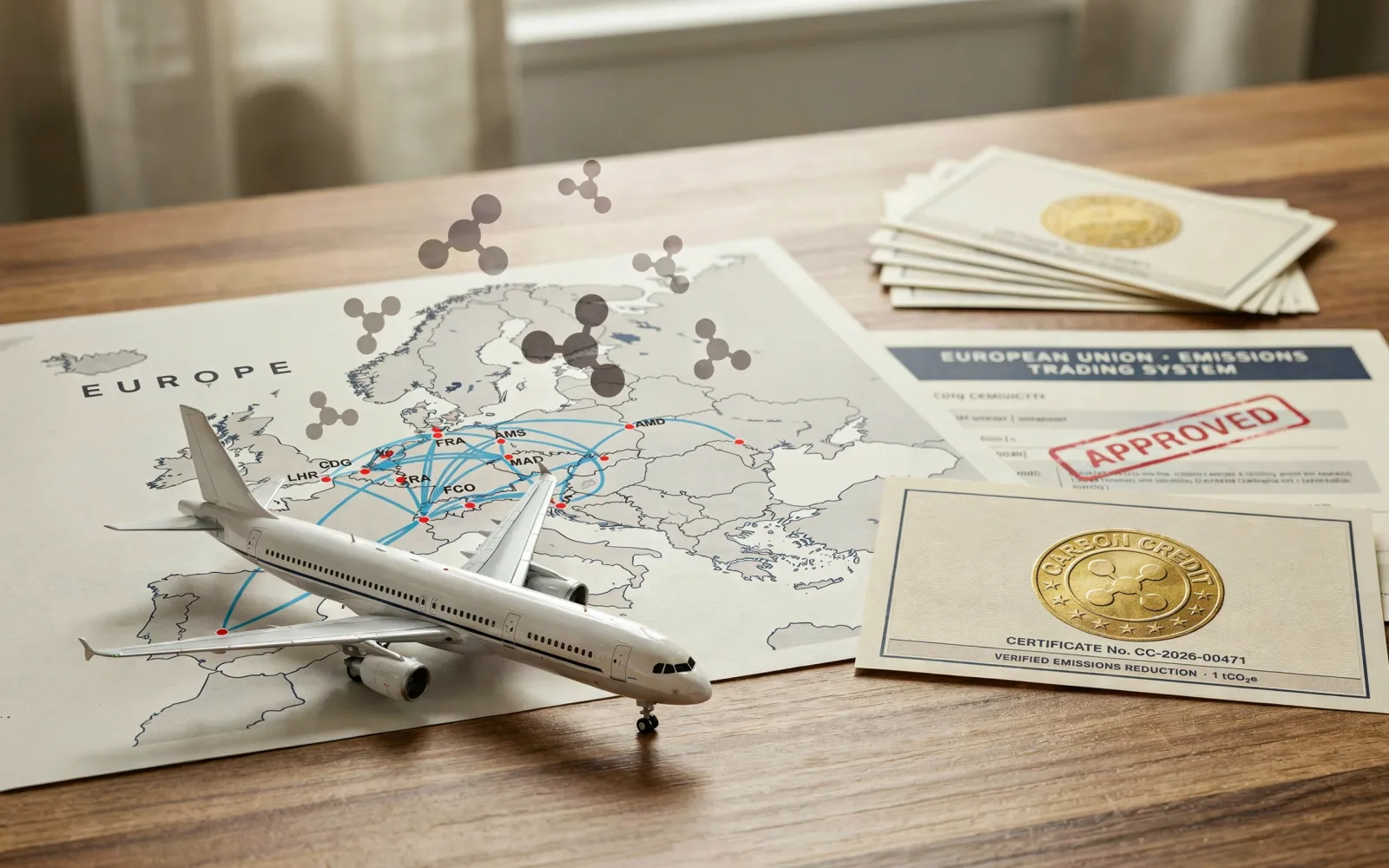
The ETS, the world’s oldest cap‑and‑trade scheme, already covers roughly 40 % of the Union’s greenhouse‑gas emissions. At present it applies to flights within the European Economic Area, the United Kingdom and Switzerland. If the Commission adopts the proposed expansion, airlines would have to purchase allowances for every tonne of CO₂ emitted on every international leg.
In a letter to the Commission, the International Air Transport Association (IATA) – which represents about 370 airlines and 85 % of global seat‑kilometres – asked the EU to keep the system confined to intra‑European routes. Signed by the heads of 15 major carriers, the letter argues that the move would “further penalise European passengers and businesses by increasing the cost of airfare and cargo.”
Aviation journalist Gerry Byrne, speaking on RTE’s Morning Ireland, explained that aircraft cannot be electrified the way cars can. “Aircraft are never going to be like cars, for example, all of our gas‑powered cars or petrol powered cars are going to be replaced by Teslas or other battery operated cars,” he said. Byrne added that airlines already contribute to a fund that offsets the carbon released by each flight, often through forest‑planting projects.
IATA Director General Willie Walsh warned that the industry’s net‑zero pledge for 2050 is “almost impossible” because sustainable aviation fuel (SAF) supplies less than 1 % of jet fuel today. Walsh said that producing enough SAF would require large plantations of crops suitable for ethanol production, a scenario he described as highly unlikely.
The carriers also cited recent supply‑chain disruptions. Delivery delays from Boeing and Airbus have forced many airlines to keep older aircraft in service, driving up maintenance bills. The war in Iran has pushed jet‑fuel prices higher, and IATA projects fuel costs to rise by about 70 % in 2026. While many airlines have hedged fuel prices months in advance, Byrne warned that their hedged inventory would soon be exhausted, forcing them to purchase fuel at the new, higher market rates.
The Commission’s proposal follows the International Civil Aviation Organization’s (ICAO) Carbon Offsetting and Reduction Scheme for International Aviation (CORSIA), which requires airlines to offset emissions from international flights. Extending the ETS would add a second layer of cost on top of CORSIA, according to the airlines.
The debate reflects a broader question about how best to reduce aviation’s carbon footprint. While the ETS has helped cut emissions in other sectors, the aviation industry argues that the system’s costs would be passed on to passengers and could undermine the competitiveness of European carriers.
The Commission has not yet made a decision. It will weigh the airlines’ concerns against the EU’s climate‑policy goals and the need to maintain a level playing field for all carriers.
In the coming weeks, the Commission is expected to hold consultations with industry stakeholders and to publish a detailed impact assessment. The outcome will determine whether the ETS remains limited to intra‑European flights or expands to cover the global aviation network.
The ETS, the world’s oldest cap‑and‑trade scheme, already covers roughly 40 % of the Union’s greenhouse‑gas emissions. At present it applies to flights within the European Economic Area, the United Kingdom and Switzerland. If the Commission adopts the proposed expansion, airlines would have to purchase allowances for every tonne of CO₂ emitted on every international leg.
In a letter to the Commission, the International Air Transport Association (IATA) – which represents about 370 airlines and 85 % of global seat‑kilometres – asked the EU to keep the system confined to intra‑European routes. Signed by the heads of 15 major carriers, the letter argues that the move would “further penalise European passengers and businesses by increasing the cost of airfare and cargo.”
Aviation journalist Gerry Byrne, speaking on RTE’s Morning Ireland, explained that aircraft cannot be electrified the way cars can. “Aircraft are never going to be like cars, for example, all of our gas‑powered cars or petrol powered cars are going to be replaced by Teslas or other battery operated cars,” he said. Byrne added that airlines already contribute to a fund that offsets the carbon released by each flight, often through forest‑planting projects.
IATA Director General Willie Walsh warned that the industry’s net‑zero pledge for 2050 is “almost impossible” because sustainable aviation fuel (SAF) supplies less than 1 % of jet fuel today. Walsh said that producing enough SAF would require large plantations of crops suitable for ethanol production, a scenario he described as highly unlikely.
The carriers also cited recent supply‑chain disruptions. Delivery delays from Boeing and Airbus have forced many airlines to keep older aircraft in service, driving up maintenance bills. The war in Iran has pushed jet‑fuel prices higher, and IATA projects fuel costs to rise by about 70 % in 2026. While many airlines have hedged fuel prices months in advance, Byrne warned that their hedged inventory would soon be exhausted, forcing them to purchase fuel at the new, higher market rates.
The Commission’s proposal follows the International Civil Aviation Organization’s (ICAO) Carbon Offsetting and Reduction Scheme for International Aviation (CORSIA), which requires airlines to offset emissions from international flights. Extending the ETS would add a second layer of cost on top of CORSIA, according to the airlines.
The debate reflects a broader question about how best to reduce aviation’s carbon footprint. While the ETS has helped cut emissions in other sectors, the aviation industry argues that the system’s costs would be passed on to passengers and could undermine the competitiveness of European carriers.
The Commission has not yet made a decision. It will weigh the airlines’ concerns against the EU’s climate‑policy goals and the need to maintain a level playing field for all carriers.
In the coming weeks, the Commission is expected to hold consultations with industry stakeholders and to publish a detailed impact assessment. The outcome will determine whether the ETS remains limited to intra‑European flights or expands to cover the global aviation network.