Blab News
Pope Leo XIV Visits Montserrat and Sagrada Familia in Historic Spain Tour
On the morning of June 6, Pope Leo XIV landed in Barcelona, kicking off a five‑day apostolic visit that will take him to the medieval monastery of Montserrat and to a Mass at Barcelona’s iconic Sagrada Familia on June 10. The trip marks the pope’s first major European tour and is aimed at addressing migration, fostering unity, and reaffirming Catholic presence in a country that has grown increasingly secular.
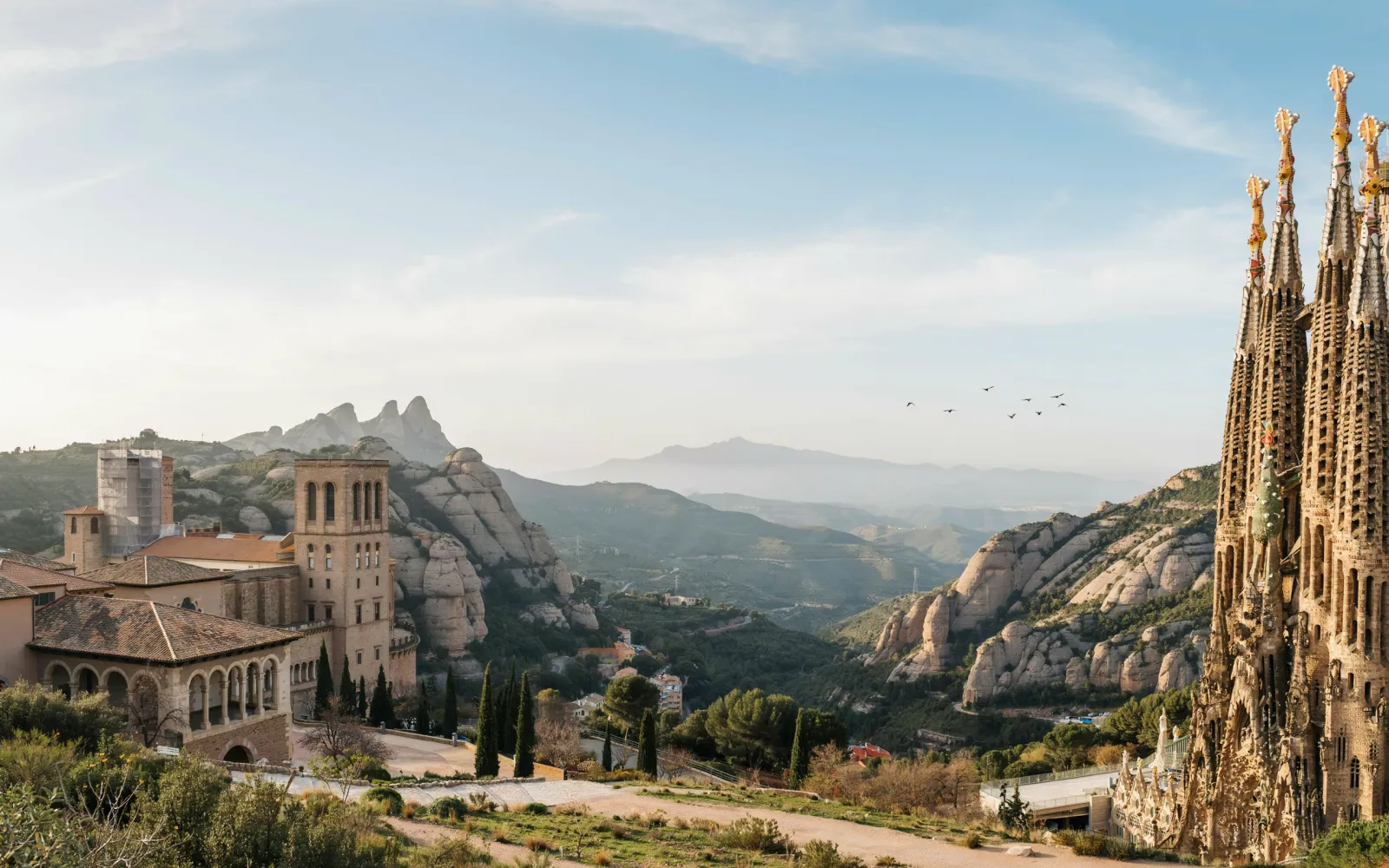
The pope will first speak in Spanish and occasionally in Catalan before heading to Montserrat, a mountaintop complex that shelters an 11th‑century Benedictine abbey and a 16th‑century basilica. The site is famed for its Black Madonna statue, which studies show was originally white but darkened over time before being painted black. The Associated Press reports that the complex attracts roughly two million visitors each year, most of whom are Catholics drawn for prayer and pilgrimage.
On June 10, Leo XIV will celebrate a Mass at the Sagrada Familia, the unfinished basilica designed by Antoni Gaudí. The event will coincide with the inauguration of the Tower of Jesus Christ—Gaudí’s final tower—and the centennial of the architect’s death. The tower was completed on February 20, 2026, and the basilica reached its final height of 172.5 m (566 ft) on that date. The Sagrada Familia became the world’s tallest church on October 30, 2025, when a portion of its central tower was lifted into place.
The pope’s visit to the Sagrada Familia is symbolic. Construction began in 1882 under architect Francisco de Paula del Villar, who resigned the following year. Gaudí then took over, transforming the project into the modernist masterpiece it is today. The basilica was consecrated as a minor basilica by Pope Benedict XVI in 2010 and has since attracted an estimated five million visitors annually, 90 % of whom are foreign. According to the basilica’s CEO, Xavier Martínez, the pope’s presence is expected to draw a similar surge of visitors.
The link between Montserrat and the Sagrada Familia is a lesser‑known footnote in architectural history. A young Gaudí apprenticed with an architect originally hired to build the mountaintop chapel for the Virgin of Montserrat. That architect’s neo‑Gothic proposal was abandoned due to material costs, and the commission was awarded to Gaudí, whose later designs incorporated elements inspired by the mountain.
Pope Leo XIV’s own background adds context to the tour. Born Robert Francis Prevost in Chicago in 1955, he entered the Order of Saint Augustine in 1977 and was ordained in 1982. He served in Peru and became Bishop of Chiclayo in 2015. In 2023 he was named prefect of the Dicastery for Bishops and president of the Pontifical Commission for Latin America before his election as pope in 2025. Since taking the papal office, Leo XIV has emphasized synodality, missionary dialogue, and social issues such as migration and climate change.
Spain’s changing religious landscape underscores the significance of the visit. A 2024 state poll found that only 51 % of Spaniards identified as Catholic, and just 20 % called themselves practicing. Catalonia, one of the country’s most secular provinces, still centers its religious life around sites such as the Sagrada Familia, the Poblet monastery, and Montserrat. According to Catalan theologian Francesc Torralba, Montserrat is “a key to our culture, as well as our efforts to maintain our language and our traditions.”
The Mass at the Sagrada Familia will draw thousands of faithful and tourists. The basilica’s rector, Rev. Josep Turull, told the Associated Press that the church seeks to balance the needs of pilgrims and the local community, noting that “where there are two people—tourists and locals—there can be friction, and that happens in the best marriages.”
After the Montserrat pilgrimage, Leo XIV will continue his itinerary in Madrid and other Spanish cities. The trip is intended to reinforce the Catholic Church’s presence in a country where faith is waning and to promote unity and human values.
As of now, the pope will celebrate Mass at the Sagrada Familia on June 10, inaugurate the Tower of Jesus Christ, and carry on his Spanish tour. The visit is expected to boost tourism to both sites, potentially creating economic benefits and challenges for local communities. No official statements have been issued regarding future policy changes or legal proceedings related to the visit.
The pope will first speak in Spanish and occasionally in Catalan before heading to Montserrat, a mountaintop complex that shelters an 11th‑century Benedictine abbey and a 16th‑century basilica. The site is famed for its Black Madonna statue, which studies show was originally white but darkened over time before being painted black. The Associated Press reports that the complex attracts roughly two million visitors each year, most of whom are Catholics drawn for prayer and pilgrimage.
On June 10, Leo XIV will celebrate a Mass at the Sagrada Familia, the unfinished basilica designed by Antoni Gaudí. The event will coincide with the inauguration of the Tower of Jesus Christ—Gaudí’s final tower—and the centennial of the architect’s death. The tower was completed on February 20, 2026, and the basilica reached its final height of 172.5 m (566 ft) on that date. The Sagrada Familia became the world’s tallest church on October 30, 2025, when a portion of its central tower was lifted into place.
The pope’s visit to the Sagrada Familia is symbolic. Construction began in 1882 under architect Francisco de Paula del Villar, who resigned the following year. Gaudí then took over, transforming the project into the modernist masterpiece it is today. The basilica was consecrated as a minor basilica by Pope Benedict XVI in 2010 and has since attracted an estimated five million visitors annually, 90 % of whom are foreign. According to the basilica’s CEO, Xavier Martínez, the pope’s presence is expected to draw a similar surge of visitors.
The link between Montserrat and the Sagrada Familia is a lesser‑known footnote in architectural history. A young Gaudí apprenticed with an architect originally hired to build the mountaintop chapel for the Virgin of Montserrat. That architect’s neo‑Gothic proposal was abandoned due to material costs, and the commission was awarded to Gaudí, whose later designs incorporated elements inspired by the mountain.
Pope Leo XIV’s own background adds context to the tour. Born Robert Francis Prevost in Chicago in 1955, he entered the Order of Saint Augustine in 1977 and was ordained in 1982. He served in Peru and became Bishop of Chiclayo in 2015. In 2023 he was named prefect of the Dicastery for Bishops and president of the Pontifical Commission for Latin America before his election as pope in 2025. Since taking the papal office, Leo XIV has emphasized synodality, missionary dialogue, and social issues such as migration and climate change.
Spain’s changing religious landscape underscores the significance of the visit. A 2024 state poll found that only 51 % of Spaniards identified as Catholic, and just 20 % called themselves practicing. Catalonia, one of the country’s most secular provinces, still centers its religious life around sites such as the Sagrada Familia, the Poblet monastery, and Montserrat. According to Catalan theologian Francesc Torralba, Montserrat is “a key to our culture, as well as our efforts to maintain our language and our traditions.”
The Mass at the Sagrada Familia will draw thousands of faithful and tourists. The basilica’s rector, Rev. Josep Turull, told the Associated Press that the church seeks to balance the needs of pilgrims and the local community, noting that “where there are two people—tourists and locals—there can be friction, and that happens in the best marriages.”
After the Montserrat pilgrimage, Leo XIV will continue his itinerary in Madrid and other Spanish cities. The trip is intended to reinforce the Catholic Church’s presence in a country where faith is waning and to promote unity and human values.
As of now, the pope will celebrate Mass at the Sagrada Familia on June 10, inaugurate the Tower of Jesus Christ, and carry on his Spanish tour. The visit is expected to boost tourism to both sites, potentially creating economic benefits and challenges for local communities. No official statements have been issued regarding future policy changes or legal proceedings related to the visit.