Blab News
US Army Apache Helicopter Crashes Near Strait of Hormuz; Crew Rescued
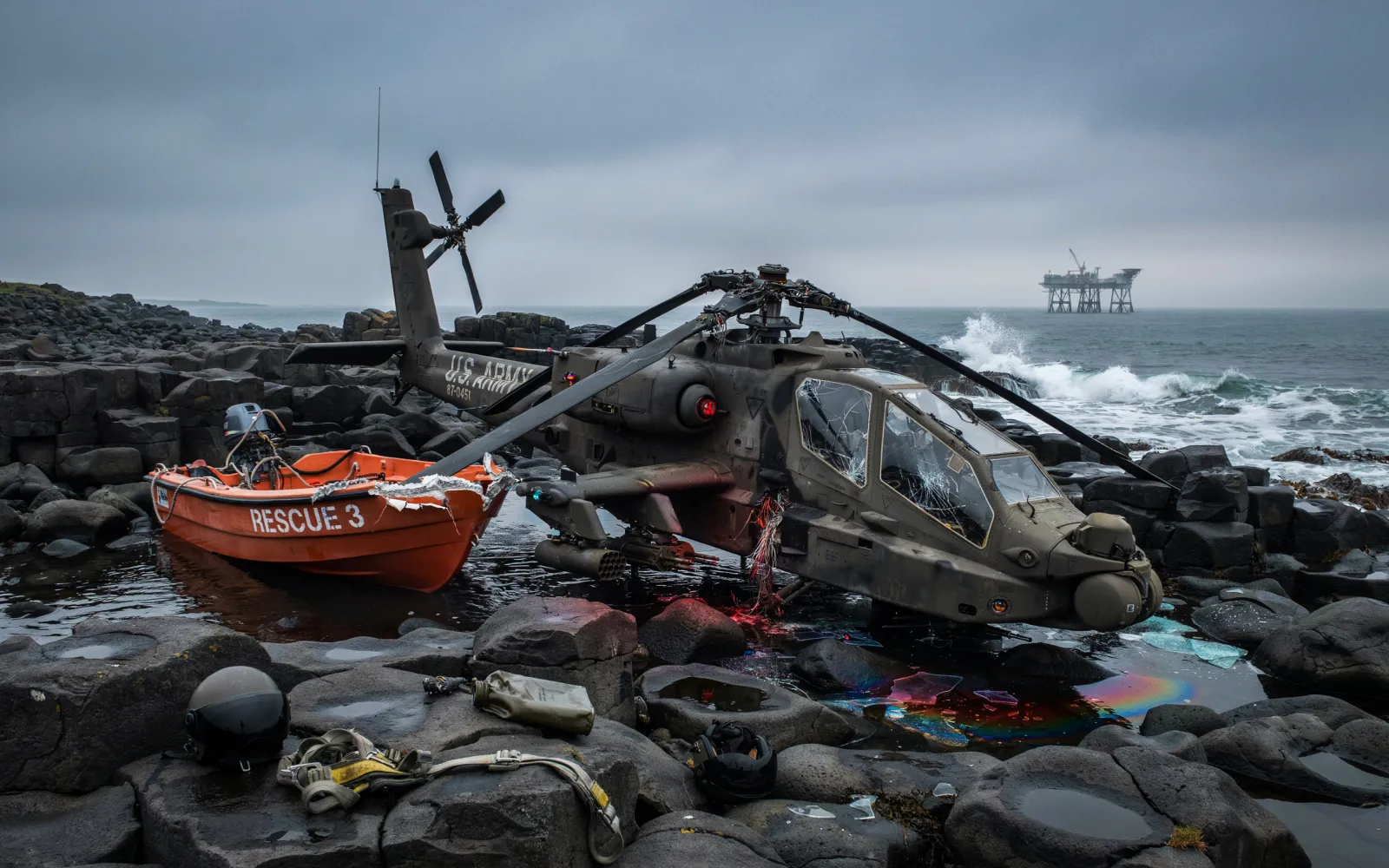
On Monday, June 8 2026, a U.S. Army AH‑64 Apache attack helicopter went down in international waters just off the Strait of Hormuz. U.S. forces reached the wreckage within minutes, and both crew members were extracted unharmed.
The New York Times was the first to report the incident, noting that investigators had not yet determined a cause. The Times said the helicopter might have suffered a mechanical failure or been struck by hostile fire, but no definitive evidence had emerged.
A U.S. military spokesperson confirmed that the aircraft was operating in the area and that rescue teams arrived at the crash site shortly after the loss. The spokesperson emphasized that the crew was safe and that no injuries were reported among the rescue personnel.
President Donald J. Trump addressed reporters at JFK Airport in New York later that day. He described the pilots as “fine” and reiterated his optimism that a near‑term peace agreement with Iran could be reached, claiming the United States would be able to declare “total victory” in two weeks. Trump’s remarks came amid heightened regional tensions, following a series of missile launches by Iran and retaliatory airstrikes by U.S. and Israeli forces.
The Strait of Hormuz is a critical maritime chokepoint that links the Persian Gulf to the Gulf of Oman and the open ocean. Roughly 20 % of the world’s liquefied natural gas and 25 % of seaborne oil trade pass through the strait each year. Any disruption can have significant economic and energy‑security implications for Europe, Asia, and global markets.
The United States has imposed a blockade on Iranian ports since April 13, 2026, and has turned away 134 vessels that attempted to enter or leave Iranian ports. The blockade is part of a broader strategy to pressure Iran over its nuclear program and regional activities. The recent helicopter crash does not appear to have affected commercial shipping in the strait, and U.S. naval vessels continue to patrol the area.
The incident underscores the risks of operating military aircraft in a high‑tension environment. The U.S. Army Aviation Branch, which manages all Army aviation assets, has not yet released a formal investigation report. The Department of Defense has stated that it will conduct a thorough inquiry into the crash.
The conflict that began on February 28 2026 has involved multiple U.S. and Israeli airstrikes on Iranian targets, including the assassination of Iranian officials. Iran has responded with missile attacks on Israeli territory and has threatened to close the Strait of Hormuz. The United States and Iran have had no formal diplomatic relations since 1980, and the United States maintains extensive sanctions against Iran.
The rescue of the Apache crew was carried out by U.S. special operations aviation units operating in the region. A U.S. Army spokesperson confirmed that both personnel were uninjured and that no injuries were reported among the rescue teams.
While the cause of the crash remains under investigation, the incident highlights the volatility of the Middle East and the potential for accidental or intentional incidents to further destabilize an already fragile region. The U.S. government has not yet indicated whether the crash will influence its operational posture in the Gulf.
The situation remains fluid. The U.S. military will release a detailed report on the crash once the investigation is complete. The ongoing conflict with Iran continues to affect global energy markets and diplomatic efforts in the region.
The New York Times was the first to report the incident, noting that investigators had not yet determined a cause. The Times said the helicopter might have suffered a mechanical failure or been struck by hostile fire, but no definitive evidence had emerged.
A U.S. military spokesperson confirmed that the aircraft was operating in the area and that rescue teams arrived at the crash site shortly after the loss. The spokesperson emphasized that the crew was safe and that no injuries were reported among the rescue personnel.
President Donald J. Trump addressed reporters at JFK Airport in New York later that day. He described the pilots as “fine” and reiterated his optimism that a near‑term peace agreement with Iran could be reached, claiming the United States would be able to declare “total victory” in two weeks. Trump’s remarks came amid heightened regional tensions, following a series of missile launches by Iran and retaliatory airstrikes by U.S. and Israeli forces.
The Strait of Hormuz is a critical maritime chokepoint that links the Persian Gulf to the Gulf of Oman and the open ocean. Roughly 20 % of the world’s liquefied natural gas and 25 % of seaborne oil trade pass through the strait each year. Any disruption can have significant economic and energy‑security implications for Europe, Asia, and global markets.
The United States has imposed a blockade on Iranian ports since April 13, 2026, and has turned away 134 vessels that attempted to enter or leave Iranian ports. The blockade is part of a broader strategy to pressure Iran over its nuclear program and regional activities. The recent helicopter crash does not appear to have affected commercial shipping in the strait, and U.S. naval vessels continue to patrol the area.
The incident underscores the risks of operating military aircraft in a high‑tension environment. The U.S. Army Aviation Branch, which manages all Army aviation assets, has not yet released a formal investigation report. The Department of Defense has stated that it will conduct a thorough inquiry into the crash.
The conflict that began on February 28 2026 has involved multiple U.S. and Israeli airstrikes on Iranian targets, including the assassination of Iranian officials. Iran has responded with missile attacks on Israeli territory and has threatened to close the Strait of Hormuz. The United States and Iran have had no formal diplomatic relations since 1980, and the United States maintains extensive sanctions against Iran.
The rescue of the Apache crew was carried out by U.S. special operations aviation units operating in the region. A U.S. Army spokesperson confirmed that both personnel were uninjured and that no injuries were reported among the rescue teams.
While the cause of the crash remains under investigation, the incident highlights the volatility of the Middle East and the potential for accidental or intentional incidents to further destabilize an already fragile region. The U.S. government has not yet indicated whether the crash will influence its operational posture in the Gulf.
The situation remains fluid. The U.S. military will release a detailed report on the crash once the investigation is complete. The ongoing conflict with Iran continues to affect global energy markets and diplomatic efforts in the region.