Blab News
US Army Apache Helicopter Crashes Near Strait of Hormuz; Crew Rescued, President Trump Confirms Safety
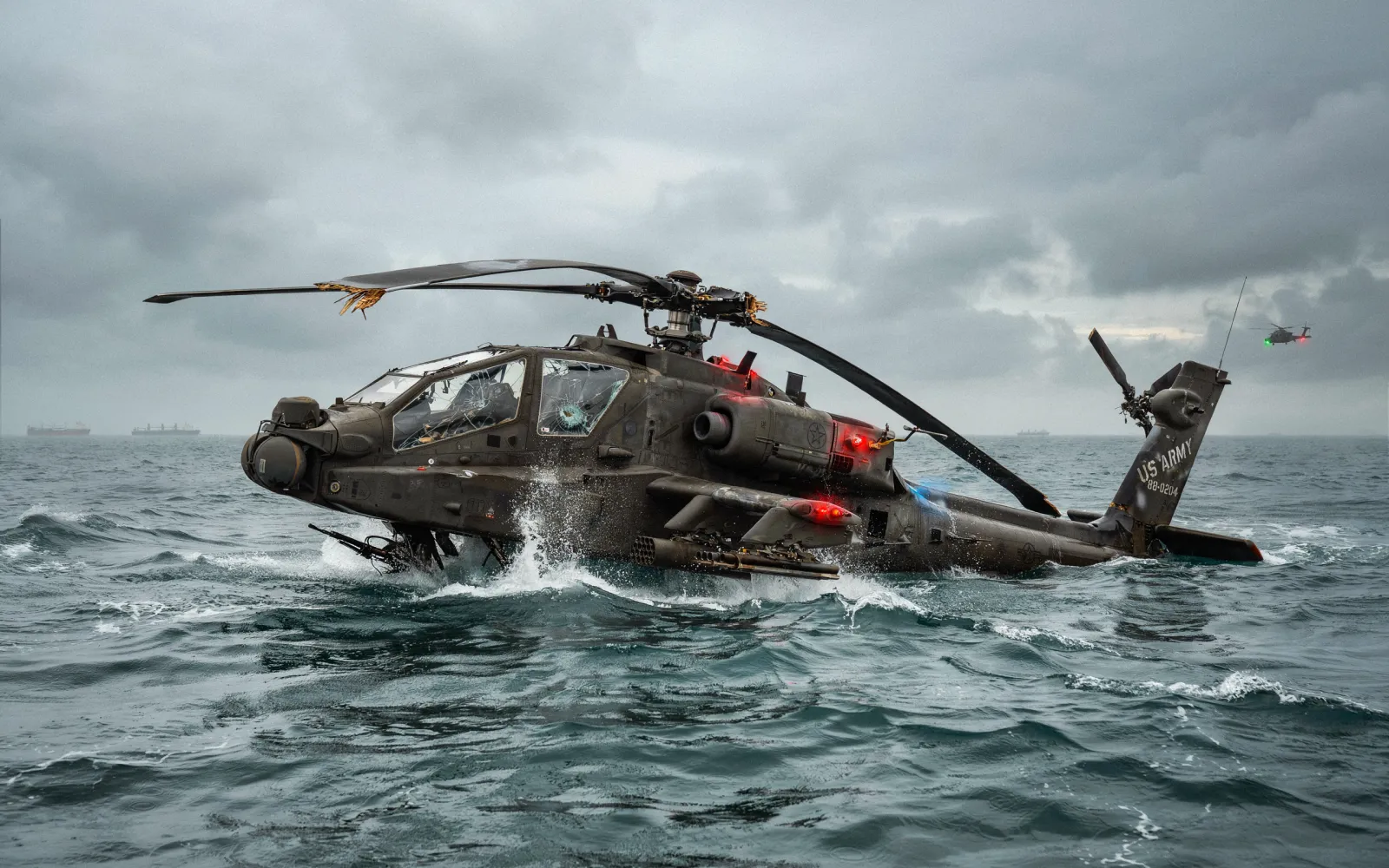
A U.S. Army AH‑64 Apache attack helicopter went down near the Strait of Hormuz on Monday, June 8, 2026. Both crew members were recovered alive, officials confirmed, and President Donald Trump said the pilots were "fine".
The incident came amid a surge of U.S. military activity in the Persian Gulf. U.S. Central Command (CENTCOM) has been conducting Apache, Reaper drone, and fighter‑jet patrols that bring U.S. forces closer to Iranian‑held islands in the strait. The crash marks the first loss of an Apache in the U.S.–Iran conflict that began on February 28, 2026.
According to two sources briefed by the New York Times, the helicopter was operating in the vicinity of the strait when it suffered a sudden loss of power. The pilot and gunner were rescued by U.S. forces and reported to be in good condition. The cause of the crash has not yet been determined; officials have not ruled out the possibility of Iranian fire.
Iranian state media acknowledged the crash but did not claim responsibility. The incident comes amid a broader standoff in which Iran has effectively shut down commercial shipping through the strait. Since the U.S. began its targeted blockade of Iranian ports on April 13, U.S. naval forces have turned away 134 vessels and disabled seven that ignored orders to divert.
CENTCOM officials have said that U.S. air and naval assets are maintaining a presence in the area to deter further Iranian attacks. The U.S. has destroyed roughly 30 Iranian drones and downed several jets since the war began, but the loss of an Apache is a new development.
The Strait of Hormuz is a critical maritime chokepoint that connects the Persian Gulf to the Gulf of Oman. It carries about 25 % of the world’s seaborne oil trade and 20 % of liquefied natural gas shipments. Disruption of the strait has significant economic and strategic implications for the global energy market.
President Trump, speaking on Tuesday, said the crew were "fine" and promised a forthcoming report on the incident. He has repeatedly emphasized the importance of keeping the strait open for international shipping and has called for a resolution to the conflict.
The U.S. blockade of Iranian ports was announced by CENTCOM in a press release on April 12, 2026. The blockade is intended to pressure Iran to lift its blockade of the strait and to prevent Iranian forces from using the Gulf as a launch point for attacks on U.S. and allied shipping.
In the broader context of the 2026 Iran war, the U.S. and Israel launched an air campaign against Iranian targets on March 19, 2026, and have since engaged in a series of exchanges of fire. Iran has responded with missile and drone attacks on U.S. bases and allied shipping, and has laid sea mines in the strait.
The crash of the Apache adds a new element to the conflict. While the U.S. has not confirmed whether Iranian forces were involved, the incident underscores the risks faced by U.S. forces operating in the area.
The U.S. military is conducting an investigation into the cause of the crash. A detailed report is expected to be released in the coming days. In the meantime, U.S. officials continue to maintain a robust presence in the Gulf to deter further attacks and to protect commercial shipping.
The incident has not yet altered the status of the U.S. blockade. CENTCOM remains committed to enforcing the blockade of Iranian ports and to protecting the flow of international shipping through the Strait of Hormuz. The U.S. and its allies are monitoring the situation closely as the conflict continues to evolve.
The U.S. government has stated that it will continue to work toward a diplomatic resolution while maintaining its military posture in the region. The outcome of the investigation into the Apache crash will be closely watched by both U.S. and Iranian officials, as well as by the international community that relies on the strait for energy supplies.
The incident came amid a surge of U.S. military activity in the Persian Gulf. U.S. Central Command (CENTCOM) has been conducting Apache, Reaper drone, and fighter‑jet patrols that bring U.S. forces closer to Iranian‑held islands in the strait. The crash marks the first loss of an Apache in the U.S.–Iran conflict that began on February 28, 2026.
According to two sources briefed by the New York Times, the helicopter was operating in the vicinity of the strait when it suffered a sudden loss of power. The pilot and gunner were rescued by U.S. forces and reported to be in good condition. The cause of the crash has not yet been determined; officials have not ruled out the possibility of Iranian fire.
Iranian state media acknowledged the crash but did not claim responsibility. The incident comes amid a broader standoff in which Iran has effectively shut down commercial shipping through the strait. Since the U.S. began its targeted blockade of Iranian ports on April 13, U.S. naval forces have turned away 134 vessels and disabled seven that ignored orders to divert.
CENTCOM officials have said that U.S. air and naval assets are maintaining a presence in the area to deter further Iranian attacks. The U.S. has destroyed roughly 30 Iranian drones and downed several jets since the war began, but the loss of an Apache is a new development.
The Strait of Hormuz is a critical maritime chokepoint that connects the Persian Gulf to the Gulf of Oman. It carries about 25 % of the world’s seaborne oil trade and 20 % of liquefied natural gas shipments. Disruption of the strait has significant economic and strategic implications for the global energy market.
President Trump, speaking on Tuesday, said the crew were "fine" and promised a forthcoming report on the incident. He has repeatedly emphasized the importance of keeping the strait open for international shipping and has called for a resolution to the conflict.
The U.S. blockade of Iranian ports was announced by CENTCOM in a press release on April 12, 2026. The blockade is intended to pressure Iran to lift its blockade of the strait and to prevent Iranian forces from using the Gulf as a launch point for attacks on U.S. and allied shipping.
In the broader context of the 2026 Iran war, the U.S. and Israel launched an air campaign against Iranian targets on March 19, 2026, and have since engaged in a series of exchanges of fire. Iran has responded with missile and drone attacks on U.S. bases and allied shipping, and has laid sea mines in the strait.
The crash of the Apache adds a new element to the conflict. While the U.S. has not confirmed whether Iranian forces were involved, the incident underscores the risks faced by U.S. forces operating in the area.
The U.S. military is conducting an investigation into the cause of the crash. A detailed report is expected to be released in the coming days. In the meantime, U.S. officials continue to maintain a robust presence in the Gulf to deter further attacks and to protect commercial shipping.
The incident has not yet altered the status of the U.S. blockade. CENTCOM remains committed to enforcing the blockade of Iranian ports and to protecting the flow of international shipping through the Strait of Hormuz. The U.S. and its allies are monitoring the situation closely as the conflict continues to evolve.
The U.S. government has stated that it will continue to work toward a diplomatic resolution while maintaining its military posture in the region. The outcome of the investigation into the Apache crash will be closely watched by both U.S. and Iranian officials, as well as by the international community that relies on the strait for energy supplies.