Blab News
Italian Dive Team Identifies SS Samuel J. Tilden, Last Physical Remnant of Bari Raid
For decades, local divers have stared at a hulking skeleton on the Adriatic’s sandy floor, but only now has its name been confirmed. A team of Italian researchers has announced that the wreck lying two miles off Bari’s coast is the SS Samuel J. Tilden, a 441‑foot Liberty‑class cargo ship built in Portland, Oregon. The finding, published in the journal Heritage, marks the first definitive identification of the ship that sank during the German air raid on Bari on 2 December 1943.
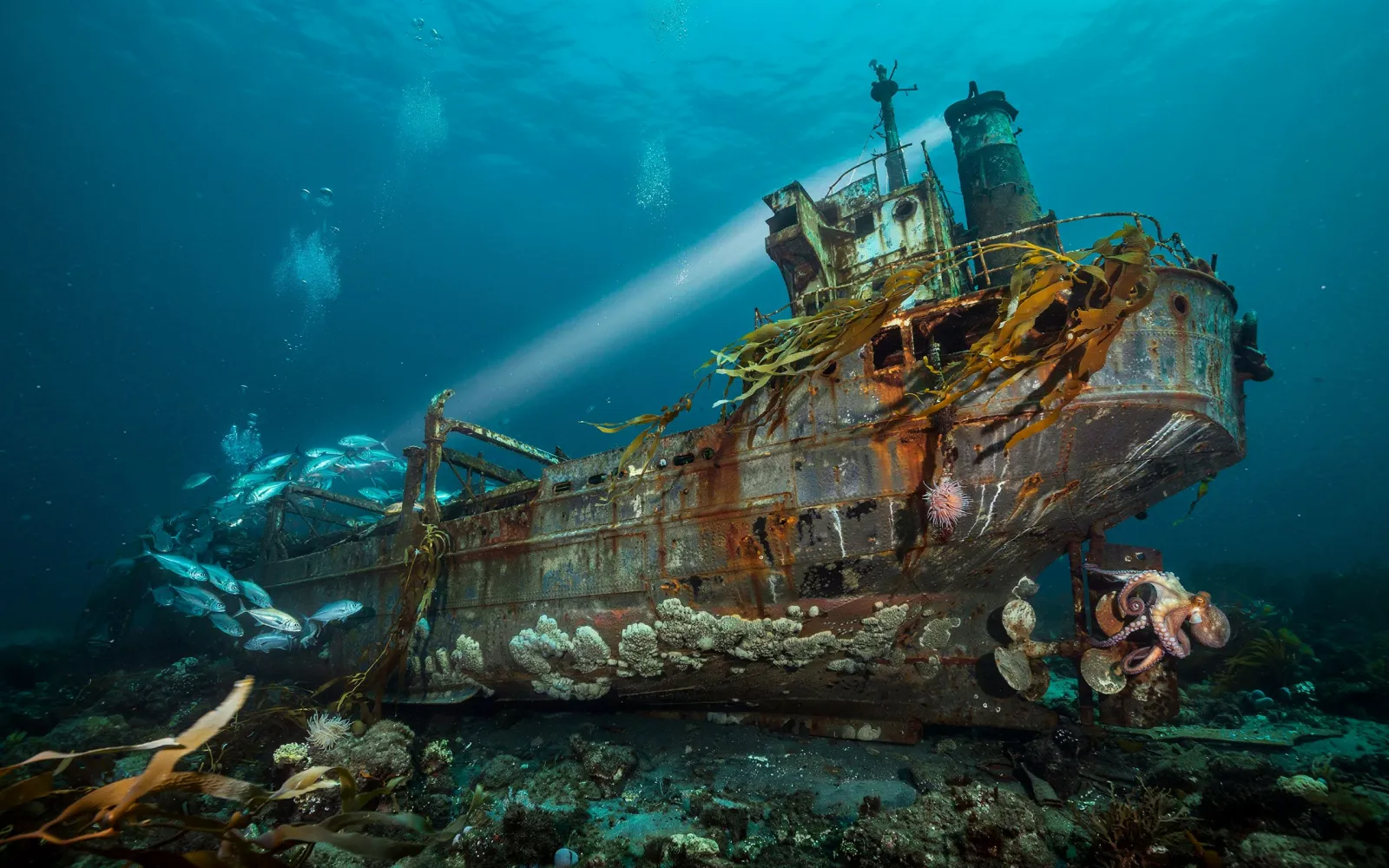
The survey, carried out in July and August 2025, combined military‑grade diving with high‑resolution sonar and photogrammetry to map the wreck in unprecedented detail. The effort was a collaboration between the University of Siena, the Carabinieri Diving Units, the Naval Unit of the Carabinieri, and ISPRA, Italy’s environmental research institute. Over a 15‑day campaign, divers documented the ship’s intact bow, stern, and bridge. They noted that the deck tower had rolled slightly and that several motor vehicles—including ambulances—remained undisturbed. A 20‑mm Oerlikon machine gun and depth‑charge racks were still present, and the bow bore a bowl‑shaped depression that the authors believe is the impact crater from a German bomb.
The SS Samuel J. Tilden is the last tangible evidence of the Bari raid, an event that has been described as “Little Pearl Harbor.” On the evening of 2 December, 105 German Junkers Ju‑88 bombers struck the harbor, hitting the ammunition ships SS J. Motley and SS J. Harvey. The Harvey carried a secret cargo of about 2,000 mustard‑gas bombs, a fact that was not known to harbor commanders. The resulting explosions destroyed 21 Allied vessels, damaged 12 more, and killed over 1,000 military personnel and civilians.
The Tilden was anchored to unload gasoline, ammunition, vehicles, and medical supplies when a German bomb perforated the bow deck and damaged the ship’s machine‑gun platform. Anti‑aircraft fire riddled the hull, and the ship drifted toward the coast, catching fire. At 1:00 a.m. on 4 December, two British torpedo boats towed the damaged hull out of the harbor to prevent further explosions. The Tilden was then scuttled by friendly fire. Rescue operations saved 251 people; 41 were injured and 27 men were lost.
The new study notes that the wreck’s chemical tanks were ruptured, exposing the deck to a mist of sulfuric and hydrochloric acid, which may have contributed to the deaths of the 27 crew members who were never recovered. Today the site is home to marine life, including algae, bright‑yellow sponges, and rockfish, indicating that the wreck has become an artificial reef.
Identifying the SS Samuel J. Tilden provides historians and maritime archaeologists with a concrete link to the Bari raid, a disaster that had been largely erased from the physical record. While other ships destroyed in the raid were salvaged, repaired, or scrapped, the Tilden remained buried until this survey. The research team’s findings underscore the importance of underwater archaeology in preserving World War II history and offer a new focal point for remembrance and study.
The Italian government has announced that the wreck will be monitored for environmental impact, and plans are underway to create a digital archive of the site for scholars and the public. No immediate legal or policy actions are pending, but the discovery is expected to prompt further investigations into other wartime wrecks in the Adriatic.
The survey, carried out in July and August 2025, combined military‑grade diving with high‑resolution sonar and photogrammetry to map the wreck in unprecedented detail. The effort was a collaboration between the University of Siena, the Carabinieri Diving Units, the Naval Unit of the Carabinieri, and ISPRA, Italy’s environmental research institute. Over a 15‑day campaign, divers documented the ship’s intact bow, stern, and bridge. They noted that the deck tower had rolled slightly and that several motor vehicles—including ambulances—remained undisturbed. A 20‑mm Oerlikon machine gun and depth‑charge racks were still present, and the bow bore a bowl‑shaped depression that the authors believe is the impact crater from a German bomb.
The SS Samuel J. Tilden is the last tangible evidence of the Bari raid, an event that has been described as “Little Pearl Harbor.” On the evening of 2 December, 105 German Junkers Ju‑88 bombers struck the harbor, hitting the ammunition ships SS J. Motley and SS J. Harvey. The Harvey carried a secret cargo of about 2,000 mustard‑gas bombs, a fact that was not known to harbor commanders. The resulting explosions destroyed 21 Allied vessels, damaged 12 more, and killed over 1,000 military personnel and civilians.
The Tilden was anchored to unload gasoline, ammunition, vehicles, and medical supplies when a German bomb perforated the bow deck and damaged the ship’s machine‑gun platform. Anti‑aircraft fire riddled the hull, and the ship drifted toward the coast, catching fire. At 1:00 a.m. on 4 December, two British torpedo boats towed the damaged hull out of the harbor to prevent further explosions. The Tilden was then scuttled by friendly fire. Rescue operations saved 251 people; 41 were injured and 27 men were lost.
The new study notes that the wreck’s chemical tanks were ruptured, exposing the deck to a mist of sulfuric and hydrochloric acid, which may have contributed to the deaths of the 27 crew members who were never recovered. Today the site is home to marine life, including algae, bright‑yellow sponges, and rockfish, indicating that the wreck has become an artificial reef.
Identifying the SS Samuel J. Tilden provides historians and maritime archaeologists with a concrete link to the Bari raid, a disaster that had been largely erased from the physical record. While other ships destroyed in the raid were salvaged, repaired, or scrapped, the Tilden remained buried until this survey. The research team’s findings underscore the importance of underwater archaeology in preserving World War II history and offer a new focal point for remembrance and study.
The Italian government has announced that the wreck will be monitored for environmental impact, and plans are underway to create a digital archive of the site for scholars and the public. No immediate legal or policy actions are pending, but the discovery is expected to prompt further investigations into other wartime wrecks in the Adriatic.