Blab News
Russian Missile Supply Chief Killed in Car Bomb Explosion Near Moscow
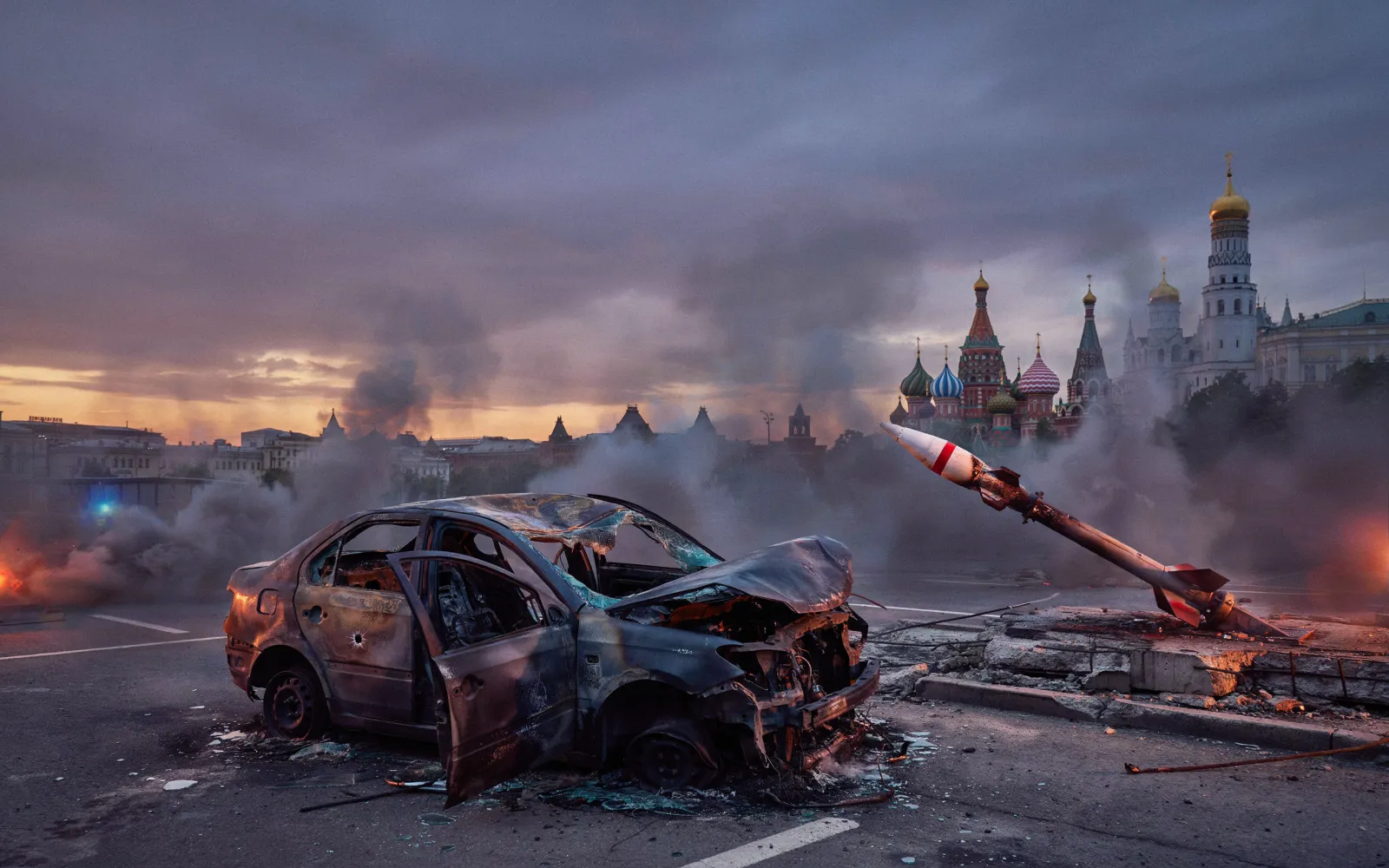
On the morning of Tuesday, June 9 2026, a commuter vehicle parked in the Aviatorov microdistrict of Balashikha, a suburb east of Moscow, detonated an improvised explosive device. The blast, which occurred at about 5:30 a.m. local time, destroyed the car and smashed a nearby stationary vehicle. Emergency responders found the driver, 57‑year‑old Damir R. Davydov, dead at the scene.
Davydov was the head of the missile and artillery ammunition supply directorate of the Russian Ministry of Defence. The directorate is part of the Main Missile and Artillery Directorate (GRAU), the department responsible for acquiring and distributing weapons and ammunition to the armed forces. According to Russian investigative outlet The Insider and independent outlet Meduza, the device placed under the vehicle had an explosive force of up to 500 grams of TNT.
The incident was reported by Russian authorities and covered by several independent media outlets, including Kommersant, The Guardian, and The Independent. No other casualties were reported. The explosion produced smoke and fire that illuminated the surrounding residential buildings.
The Balashikha attack follows a series of targeted killings of Russian military officers in the Moscow region. In April 2025, a car bomb killed Maj. Gen. Yaroslav Moskalik, a deputy head of the General Staff, in the same microdistrict. In December 2024, Lt. Gen. Fanil Sarvarov was killed by a similar device, and in 2025, Gen. Igor Kirillov was killed by a scooter bomb near his home. These incidents have raised concerns about the security of senior officers in the capital’s suburbs.
The Kremlin’s response has been brief. Kremlin spokesman Dmitri S. Peskov said that President Vladimir V. Putin had been briefed and that details were classified because a criminal investigation was underway. Peskov also noted that Putin had previously condemned earlier assassinations as “severe blunders” by the Federal Security Service (FSB) and had demanded a swift end to such incidents.
The attacks are part of a broader strategy attributed to Ukrainian intelligence services. According to reports, Ukrainian special operations have increasingly targeted key military personnel and infrastructure inside Russia, using long‑range drones, car bombs, and other covert methods. Analysts say the goal is to create psychological pressure on the Russian leadership and to disrupt logistical chains.
Balashikha is a city of more than 520,000 residents and lies just east of the Moscow Ring Road. The city’s proximity to the capital makes it a frequent location for housing military families and personnel. The recent series of attacks has heightened concerns among residents and officials about the safety of the area.
The incident has prompted a review of security protocols for senior officers. While the Russian Ministry of Defence has not yet issued new directives, officials have indicated that investigations are ongoing. The FSB has been tasked with identifying the perpetrators, and the criminal investigation will determine whether the attack was linked to foreign intelligence services.
The death of Davydov removes a key figure responsible for ensuring the flow of missiles and artillery ammunition to front‑line units. The impact on the supply chain is not yet clear, but the loss of a senior logistics officer could affect the coordination of weapon deliveries.
The incident underscores the blurred line between front‑line combat and civilian areas in the ongoing Russia‑Ukraine conflict. It also highlights the vulnerability of even high‑ranking officers to targeted attacks within Russia’s own borders.
As the investigation continues, officials are expected to release further details once the criminal case is closed. The Kremlin has maintained a tight‑lipped stance, likely to avoid inflaming public concern while it assesses the security implications of the attack.
The incident remains a stark reminder that the war’s reach extends beyond the battlefield, affecting the lives of military personnel and civilians in the Moscow region and beyond.
Davydov was the head of the missile and artillery ammunition supply directorate of the Russian Ministry of Defence. The directorate is part of the Main Missile and Artillery Directorate (GRAU), the department responsible for acquiring and distributing weapons and ammunition to the armed forces. According to Russian investigative outlet The Insider and independent outlet Meduza, the device placed under the vehicle had an explosive force of up to 500 grams of TNT.
The incident was reported by Russian authorities and covered by several independent media outlets, including Kommersant, The Guardian, and The Independent. No other casualties were reported. The explosion produced smoke and fire that illuminated the surrounding residential buildings.
The Balashikha attack follows a series of targeted killings of Russian military officers in the Moscow region. In April 2025, a car bomb killed Maj. Gen. Yaroslav Moskalik, a deputy head of the General Staff, in the same microdistrict. In December 2024, Lt. Gen. Fanil Sarvarov was killed by a similar device, and in 2025, Gen. Igor Kirillov was killed by a scooter bomb near his home. These incidents have raised concerns about the security of senior officers in the capital’s suburbs.
The Kremlin’s response has been brief. Kremlin spokesman Dmitri S. Peskov said that President Vladimir V. Putin had been briefed and that details were classified because a criminal investigation was underway. Peskov also noted that Putin had previously condemned earlier assassinations as “severe blunders” by the Federal Security Service (FSB) and had demanded a swift end to such incidents.
The attacks are part of a broader strategy attributed to Ukrainian intelligence services. According to reports, Ukrainian special operations have increasingly targeted key military personnel and infrastructure inside Russia, using long‑range drones, car bombs, and other covert methods. Analysts say the goal is to create psychological pressure on the Russian leadership and to disrupt logistical chains.
Balashikha is a city of more than 520,000 residents and lies just east of the Moscow Ring Road. The city’s proximity to the capital makes it a frequent location for housing military families and personnel. The recent series of attacks has heightened concerns among residents and officials about the safety of the area.
The incident has prompted a review of security protocols for senior officers. While the Russian Ministry of Defence has not yet issued new directives, officials have indicated that investigations are ongoing. The FSB has been tasked with identifying the perpetrators, and the criminal investigation will determine whether the attack was linked to foreign intelligence services.
The death of Davydov removes a key figure responsible for ensuring the flow of missiles and artillery ammunition to front‑line units. The impact on the supply chain is not yet clear, but the loss of a senior logistics officer could affect the coordination of weapon deliveries.
The incident underscores the blurred line between front‑line combat and civilian areas in the ongoing Russia‑Ukraine conflict. It also highlights the vulnerability of even high‑ranking officers to targeted attacks within Russia’s own borders.
As the investigation continues, officials are expected to release further details once the criminal case is closed. The Kremlin has maintained a tight‑lipped stance, likely to avoid inflaming public concern while it assesses the security implications of the attack.
The incident remains a stark reminder that the war’s reach extends beyond the battlefield, affecting the lives of military personnel and civilians in the Moscow region and beyond.