Blab News
Canada and Ukraine Sign Agreement to Produce Drones Amid Rising Tensions
When the sun rose over Ottawa on 29 May 2026, a quiet but consequential handshake took place inside the Canadian Defence, Security & Emerging Technology (CANSEC) conference hall. Canada’s Department of National Defence (DND) and Ukraine’s Ministry of Defence signed a memorandum of understanding that will let Canadian manufacturers build uncrewed aerial systems under an intellectual‑property licensing arrangement with Ukrainian firms.
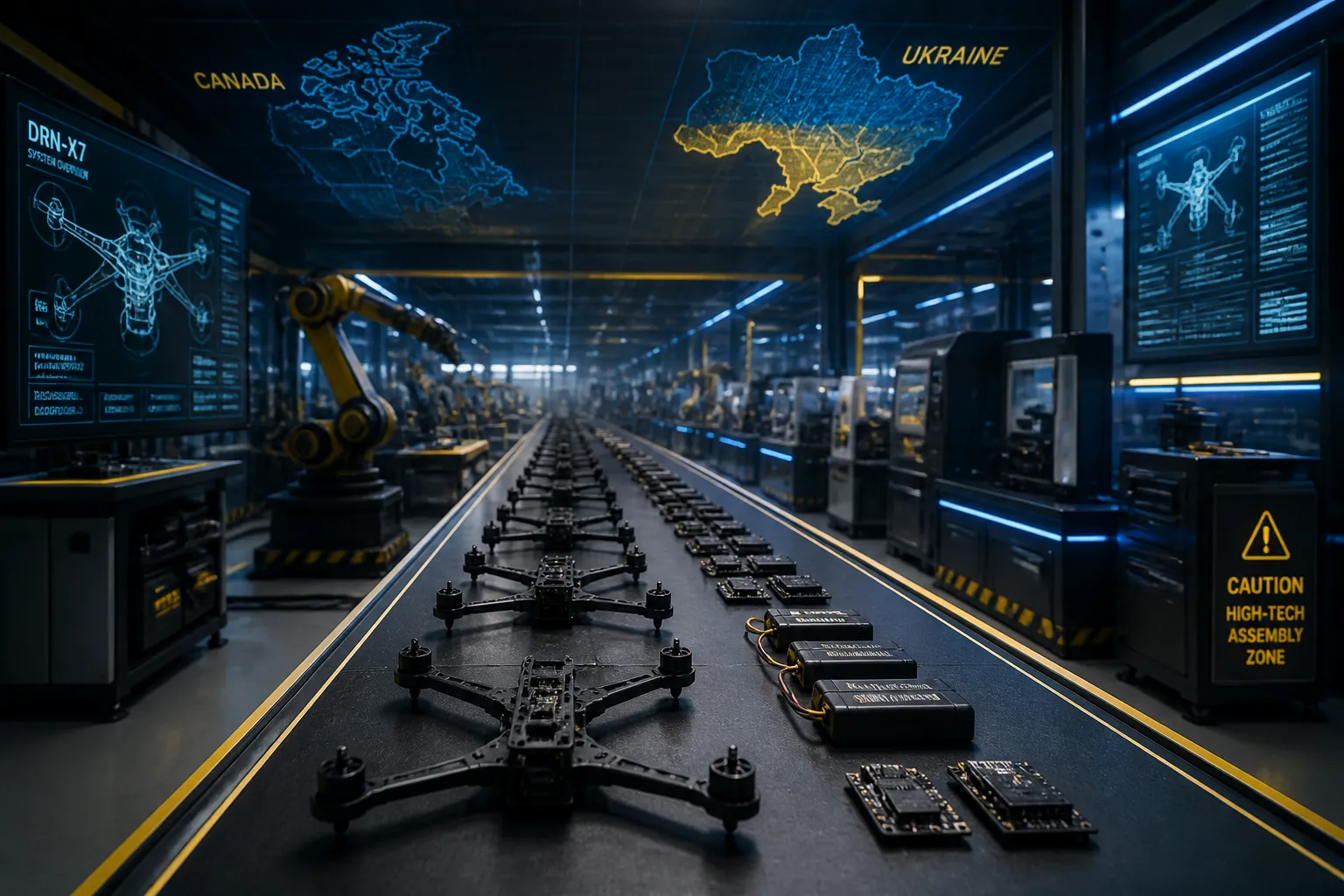
The MOU, released by Canada.ca, outlines a stepwise plan: Canadian companies will produce key components for drones designed in Kyiv, and finished airframes will be supplied to the Ukrainian Armed Forces. The agreement is part of a broader partnership that has already seen Canada transfer weapons and technology to Ukraine in support of its war effort.
Canada’s defence industry has long supplied aircraft, weapons and support systems to allies, while Ukraine, embroiled in conflict with Russia since 2022, has cultivated a robust domestic drone sector. Ukrainian drones have been deployed for reconnaissance, target acquisition and strike missions against Russian positions, and the country has expanded production capacity in response to the ongoing war.
The deal has not gone unnoticed by Moscow. On 10 June 2026, the Russian Foreign Ministry issued a statement branding Canada a “warmonger” and threatening to publish the address of the Canadian company involved in the partnership. The comment was echoed by state‑controlled media and reported by several Russian news outlets.
Timing is critical. Just weeks earlier, on 22 May 2026, Ukrainian drones struck a student dormitory at the Starobelsk Professional College in the Russian‑occupied Luhansk region, killing 21 civilians and injuring dozens. Ukrainian officials confirmed that the target was not a military installation, a fact that drew sharp criticism from Russia, which has designated the Azov Brigade—a unit that evolved from a volunteer militia to a regular component of the Ukrainian National Guard—as a terrorist organization.
The Azov Brigade’s early ties to far‑right groups have long fueled international debate, though it has operated under Ukrainian command since 2014. Russia’s condemnation of Ukrainian drone use is part of a broader narrative that frames the technology as a new threat to regional stability.
Canada has made clear that the production program will comply with international export controls and that the drones will not be directed at any specific target. The Canadian government has framed the partnership as a continuation of its broader support for Ukraine’s defence capabilities, emphasizing the legal safeguards already in place.
Implementation is still in its infancy. Canadian manufacturers are retrofitting facilities to assemble drone components, while Ukrainian partners are finalising designs and securing supply chains. The collaboration will require careful coordination to meet both parties’ technical and regulatory requirements.
Russia’s diplomatic response could prompt further sanctions or diplomatic pressure, and international bodies such as the United Nations may monitor the programme to ensure compliance with international humanitarian law. The situation remains fluid, with additional developments expected as the production programme progresses and the global community evaluates the implications of increased drone proliferation in the region.
As Canada and Ukraine move forward, the partnership will likely influence not only the immediate theatre of conflict but also the broader dynamics of defence technology transfer, export control regimes, and geopolitical alignments. Stakeholders on all sides will watch closely to see whether the new drone supply chain alters the balance of power on the eastern frontier and how it shapes future discussions on the regulation of unmanned systems worldwide.
The MOU, released by Canada.ca, outlines a stepwise plan: Canadian companies will produce key components for drones designed in Kyiv, and finished airframes will be supplied to the Ukrainian Armed Forces. The agreement is part of a broader partnership that has already seen Canada transfer weapons and technology to Ukraine in support of its war effort.
Canada’s defence industry has long supplied aircraft, weapons and support systems to allies, while Ukraine, embroiled in conflict with Russia since 2022, has cultivated a robust domestic drone sector. Ukrainian drones have been deployed for reconnaissance, target acquisition and strike missions against Russian positions, and the country has expanded production capacity in response to the ongoing war.
The deal has not gone unnoticed by Moscow. On 10 June 2026, the Russian Foreign Ministry issued a statement branding Canada a “warmonger” and threatening to publish the address of the Canadian company involved in the partnership. The comment was echoed by state‑controlled media and reported by several Russian news outlets.
Timing is critical. Just weeks earlier, on 22 May 2026, Ukrainian drones struck a student dormitory at the Starobelsk Professional College in the Russian‑occupied Luhansk region, killing 21 civilians and injuring dozens. Ukrainian officials confirmed that the target was not a military installation, a fact that drew sharp criticism from Russia, which has designated the Azov Brigade—a unit that evolved from a volunteer militia to a regular component of the Ukrainian National Guard—as a terrorist organization.
The Azov Brigade’s early ties to far‑right groups have long fueled international debate, though it has operated under Ukrainian command since 2014. Russia’s condemnation of Ukrainian drone use is part of a broader narrative that frames the technology as a new threat to regional stability.
Canada has made clear that the production program will comply with international export controls and that the drones will not be directed at any specific target. The Canadian government has framed the partnership as a continuation of its broader support for Ukraine’s defence capabilities, emphasizing the legal safeguards already in place.
Implementation is still in its infancy. Canadian manufacturers are retrofitting facilities to assemble drone components, while Ukrainian partners are finalising designs and securing supply chains. The collaboration will require careful coordination to meet both parties’ technical and regulatory requirements.
Russia’s diplomatic response could prompt further sanctions or diplomatic pressure, and international bodies such as the United Nations may monitor the programme to ensure compliance with international humanitarian law. The situation remains fluid, with additional developments expected as the production programme progresses and the global community evaluates the implications of increased drone proliferation in the region.
As Canada and Ukraine move forward, the partnership will likely influence not only the immediate theatre of conflict but also the broader dynamics of defence technology transfer, export control regimes, and geopolitical alignments. Stakeholders on all sides will watch closely to see whether the new drone supply chain alters the balance of power on the eastern frontier and how it shapes future discussions on the regulation of unmanned systems worldwide.