Blab News
Georgia Governor Calls Special Session to Redraw Districts Amid Voting-Rights Concerns
When Governor Brian Kemp announced a special legislative session on May 13, the state’s political map was poised for yet another overhaul, sending a ripple through lawmakers, voters, and advocacy groups.
The proclamation, which will convene on June 17, is a direct response to the U.S. Supreme Court’s April 2026 ruling in Louisiana v. Callais. The decision weakened Section 2 of the Voting Rights Act and clarified that claims of race‑based gerrymandering must be linked to intentional dilution. Kemp’s call comes after a brief period in early May when he told local media that “voting is already underway for the 2026 elections.” That comment was widely read as a hint that Georgia would sidestep a mid‑decade redistricting, setting the state apart from other Republican‑led Southern states that had already begun dismantling majority‑Black districts.
Within two weeks, however, the governor reversed course and scheduled the special session. The timing adds another layer of complexity: the regular 2026 legislative session adjourned on April 3, and the state’s primary elections on May 19 used maps drawn in a 2023 special session that added majority‑Black districts under a federal court mandate. Primary runoffs on June 16 will finish just one day before the new session begins, creating a tight window for lawmakers and voters to influence the process.
Common Cause Georgia’s political director Kyle Gomez‑Leinweber noted the urgency, saying, “Georgia has already seen two redistricting cycles in the 2020s, and now a third is coming in 2026.” He added that the upcoming session would likely trigger a comprehensive overhaul, “establishing a brand‑new map configuration explicitly engineered for the 2028 elections.”
Minority voters and Democratic lawmakers are already raising alarms. At a Korean American convening on May 30, State Representative Sam Park (D‑Lawrenceville) warned that the redistricting effort “will likely knock back the political progress of minority communities by 10 to 20 years.” He pointed out that the shift arrives “just as the state’s multibillion‑dollar budget could otherwise be leveraged to invest directly back into communities like Korean Americans.” Park urged voters to counter the effort through vigorous civic engagement.
In a town hall in Duluth on May 23, State Representative Marvin Lim (D‑Norcross) acknowledged the structural hurdles facing Georgia’s minority Democratic base. He said, “While Georgia Democrats intend to propose their own alternative House maps, the bills that ultimately advance are entirely controlled by the Republican majority.” Lim explained that map‑makers rely on a mix of internal and external polling data, voter canvassing records, and broad neighborhood political “vibes” to draw lines behind closed doors. He urged voters to use the brief time remaining before the June 17 session to contact their lawmakers directly, stressing that “the vast majority of my colleagues do not check email.” Lim added that placing phone calls to legislative offices, attending local town halls, or visiting the state Capitol in person remain the most reliable ways to influence representatives.
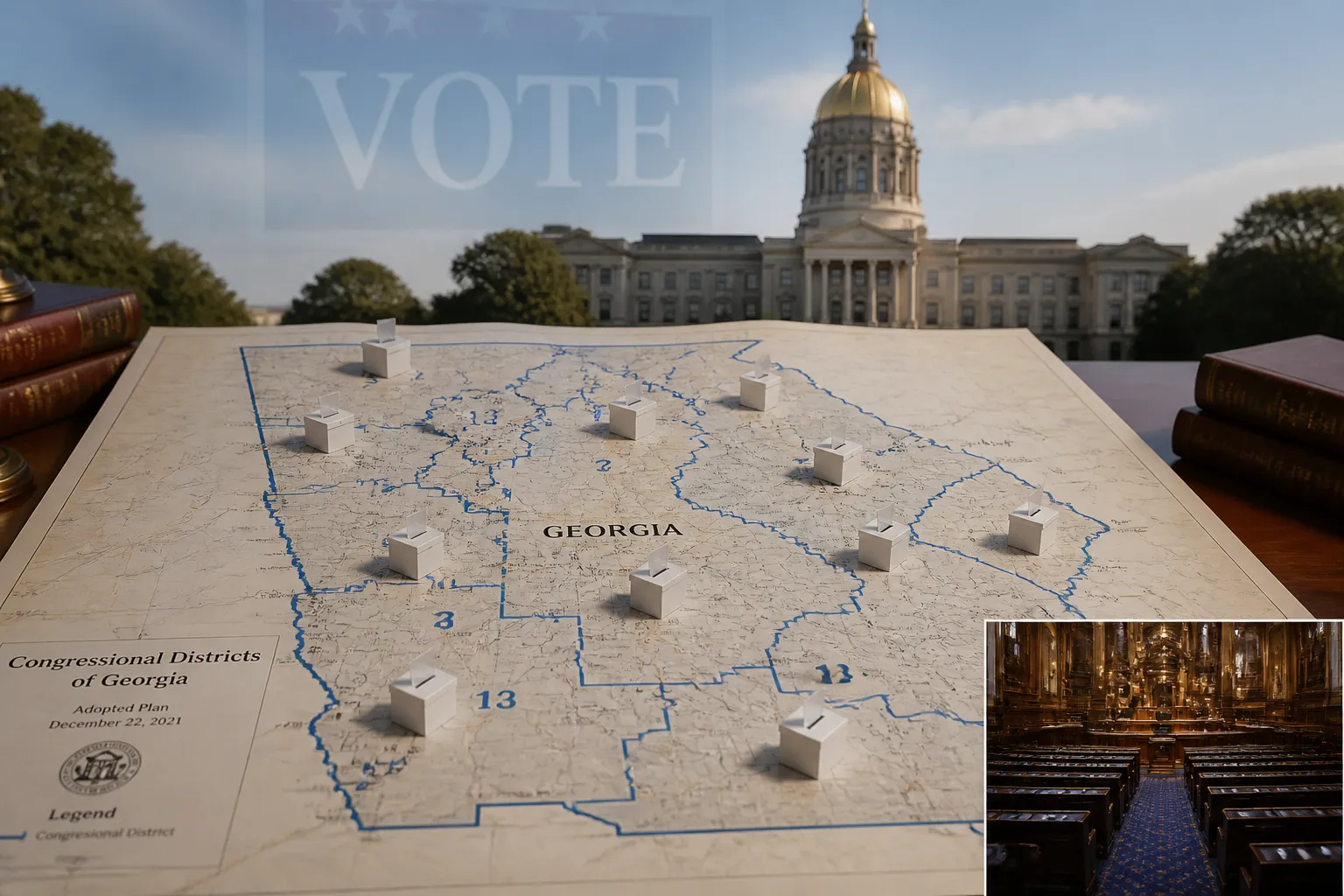
The special session will address both congressional and state legislative districts. Because the Supreme Court requires Georgia to produce new maps before the 2028 election cycle, the state’s current maps—drawn under a federal court order that mandated additional majority‑Black districts—may be reshaped. The new maps could alter the political landscape for the 2028 elections and beyond, potentially affecting the balance of power in the state House, Senate, and the U.S. House of Representatives.
Republican lawmakers control the legislature, and the process of drawing new districts will likely involve intense partisan negotiation. Voting‑rights advocates and Democratic lawmakers are preparing to challenge any map they believe dilutes minority voting power, citing the Callais decision and the historical role of the Voting Rights Act in protecting minority representation.
As the special session approaches, voters and officials alike will be watching closely how the new maps are drawn and how they will shape Georgia’s political representation in the 2028 election cycle. The outcome will also signal how the state responds to the Supreme Court’s clarified standards for race‑based redistricting.
The proclamation, which will convene on June 17, is a direct response to the U.S. Supreme Court’s April 2026 ruling in Louisiana v. Callais. The decision weakened Section 2 of the Voting Rights Act and clarified that claims of race‑based gerrymandering must be linked to intentional dilution. Kemp’s call comes after a brief period in early May when he told local media that “voting is already underway for the 2026 elections.” That comment was widely read as a hint that Georgia would sidestep a mid‑decade redistricting, setting the state apart from other Republican‑led Southern states that had already begun dismantling majority‑Black districts.
Within two weeks, however, the governor reversed course and scheduled the special session. The timing adds another layer of complexity: the regular 2026 legislative session adjourned on April 3, and the state’s primary elections on May 19 used maps drawn in a 2023 special session that added majority‑Black districts under a federal court mandate. Primary runoffs on June 16 will finish just one day before the new session begins, creating a tight window for lawmakers and voters to influence the process.
Common Cause Georgia’s political director Kyle Gomez‑Leinweber noted the urgency, saying, “Georgia has already seen two redistricting cycles in the 2020s, and now a third is coming in 2026.” He added that the upcoming session would likely trigger a comprehensive overhaul, “establishing a brand‑new map configuration explicitly engineered for the 2028 elections.”
Minority voters and Democratic lawmakers are already raising alarms. At a Korean American convening on May 30, State Representative Sam Park (D‑Lawrenceville) warned that the redistricting effort “will likely knock back the political progress of minority communities by 10 to 20 years.” He pointed out that the shift arrives “just as the state’s multibillion‑dollar budget could otherwise be leveraged to invest directly back into communities like Korean Americans.” Park urged voters to counter the effort through vigorous civic engagement.
In a town hall in Duluth on May 23, State Representative Marvin Lim (D‑Norcross) acknowledged the structural hurdles facing Georgia’s minority Democratic base. He said, “While Georgia Democrats intend to propose their own alternative House maps, the bills that ultimately advance are entirely controlled by the Republican majority.” Lim explained that map‑makers rely on a mix of internal and external polling data, voter canvassing records, and broad neighborhood political “vibes” to draw lines behind closed doors. He urged voters to use the brief time remaining before the June 17 session to contact their lawmakers directly, stressing that “the vast majority of my colleagues do not check email.” Lim added that placing phone calls to legislative offices, attending local town halls, or visiting the state Capitol in person remain the most reliable ways to influence representatives.
The special session will address both congressional and state legislative districts. Because the Supreme Court requires Georgia to produce new maps before the 2028 election cycle, the state’s current maps—drawn under a federal court order that mandated additional majority‑Black districts—may be reshaped. The new maps could alter the political landscape for the 2028 elections and beyond, potentially affecting the balance of power in the state House, Senate, and the U.S. House of Representatives.
Republican lawmakers control the legislature, and the process of drawing new districts will likely involve intense partisan negotiation. Voting‑rights advocates and Democratic lawmakers are preparing to challenge any map they believe dilutes minority voting power, citing the Callais decision and the historical role of the Voting Rights Act in protecting minority representation.
As the special session approaches, voters and officials alike will be watching closely how the new maps are drawn and how they will shape Georgia’s political representation in the 2028 election cycle. The outcome will also signal how the state responds to the Supreme Court’s clarified standards for race‑based redistricting.