Blab News
Cuba Signals Willingness to Negotiate Property Restitution, but U.S. Stance Remains Unchanged
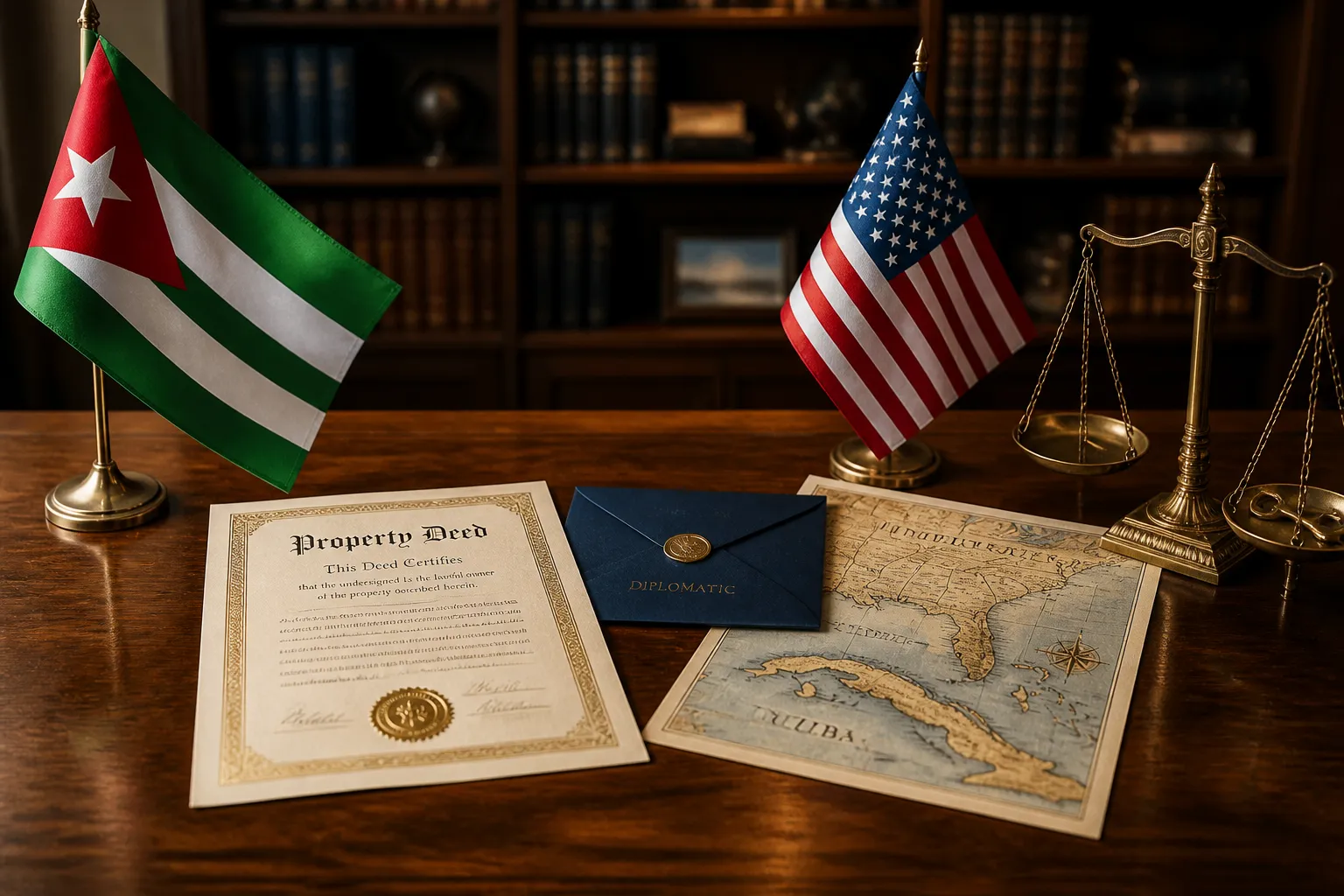
In a quiet yet potentially pivotal move, Cuba’s Deputy Minister of Foreign Trade and Investment, Carlos Mendez, told the Spanish‑language newspaper The National on 19 June 2026 that Havana is ready to pursue an arrangement that would be “satisfactory for all parties” regarding the properties nationalised after the 1959 revolution—an issue that has long strained ties with the United States.
Mendez explained that the government would entertain agreements that balance the interests of foreign firms that were seized and those of Cuban emigrants who lost homes and businesses when the revolution took hold. He added that Cuba is open to diaspora investment across a range of business models and sectors.
The statement marks the first public indication that Cuba is stepping beyond its historic silence on the matter. It follows a series of diplomatic gestures in recent months aimed at attracting foreign investment, including the launch of a new foreign‑investment office in Havana and the signing of several commercial agreements.
Ahmed Faisal, an Egyptian‑born consultant working with Cuban officials on economic liberalisation, said the wording of the statement carried more weight than its cautious tone. According to Faisal, Cuban Americans who have the capital to restore their former properties could regain full ownership. Those without sufficient funds would need outside investors to take an equity stake. He added that the goal is to inject urgently needed capital into Cuba’s economy.
Experts warn that the proposal is unlikely to satisfy Washington. Mario Braga, a geopolitical analyst at RANE Network, said that while property restitution may be a prerequisite, it falls short of the U.S. demands. He noted that the United States would also want Cuba to expel or remove intelligence officers from Russia and China and to enact major political reforms.
Arturo Lopez‑Levy, a Cuban‑born research fellow at Georgia College, said the Cuban government is not in a position to offer full restitution. He explained that most properties seized in the early years of the revolution have been destroyed or occupied by other families, foreign companies, or hotels. Lopez‑Levy added that even a compensation or debt‑for‑investment arrangement would not shift Washington’s position.
Professor Helen Yaffe of the University of Glasgow raised practical questions about what restitution would mean in practice. She said many former Cuban‑owned mansions have been converted into homes, apartments, schools, offices, or research centres. Yaffe also questioned whether the most powerful voices in the Cuban‑American community would actually return to Cuba. She cited the Helms‑Burton Act of 1996, which tightens the U.S. embargo and makes any partial concession legally insufficient unless Cuba transitions to a democratic market economy.
The issue has a long history. After the revolution, the Cuban government nationalised roughly 6,000 American‑owned properties, a move that triggered the 1996 Helms‑Burton Act. The Act extends the U.S. embargo to foreign companies trading with Cuba and allows U.S. citizens to sue for property losses. The embargo remains in force, although the Obama administration temporarily suspended parts of the Act in 2015‑2017.
Today, Cuba faces a dual challenge: it needs foreign investment to revive its economy and it must navigate a complex U.S. legal framework that still bars most commercial activity. The Cuban government’s invitation to the diaspora is a first step toward addressing historic grievances, but it is unclear whether it will lead to concrete agreements.
The current situation remains fluid. Cuba has announced its willingness to negotiate, but Washington has not yet signalled any change in its policy. The next few months will likely see further statements from Cuban officials, possible diplomatic exchanges with U.S. representatives, and continued monitoring by U.S. lawmakers who keep the Helms‑Burton Act in their legislative toolkit. The outcome will hinge on whether Cuba can offer a package that satisfies both its economic needs and the legal and political conditions set by the United States.
Mendez explained that the government would entertain agreements that balance the interests of foreign firms that were seized and those of Cuban emigrants who lost homes and businesses when the revolution took hold. He added that Cuba is open to diaspora investment across a range of business models and sectors.
The statement marks the first public indication that Cuba is stepping beyond its historic silence on the matter. It follows a series of diplomatic gestures in recent months aimed at attracting foreign investment, including the launch of a new foreign‑investment office in Havana and the signing of several commercial agreements.
Ahmed Faisal, an Egyptian‑born consultant working with Cuban officials on economic liberalisation, said the wording of the statement carried more weight than its cautious tone. According to Faisal, Cuban Americans who have the capital to restore their former properties could regain full ownership. Those without sufficient funds would need outside investors to take an equity stake. He added that the goal is to inject urgently needed capital into Cuba’s economy.
Experts warn that the proposal is unlikely to satisfy Washington. Mario Braga, a geopolitical analyst at RANE Network, said that while property restitution may be a prerequisite, it falls short of the U.S. demands. He noted that the United States would also want Cuba to expel or remove intelligence officers from Russia and China and to enact major political reforms.
Arturo Lopez‑Levy, a Cuban‑born research fellow at Georgia College, said the Cuban government is not in a position to offer full restitution. He explained that most properties seized in the early years of the revolution have been destroyed or occupied by other families, foreign companies, or hotels. Lopez‑Levy added that even a compensation or debt‑for‑investment arrangement would not shift Washington’s position.
Professor Helen Yaffe of the University of Glasgow raised practical questions about what restitution would mean in practice. She said many former Cuban‑owned mansions have been converted into homes, apartments, schools, offices, or research centres. Yaffe also questioned whether the most powerful voices in the Cuban‑American community would actually return to Cuba. She cited the Helms‑Burton Act of 1996, which tightens the U.S. embargo and makes any partial concession legally insufficient unless Cuba transitions to a democratic market economy.
The issue has a long history. After the revolution, the Cuban government nationalised roughly 6,000 American‑owned properties, a move that triggered the 1996 Helms‑Burton Act. The Act extends the U.S. embargo to foreign companies trading with Cuba and allows U.S. citizens to sue for property losses. The embargo remains in force, although the Obama administration temporarily suspended parts of the Act in 2015‑2017.
Today, Cuba faces a dual challenge: it needs foreign investment to revive its economy and it must navigate a complex U.S. legal framework that still bars most commercial activity. The Cuban government’s invitation to the diaspora is a first step toward addressing historic grievances, but it is unclear whether it will lead to concrete agreements.
The current situation remains fluid. Cuba has announced its willingness to negotiate, but Washington has not yet signalled any change in its policy. The next few months will likely see further statements from Cuban officials, possible diplomatic exchanges with U.S. representatives, and continued monitoring by U.S. lawmakers who keep the Helms‑Burton Act in their legislative toolkit. The outcome will hinge on whether Cuba can offer a package that satisfies both its economic needs and the legal and political conditions set by the United States.