Blab News
David Hockney, British art icon, dies aged 88
David Hockney, the celebrated British painter whose work helped define the pop‑art movement of the 1960s and whose California pool scenes became cultural touchstones, died on 11 June 2026 at the age of 88.
Born in Bradford on 9 July 1937, Hockney grew up in a working‑class family and earned a scholarship to Bradford Grammar School before studying at the Bradford School of Art. There he spent long hours at his easel, selling his first portrait of his father for just £10 in 1957. In 1959 he moved to London to attend the Royal College of Art, where he rubbed shoulders with contemporaries such as Allen Jones and R.B. Kitaj.
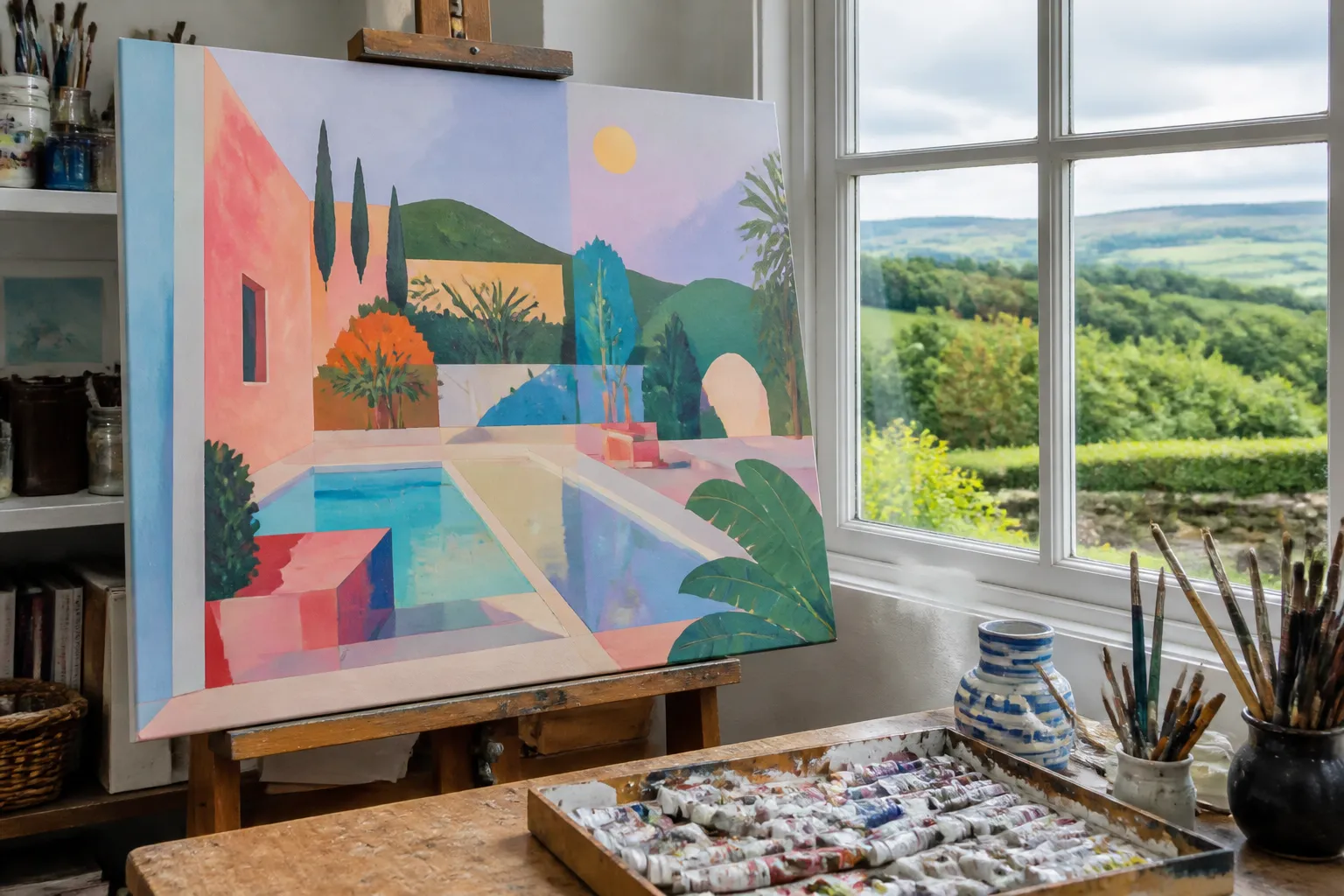
After leaving the RCA, Hockney travelled to New York and then to Los Angeles in 1963. The bright light and open culture of Southern California profoundly influenced his style, prompting him to paint large, brightly coloured scenes of swimming pools and the surrounding landscape. Using acrylics, he captured the clarity of water and light in works such as A Bigger Splash (1967) and Portrait of an Artist (Pool with Two Figures) (1972). The latter sold at Christie’s in 2018 for $90.3 million, the highest price ever paid for a living artist’s work at auction.
Hockney’s practice was marked by constant experimentation. He worked in oils, acrylics, watercolours, charcoal, pen and ink, pencil, felt‑tips, crayons, etchings, and drypoints. In the 1980s he turned to photographic techniques, creating photo‑collages from Polaroid images and later using Xerox photocopiers and fax machines to assemble multiple viewpoints. The 2000s saw him embrace digital tools, producing works on the iPad and incorporating inkjet printing. He also designed opera sets for the Metropolitan Opera in New York and the Glyndebourne Festival.
Beyond painting, Hockney was a prolific draftsman and stage designer. In the 1970s he produced a series of double portraits, including works of Christopher Isherwood and his partner Don Bachardy, and of fashion designer Ossie Clark and his wife Celia Birtwell. He also painted his parents and his beloved dachshunds.
Hockney was openly gay from a young age, a fact he did not hide despite the legal and social climate of the 1950s and 1960s. He lived between the United Kingdom, France, and the United States, and in his later years he settled in Bridlington, East Yorkshire, where he produced large landscape paintings of the Yorkshire Wolds.
He received several honours during his lifetime. He declined a knighthood but accepted the Order of Merit, a personal gift of the Queen. He was elected to the Royal Academy in 1985 and was widely regarded as Britain’s greatest living artist.
The art world has responded to his death with tributes that highlight his restless curiosity and his willingness to explore new media. His work continues to command high prices at auction, and major retrospectives are planned for the coming years. The legacy of his paintings, especially the iconic pool scenes, remains a central reference point for contemporary British art.
Hockney’s death marks the end of a career that spanned more than six decades and that reshaped the way artists approached light, colour and the everyday. His influence will be felt for generations of artists and collectors who continue to study his techniques and his fearless experimentation.
Born in Bradford on 9 July 1937, Hockney grew up in a working‑class family and earned a scholarship to Bradford Grammar School before studying at the Bradford School of Art. There he spent long hours at his easel, selling his first portrait of his father for just £10 in 1957. In 1959 he moved to London to attend the Royal College of Art, where he rubbed shoulders with contemporaries such as Allen Jones and R.B. Kitaj.
After leaving the RCA, Hockney travelled to New York and then to Los Angeles in 1963. The bright light and open culture of Southern California profoundly influenced his style, prompting him to paint large, brightly coloured scenes of swimming pools and the surrounding landscape. Using acrylics, he captured the clarity of water and light in works such as A Bigger Splash (1967) and Portrait of an Artist (Pool with Two Figures) (1972). The latter sold at Christie’s in 2018 for $90.3 million, the highest price ever paid for a living artist’s work at auction.
Hockney’s practice was marked by constant experimentation. He worked in oils, acrylics, watercolours, charcoal, pen and ink, pencil, felt‑tips, crayons, etchings, and drypoints. In the 1980s he turned to photographic techniques, creating photo‑collages from Polaroid images and later using Xerox photocopiers and fax machines to assemble multiple viewpoints. The 2000s saw him embrace digital tools, producing works on the iPad and incorporating inkjet printing. He also designed opera sets for the Metropolitan Opera in New York and the Glyndebourne Festival.
Beyond painting, Hockney was a prolific draftsman and stage designer. In the 1970s he produced a series of double portraits, including works of Christopher Isherwood and his partner Don Bachardy, and of fashion designer Ossie Clark and his wife Celia Birtwell. He also painted his parents and his beloved dachshunds.
Hockney was openly gay from a young age, a fact he did not hide despite the legal and social climate of the 1950s and 1960s. He lived between the United Kingdom, France, and the United States, and in his later years he settled in Bridlington, East Yorkshire, where he produced large landscape paintings of the Yorkshire Wolds.
He received several honours during his lifetime. He declined a knighthood but accepted the Order of Merit, a personal gift of the Queen. He was elected to the Royal Academy in 1985 and was widely regarded as Britain’s greatest living artist.
The art world has responded to his death with tributes that highlight his restless curiosity and his willingness to explore new media. His work continues to command high prices at auction, and major retrospectives are planned for the coming years. The legacy of his paintings, especially the iconic pool scenes, remains a central reference point for contemporary British art.
Hockney’s death marks the end of a career that spanned more than six decades and that reshaped the way artists approached light, colour and the everyday. His influence will be felt for generations of artists and collectors who continue to study his techniques and his fearless experimentation.