Blab News
Why No Human Has Walked on the Moon Since 1972: A Political and Institutional Decision
If you look back at the last time humanity set foot on the Moon, you might think it was a long‑term ambition that simply faded. In reality, the pause has a clear political origin. Since Apollo 17 landed in December 1972, no crewed mission has reached the lunar surface because the United States deliberately ended the Apollo program in the early 1970s.
The Apollo program’s original spark was the Cold‑War space race. After Neil Armstrong and Buzz Aldrin touched the Moon on July 20, 1969, the United States had already surpassed the Soviet Union in the lunar domain. By the end of that year, the Soviet Union had abandoned its lunar ambitions following four failed N1 rocket tests, leaving the U.S. without a rival capable of challenging its lunar dominance.
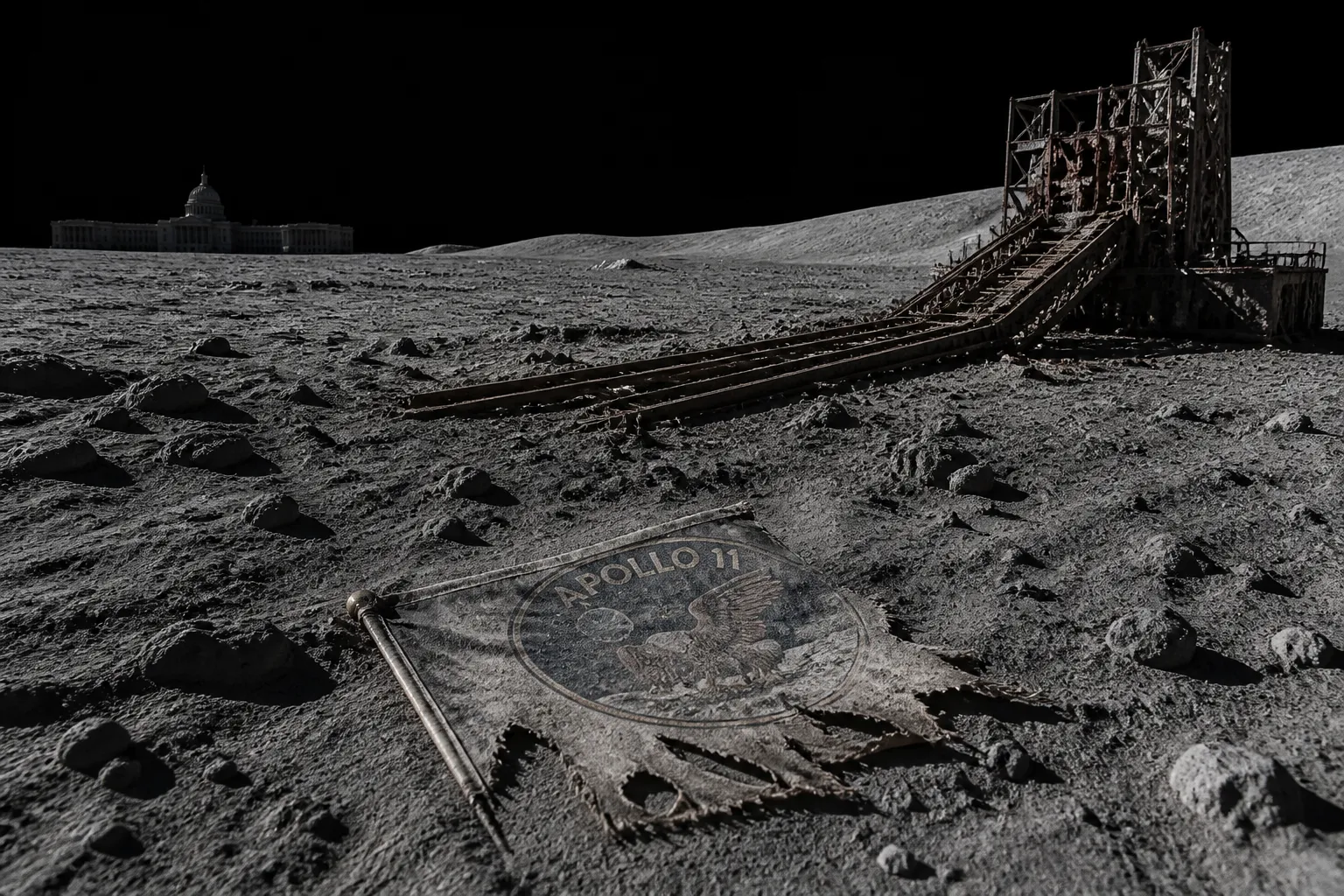
In December 1969, a senior aide to President Richard Nixon informed NASA that the administration could not fund further lunar missions and that the President did not see a need to fly additional Apollo landings. By January 4, 1970, Apollo 20 was formally cancelled, followed by Apollo 18 and 19 in September 1970. The remaining missions—Apollo 14 through 17—were allowed to proceed and were completed by December 1972. The Saturn V production line was shut down in 1970, and the remaining unflown rockets were transferred to museums.
The decision reflected a shift in national priorities. President Kennedy’s 1961 speech framed the Moon landing as a national goal, but the underlying policy logic was competition with the Soviet Union. The Apollo program had consumed up to 4.4 % of the U.S. federal budget in 1966. Once the Soviet Union conceded the lunar race, the strategic prestige that had justified that spending evaporated. Public opinion surveys from the late 1960s consistently showed that a majority of Americans did not consider Apollo worth its cost.
NASA’s own leadership agreed that resources could be redirected to other objectives. Administrator Thomas Paine, under President Nixon, decided to terminate Saturn V production to free budget for the Skylab space station and the Space Shuttle program. The agency framed the move as a reallocation of funds from a completed program to new projects, rather than an abandonment of human spaceflight.
The institutional impact was profound. The Saturn V line had supported a national‑scale manufacturing network, a workforce of roughly 400,000 people, and a suite of specialized test facilities. When the line was shut down, that infrastructure disappeared. While the technical knowledge from Apollo survives in archives and the memories of surviving engineers, the institutional capacity to build and launch a heavy‑lift vehicle was lost. Rebuilding that capability has required decades of effort, as seen in the Artemis program’s ongoing development of the Space Launch System.
Today, crewed lunar exploration is being revived through Artemis, China’s lunar program, and commercial partners. The new initiatives are driven by different motivations—geopolitical competition, commercial interest in lunar resources, and scientific goals such as studying the lunar south pole. Whether these new programs will sustain a long‑term human presence on the Moon depends on the durability of the newly built institutional infrastructure.
In short, the absence of human lunar landings since 1972 is a consequence of a political decision to end a program whose strategic purpose had been fulfilled. The technical capability remains, but the institutional framework that once supported it was dismantled. The current revival of lunar exploration is a new chapter that must build its own sustainable foundation.
The Apollo program’s original spark was the Cold‑War space race. After Neil Armstrong and Buzz Aldrin touched the Moon on July 20, 1969, the United States had already surpassed the Soviet Union in the lunar domain. By the end of that year, the Soviet Union had abandoned its lunar ambitions following four failed N1 rocket tests, leaving the U.S. without a rival capable of challenging its lunar dominance.
In December 1969, a senior aide to President Richard Nixon informed NASA that the administration could not fund further lunar missions and that the President did not see a need to fly additional Apollo landings. By January 4, 1970, Apollo 20 was formally cancelled, followed by Apollo 18 and 19 in September 1970. The remaining missions—Apollo 14 through 17—were allowed to proceed and were completed by December 1972. The Saturn V production line was shut down in 1970, and the remaining unflown rockets were transferred to museums.
The decision reflected a shift in national priorities. President Kennedy’s 1961 speech framed the Moon landing as a national goal, but the underlying policy logic was competition with the Soviet Union. The Apollo program had consumed up to 4.4 % of the U.S. federal budget in 1966. Once the Soviet Union conceded the lunar race, the strategic prestige that had justified that spending evaporated. Public opinion surveys from the late 1960s consistently showed that a majority of Americans did not consider Apollo worth its cost.
NASA’s own leadership agreed that resources could be redirected to other objectives. Administrator Thomas Paine, under President Nixon, decided to terminate Saturn V production to free budget for the Skylab space station and the Space Shuttle program. The agency framed the move as a reallocation of funds from a completed program to new projects, rather than an abandonment of human spaceflight.
The institutional impact was profound. The Saturn V line had supported a national‑scale manufacturing network, a workforce of roughly 400,000 people, and a suite of specialized test facilities. When the line was shut down, that infrastructure disappeared. While the technical knowledge from Apollo survives in archives and the memories of surviving engineers, the institutional capacity to build and launch a heavy‑lift vehicle was lost. Rebuilding that capability has required decades of effort, as seen in the Artemis program’s ongoing development of the Space Launch System.
Today, crewed lunar exploration is being revived through Artemis, China’s lunar program, and commercial partners. The new initiatives are driven by different motivations—geopolitical competition, commercial interest in lunar resources, and scientific goals such as studying the lunar south pole. Whether these new programs will sustain a long‑term human presence on the Moon depends on the durability of the newly built institutional infrastructure.
In short, the absence of human lunar landings since 1972 is a consequence of a political decision to end a program whose strategic purpose had been fulfilled. The technical capability remains, but the institutional framework that once supported it was dismantled. The current revival of lunar exploration is a new chapter that must build its own sustainable foundation.