Blab News
US Airstrikes on Iranian Targets Follow Drone Attack on Oil Tanker in Strait of Hormuz
On Saturday, 27 June 2026, the United States Central Command (CENTCOM) announced that U.S. aircraft had struck multiple Iranian military sites in retaliation for an earlier drone attack on a merchant vessel. The strikes targeted surveillance infrastructure, communication systems, air‑defense sites, drone storage facilities and minelayer capabilities in Iran.
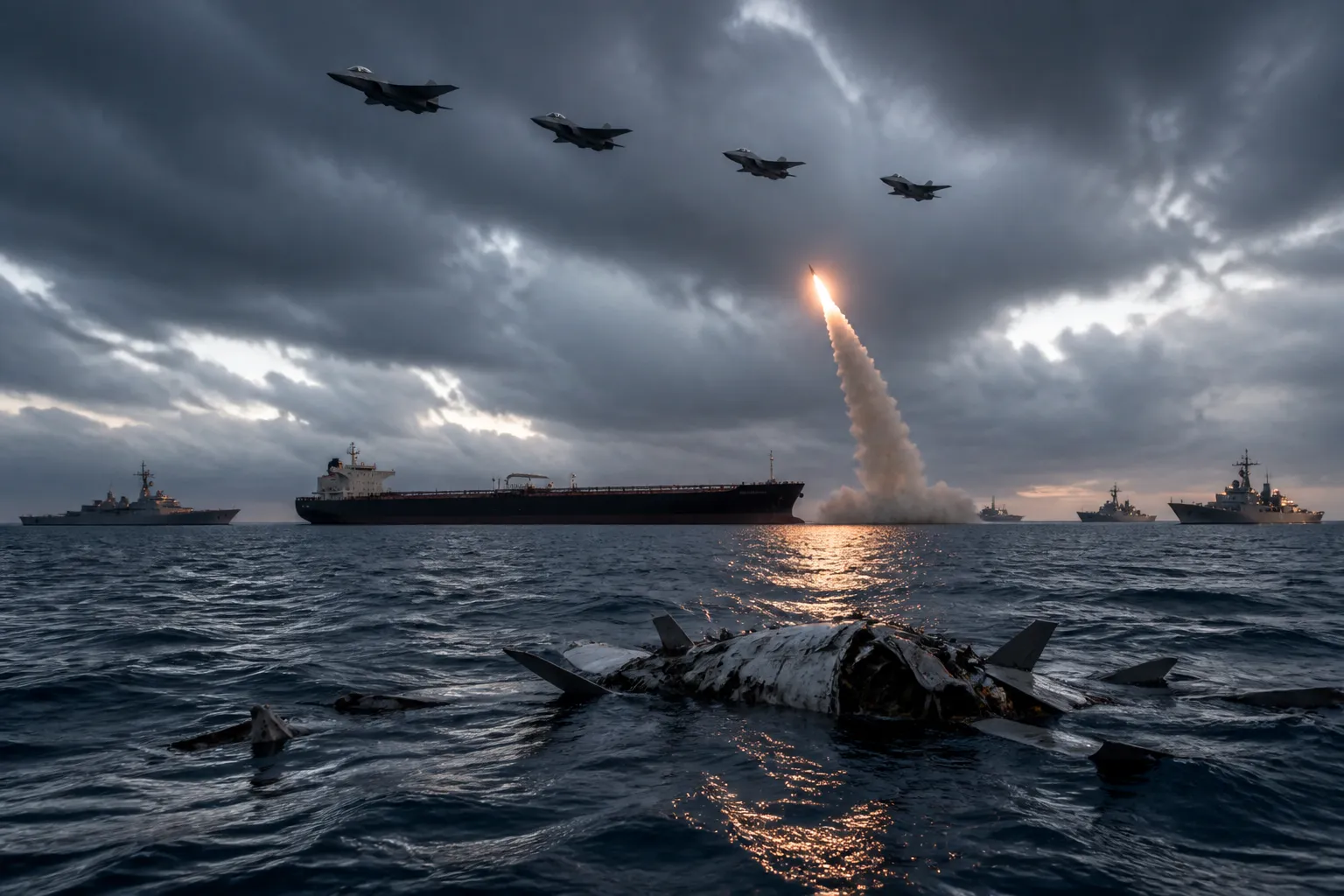
The U.S. response was prompted by an incident that occurred early on Saturday when Iranian forces launched a one‑way drone that struck the Panama‑flagged oil tanker MT Kiku. The tanker was carrying more than two million barrels of crude oil and was sailing through the Strait of Hormuz toward a port in the United Arab Emirates. According to CENTCOM, Iran had a chance to honor the ceasefire agreement that had been reached on 14 June 2026, but elected not to when it attacked the tanker.
The drone attack on MT Kiku followed a similar incident on 25 June, when an Iranian drone struck a merchant vessel off the coast of Oman. The U.S. had already carried out strikes on 26 June in response to that earlier attack, and the 27 June strikes were a continuation of that pattern.
President Donald Trump posted on Truth Social that the U.S. had "struck Iranian missile and drone storage locations, and coastal radar sites, for violating the Cease Fire Agreement, AGAIN!" He warned that the United States could no longer remain reasonable if Iran continued to violate the ceasefire and threatened that the Islamic Republic would no longer exist.
Bahrain’s foreign ministry condemned the Iranian drone attack on its territory, calling it a "flagrant threat to the security of citizens and residents." No damage was reported. Iran’s Revolutionary Guard, through the state‑run IRNA news agency, said it had targeted several locations of the U.S. "terrorist army" in the region but did not specify the sites.
Vice President J.D. Vance, who has been leading U.S. negotiations with Iran, said on social media that Iran should "pick up the phone" if there were disagreements about the ceasefire, adding that violence would be met with violence.
The Joint Maritime Information Center (JMIC), overseen by the U.S. Navy, announced that a route near Oman’s coast would be widened to allow both inbound and outbound traffic through the Strait of Hormuz. The expansion is intended to ease shipping flows but could create a flashpoint with Tehran, which has warned that it will charge fees for transit and has repeatedly demanded that ships obey its orders.
The International Maritime Organization (IMO) halted an effort to evacuate ships from the Strait of Hormuz after an Iranian drone attack on a merchant vessel. The IMO said it would not resume the evacuation until guarantees were in place that other ships would not be attacked. About 115 ships have moved out of the strait in recent days.
The U.S. and Iran had agreed to a memorandum of understanding on 17 June 2026 to end the war and the blockades of the Strait of Hormuz. The agreement was intended to provide a framework for a final settlement, including the reopening of the strait and the cessation of fighting between Israel and Hezbollah in Lebanon. The 27 June strikes demonstrate that the ceasefire remains fragile and that violations can quickly lead to renewed military action.
The U.S. has continued to conduct strikes on Iranian military sites since the war began in February 2026. The latest attacks are part of a broader strategy to deter further Iranian aggression and to protect commercial shipping in the Persian Gulf.
The situation remains fluid. U.S. officials have not announced any further actions, and it is unclear whether Iran will respond with additional strikes. The international community, particularly Gulf Arab states, has called for restraint and for the full implementation of the ceasefire agreement.
The ongoing tensions underscore the strategic importance of the Strait of Hormuz, which carries a significant portion of the world’s oil and gas trade. Any disruption to shipping through the strait has the potential to affect global energy markets and to raise security concerns for the region.
The United Nations, the International Maritime Organization, and other international bodies continue to monitor the situation closely, urging all parties to adhere to the ceasefire and to avoid actions that could further destabilize the region.
The U.S. response was prompted by an incident that occurred early on Saturday when Iranian forces launched a one‑way drone that struck the Panama‑flagged oil tanker MT Kiku. The tanker was carrying more than two million barrels of crude oil and was sailing through the Strait of Hormuz toward a port in the United Arab Emirates. According to CENTCOM, Iran had a chance to honor the ceasefire agreement that had been reached on 14 June 2026, but elected not to when it attacked the tanker.
The drone attack on MT Kiku followed a similar incident on 25 June, when an Iranian drone struck a merchant vessel off the coast of Oman. The U.S. had already carried out strikes on 26 June in response to that earlier attack, and the 27 June strikes were a continuation of that pattern.
President Donald Trump posted on Truth Social that the U.S. had "struck Iranian missile and drone storage locations, and coastal radar sites, for violating the Cease Fire Agreement, AGAIN!" He warned that the United States could no longer remain reasonable if Iran continued to violate the ceasefire and threatened that the Islamic Republic would no longer exist.
Bahrain’s foreign ministry condemned the Iranian drone attack on its territory, calling it a "flagrant threat to the security of citizens and residents." No damage was reported. Iran’s Revolutionary Guard, through the state‑run IRNA news agency, said it had targeted several locations of the U.S. "terrorist army" in the region but did not specify the sites.
Vice President J.D. Vance, who has been leading U.S. negotiations with Iran, said on social media that Iran should "pick up the phone" if there were disagreements about the ceasefire, adding that violence would be met with violence.
The Joint Maritime Information Center (JMIC), overseen by the U.S. Navy, announced that a route near Oman’s coast would be widened to allow both inbound and outbound traffic through the Strait of Hormuz. The expansion is intended to ease shipping flows but could create a flashpoint with Tehran, which has warned that it will charge fees for transit and has repeatedly demanded that ships obey its orders.
The International Maritime Organization (IMO) halted an effort to evacuate ships from the Strait of Hormuz after an Iranian drone attack on a merchant vessel. The IMO said it would not resume the evacuation until guarantees were in place that other ships would not be attacked. About 115 ships have moved out of the strait in recent days.
The U.S. and Iran had agreed to a memorandum of understanding on 17 June 2026 to end the war and the blockades of the Strait of Hormuz. The agreement was intended to provide a framework for a final settlement, including the reopening of the strait and the cessation of fighting between Israel and Hezbollah in Lebanon. The 27 June strikes demonstrate that the ceasefire remains fragile and that violations can quickly lead to renewed military action.
The U.S. has continued to conduct strikes on Iranian military sites since the war began in February 2026. The latest attacks are part of a broader strategy to deter further Iranian aggression and to protect commercial shipping in the Persian Gulf.
The situation remains fluid. U.S. officials have not announced any further actions, and it is unclear whether Iran will respond with additional strikes. The international community, particularly Gulf Arab states, has called for restraint and for the full implementation of the ceasefire agreement.
The ongoing tensions underscore the strategic importance of the Strait of Hormuz, which carries a significant portion of the world’s oil and gas trade. Any disruption to shipping through the strait has the potential to affect global energy markets and to raise security concerns for the region.
The United Nations, the International Maritime Organization, and other international bodies continue to monitor the situation closely, urging all parties to adhere to the ceasefire and to avoid actions that could further destabilize the region.